Western Australia
Description
Western Australia is a state occupying the entire western third of Australia. It is bounded by the Indian Ocean to the north and west, the Great Australian Bight and Southern Ocean to the south, the Northern Territory to the north-east and South Australia to the south-east. Western Australia is Australia's largest state with a total land area of 2,529,875 square kilometres (976,790 sq mi), and the second-largest country subdivision in the world – however, a significant part of it is sparsely populated. The state has about 2.6 million inhabitants, around 11% of the national total. 92% of the population lives in the south-west corner of the state.
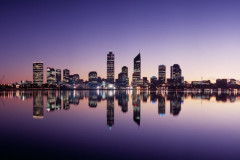
The first European visitor to Western Australia was the Dutch explorer Dirk Hartog, who visited the Western Australian coast in 1616. The first European settlement of Western Australia occurred following the landing by Major Edmund Lockyer on 26 December 1826 of an expedition on behalf of the New South Wales colonial government. He established a convict-supported military garrison at King George III Sound, at present-day Albany, and on 21 January 1827 formally took possession of the western third of the continent for the British Crown. This was followed by the establishment of the Swan River Colony in 1829, including the site of the present-day capital, Perth.
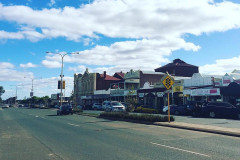
York was the first inland settlement in Western Australia. Situated 97 kilometres east of Perth, it was settled on 16 September 1831.
Western Australia achieved responsible government in 1890, and federated with the other British colonies in Australia in 1901. Today its economy mainly relies on mining, agriculture and tourism. The state produces 46% of Australia's exports. Western Australia is the second-largest iron ore producer in the world.
Geography
Western Australia is bounded to the east by longitude 129°E, the meridian 129 degrees east of Greenwich, which defines the border with South Australia and the Northern Territory, and bounded by the Indian Ocean to the west and north. The International Hydrographic Organization (IHO) designates the body of water south of the continent as part of the Indian Ocean; in Australia it is officially gazetted as the Southern Ocean.
The total length of the state's eastern border is 1,862 km (1,157 mi). There are 20,781 km (12,913 mi) of coastline, including 7,892 km (4,904 mi) of island coastline. The total land area occupied by the state is 2.5 million km2.
Natural history
Geology
The bulk of Western Australia consists of the extremely old Yilgarn craton and Pilbara craton which merged with the Deccan Plateau of India, Madagascar and the Karoo and Zimbabwe cratons of Southern Africa, in the Archean Eon to form Ur, one of the oldest supercontinents on Earth (3 – 3.2 billion years ago).
Because the only mountain-building since then has been of the Stirling Range with the rifting from Antarctica, the land is extremely eroded and ancient, with no part of the state above 1,245 metres (4,085 ft) AHD (at Mount Meharry in the Hamersley Range of the Pilbara region). Most of the state is a low plateau with an average elevation of about 400 metres (1,200 ft), very low relief, and no surface runoff. This descends relatively sharply to the coastal plains, in some cases forming a sharp escarpment (as with the Darling Range/Darling Scarp near Perth).
The extreme age of the landscape has meant that the soils are remarkably infertile and frequently laterised. Even soils derived from granitic bedrock contain an order of magnitude less available phosphorus and only half as much nitrogen as soils in comparable climates in other continents. Soils derived from extensive sandplains or ironstone are even less fertile, nearly devoid of soluble phosphate and also deficient in zinc, copper, molybdenum and sometimes potassium and calcium.
The infertility of most of the soils has required heavy application by farmers of chemical fertilisers, particularly superphosphate, insecticides and herbicides. These have resulted in damage to invertebrate and bacterial populations. The grazing and use of hoofed mammals and, later, heavy machinery through the years have resulted in compaction of soils and great damage to the fragile soils.
Large-scale land clearing for agriculture has damaged habitats for native flora and fauna. As a result, the South West region of the state has a higher concentration of rare, threatened or endangered flora and fauna than many areas of Australia, making it one of the world's biodiversity "hot spots". Large areas of the state's wheatbelt region have problems with dryland salinity and the loss of fresh water.
Flora and fauna
Western Australia is home to around 540 species of birds (depending on the taxonomy used). Of these around 15 are endemic to the state. The best areas for birds are the southwestern corner of the state and the area around Broome and the Kimberley.
The Flora of Western Australia comprises 9,437 published native vascular plant species of 1,543 genera within 226 families; there are also 1,171 naturalised alien or invasive plant species, more commonly known as weeds. In the southwest region are some of the largest numbers of plant species for its area in the world.
Specific ecoregions of Western Australia include: the sandstone gorges of The Kimberley on the northern coast and below that areas of dry grassland (Ord Victoria Plain) or semi-desert (Western Australian Mulga shrublands), with Tanami Desert inland from there. Following the coast south there is the Southwest Australia savanna and the Swan Coastal Plain around Perth, and then farther south the Warren on the southwest corner of the coast around the wine-growing area of Margaret River.
Going east along the Southern Ocean coast is the Goldfields-Esperance region, including the Esperance grasslands and the Coolgardie grasslands inland around town of Coolgardie.
History
The first inhabitants of Australia arrived from the north about 40,000 to 60,000 years ago. Over thousands of years they eventually spread across the whole landmass. These Indigenous Australians were long established throughout Western Australia by the time European explorers began to arrive in the early seventeenth century.
The first European to visit Western Australia was a Dutch explorer, Dirk Hartog, who on 25 October 1616 landed at what is now known as Cape Inscription, Dirk Hartog Island. For the rest of the 17th century, other Dutch and British navigators encountered the coast, usually unintentionally, as demonstrated by the many shipwrecks along the coast of ships that deviated from the Brouwer Route (because of poor navigation and storms). Two hundred years passed before Europeans believed that the great southern continent actually existed. By the late 18th century, British and French sailors had begun to explore the Western Australian coast.
The origins of the present state began with the establishment by Lockyer of a convict-supported settlement from New South Wales at King George III Sound. The settlement was formally annexed on 21 January 1827 by Lockyer when he commanded the Union Jack be raised and a feu de joie fired by the troops. The settlement was founded in response to British concerns about the possibility of a French colony being established on the coast of Western Australia. On 7 March 1831 it was transferred to the control of the Swan River Colony, and named Albany in 1832.
In 1829 the Swan River Colony was established on the Swan River by Captain James Stirling. By 1832, the British settler population of the colony had reached around 1,500, and the official name of the colony was changed to Western Australia. The two separate townsites of the colony developed slowly into the port city of Fremantle and the state's capital, Perth. York was the first inland settlement in Western Australia, situated 97 kilometres east of Perth and settled on 16 September 1831. York was the staging point for early explorers who discovered the rich gold reserves of Kalgoorlie.
Population growth was very slow until significant discoveries of gold were made in the 1890s around Kalgoorlie.
In 1887, a new constitution was drafted, providing for the right of self-governance of European Australians and in 1890, the act granting self-government to the colony was passed by the British Parliament. John Forrest became the first Premier of Western Australia.
In 1896, the Western Australian Parliament authorised the raising of a loan to construct a pipeline to transport 23 megalitres (5 million imperial gallons) of water per day to the Goldfields of Western Australia. The pipeline, known as the Goldfields Water Supply Scheme, was completed in 1903. C.Y. O'Connor, Western Australia's first engineer-in-chief, designed and oversaw the construction of the pipeline. It carries water 530 km (330 mi) from Perth to Kalgoorlie, and is attributed by historians as an important factor driving the state's population and economic growth.
Following a campaign led by Forrest, residents of the colony of Western Australia (still informally called the Swan River Colony) voted in favour of federation, resulting in Western Australia officially becoming a state on 1 January 1901.
Tourism
Tourism forms a major part of the Western Australian economy with 833,100 international visitors making up 12.8% of the total international tourism to Australia in the year ending March 2015. The top three source markets include the United Kingdom (17%), Singapore (10%) and New Zealand (10%) with the majority of purpose for visitation being holiday/vacation reasons. The tourism industry contributes $9.3 billion to the Western Australian economy and supports 94,000 jobs within the state. Both directly and indirectly, the industry makes up 3.2% of the state's economy whilst comparatively, WA's largest revenue source, the mining sector, brings in 31%.
Tourism WA is the government agency responsible for promoting Western Australia as a holiday destination.
Culture
Wine
Winemaking regions are concentrated in the cooler climate of the south-western portion of the state. Western Australia produces less than 5% of the country's wine output, but in quality terms is considered to be very much near the top. Major wine producing regions include: Margaret River, The Great Southern, Swan Valley as well as smaller districts including Blackwood Valley, Manjimup, Pemberton, Peel, Chittering Valley, Perth Hills, and Geographe.
The arts
Western Australia is home to one of the country's leading performance training institutions, the acclaimed Western Australian Academy of Performing Arts (WAAPA), as well as a burgeoning theatrical and musical scene. Notable musicians and bands to have been born in or lived in Western Australia include Adam Brand, Karnivool, Birds of Tokyo, Bon Scott, Eskimo Joe, Johnny Young, Gyroscope, the John Butler Trio, Tame Impala, Kevin Mitchell, Tim Minchin, The Kill Devil Hills, Pendulum, The Pigram Brothers, Rolf Harris and The Triffids. The West Australian Music Industry Awards (WAMis) have been awarded every year to the leading musicians and performers in WA since 2001.
Notable actors and television personalities from Western Australia include Heath Ledger, Sam Worthington, Ernie Dingo, Jessica Marais, Megan Gale, Rove McManus, Isla Fisher, and Melissa George. Films and television series filmed or partly filmed in Western Australia include Cloudstreet, Australia, Bran Nu Dae, ABBA: the Movie and Last Train to Freo.
Noted Western Australian indigenous painters and artisans include Jack Dale Mengenen, Paddy Bedford, Queenie McKenzie, and Rover Thomas.
The West Australian Symphony Orchestra (WASO) is based at the Perth Concert Hall. Other concert, performance and indoor sporting venues in Western Australia include His Majesty's Theatre, the now demolished Perth Entertainment Centre, the Burswood Dome and Theatre and the Perth Arena, which opened in 2012.