
Altai Republic
Description
Altai Republic is a federal subject of Russia (a republic). Its capital is the town of Gorno-Altaysk. The area of the republic is 92,600 square km. Population: 206,168 (2010 Census).
History
Xiongnu Empire (209 BC-93 CE) governed the territory of the modern Altai Republic. The ethnicity of this empire is unclear; proposals by scholars include Turkic, Mongolic, Yeniseian, Tocharian, Iranian, and Uralic. The southern part of the Altai Republic came under the Naiman Khanate. Territory of the modern Altai Republic has been ruled by the Mongolic Xianbei state (93-234), Rouran Khaganate (330-555), Mongol Empire (1206-1368), Golden Horde (1240-1502) and Zunghar Khanate (1634-1758).
The national autonomy for the Altai people was created on June 1, 1922 as Oyrot Autonomous Oblast (Ойро́тская автоно́мная о́бласть), part of Altai Krai. The original name for this region was Bazla. On January 7, 1948 it was renamed Gorno-Altai Autonomous Oblast (Го́рно-Алта́йская автоно́мная о́бласть). In 1991 it was reorganized into the Gorno-Altai Autonomous Soviet Socialist Republic (ASSR). In 1992 it was renamed as the Altai Republic.
Geography
The Altai Republic is situated in the very center of Asia at the junction of the Siberian taiga, the steppes of Kazakhstan and the semi-deserts of Mongolia. Forests cover about 25% of the republic's territory.
- Area: 92,600 km2 (35,800 sq mi)
- Borders:
- internal: Kemerovo Oblast (N), Republic of Khakassia (NE), Tuva Republic (E), and Altai Krai (W/NW).
- international: Mongolia (Bayan-Ölgii Province) (SE), China (Altay Prefecture) (S), and Kazakhstan (East Kazakhstan Province) (S/SW)
- Highest point: Mount Belukha (4,506 m)
- Maximum N->S distance: 360 km
- Maximum E->W distance: 380 km
Rivers and lakes
Katun River in the northern Altai RepublicMore than 20,000 tributaries sprawl throughout the mountainous Republic, making for a total of more than 60,000 km worth of waterways. The republic's largest rivers are the Katun and the Biya, both of which originate in the mountains and flow northwards. The junction of the two rivers eventually forms the Ob River, one of the longest rivers in Siberia, which flows northward to the Arctic Ocean.
The source of the black Biya River is Lake Teletskoye, the region's largest lake located in an isolated area far south in the mountains. The emerald-colored Katun River has its source at the Gebler glacier, which is situated on the Republic's highest point, Mount Belukha. The Katun River in particular holds a religious significance for native Altaians, as well as for many Russians who live in the area, as Mount Belukha is known in Altai folklore to be the gateway to the mystical kingdom of Shambhala.
The hydrographic network of the Republic also includes approximately 7,000 lakes, adding up to a total area of more than 700 km2 (270 sq mi). The largest lake is Lake Teletskoye, which is 80 km (50 mi) long and 5 km wide, has an area of 230.8 square km, and has a maximum depth of 325 meters (1,066 ft). The mountain lakes of Altai contain enormous freshwater reserves of a very pure quality as a result of their distance from most human activity. Lake Teletskoye alone contains more than 40 cubic km of highly pure water.
Potential ground water storage is evaluated at 22 million m³ per day, while the present use constitutes about 44,000 m³ per day.
Mountains
The most striking geographical aspect of the Republic of Altai is its mountainous terrain. The Republic is situated within the Russian part of the Altai Mountains system, which covers a large part of the Republic and continues into neighboring Kazakhstan, Mongolia and China. The region continues to experience periodic notable seismic activity, which is visually made apparent through the mountains' characteristically high and rugged mountain ridges, separated by narrow and deep river valleys. The Republic's highest peak, Mount Belukha (4,506 m), is the highest point in Siberia.
Natural resources
Various bodies of water are among the most important natural resources of the Republic. Mineral and hot springs are popular destinations for tourists and locals, sought for their therapeutic effects. Additionally, Altai glaciers contain a great amount of fresh water. The general volume of ice for registered Altai glaciers comes to a total of 57 km³, 52 km³ of which is water. The total water stock of the glaciers exceeds the average annual effluence of all Altai rivers, which are equal to 43 km³ per year. The largest glaciers are: Bolshoy Taldurinsky (35 km²), Mensu (21 km²), Sofiysky (17 km²), and Bolshoy Maashey (16 km²).
Mineral resources in the region primarily include gold, silver, iron ores, and lithium, in addition to other smaller amounts of minerals. The large city of Barnaul in neighboring Altai Krai was originally founded as a processing center for minerals from the Altai region, although the mineral extraction industry today is much smaller than in the past.
Religion
Different religions are present in Altay. According to a 2012 official survey 27.6% of the population adheres to the Russian Orthodox Church. The second most popular religions are ethnic and nature religions, namely Rodnovery (Slavic native faith), Tengrism (Central Asians' native faith) and Burkhanism, constituting altogether 13% of the population. 6% of the population follows Islam, 2% Hinduism (including Slavic-Vedic, Krishnaite and Tantric movements), 1% are Old Believers and 1% Protestants. 25% of the population is "spiritual but not religious", 14% is atheist and 7.4% follows other religions or did not answer to the question.
The traditional religion of the native Altaians is Tengrist shamanism, revived by modern Tengrist movements and Burkhanism. Ethnic Russians primarily practice Russian Orthodox Christianity and Rodnovery (Slavic native faith), but also Hinduism, while Kazakhs are traditionally Muslims. Tibetan Buddhism has also recently begun making some inroads by way of neighboring Mongolia and Tuva.
From 1904 until the 1930s, a new religious movement called Burkhanism (or Ak Jang, the "white faith") was popularized among native Altaians. The religion originated in Altai, and emphasized the "white" aspect of shamanistic practice. Burkhanism remains an important component of Altaian national consciousness, and is currently being revived in several forms along with indigenous Altai culture in general.
Russian Pagan and Hindu followers often go on pilgrimages to Mount Belukha, which is considered to be the location of Shambhala both by some Pagans and locals of Altai. One can often find manifestations of shamanistic spirituality in the region; for example, at points along the Katun River, local believers in shamanic religions are known to tie white ribbons to nearby trees and leave offerings of coins or food to the spirits. Although shamanism is much less widely practiced today, it is regaining popularity as a result of new religious freedom following the collapse of the Soviet Union.
Culture
The indigenous Altai culture holds the lands of Altai to be sacred. The indigenous (Turkic) languages are focused on the stewardship of the lands. The Altai oral history is transmitted by throat-singers. The Altai culture was repressed during Soviet times, and has been rebounding since then. The clans of all ten regions gather in the village of Yelo for a biennial cultural celebration.
There is also a large contingent of "Old Believers" who fled to Altai when they split from the Russian Orthodox Church about 200 years ago. They were taken in by the Altai people, and are now integrated into the fabric of Altai culture.
The UNESCO World Heritage Site "Golden Mountains" protects the Ukok Plateau, on which there are many standing stones and kurgans. Although archaeologists consider kurgans to be burial sites, the indigenous people believe that they are highly refined magnetic instruments for directing the flow of cosmic energy into the Earth. Thus, there is great local indignation about the excavation and removal of the Siberian Ice Maiden, an extraordinary 2,500-year-old mummy that had been preserved in permafrost.
Gorno-Altaisk is the location of National Museum of Altai Republic, which houses the mummy "Altai Princess". National Library of the Republic of Altai, the National Theatre of the Republic of Altai and Municipal House of Culture
Regularly held national holiday Maslenitsa, Nowruz, Chaga - Bayram, received in February 2013 with the official status of the Republican celebration.
In 2013, the Altai Republic participated in the Türkvizyon Song Contest. The Altai Republic's entry was the song "Altayym Menin" performed by Artur Marlujokov. The Altai Republic received fifth place in the contest. The republic has also announced plans to compete in the 2014 Türkvizyon Song Contest.
Towns
All accomodation types
Hotels
 from 13 USDHotel Avtoreis
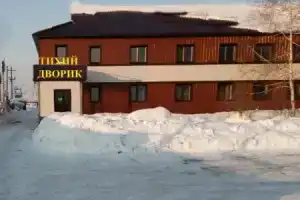 from 14 USDTihiy dvorik Hotel
 from 16 USDParnas Hotel
 High ratingfrom 30 USDOttenki Hotel
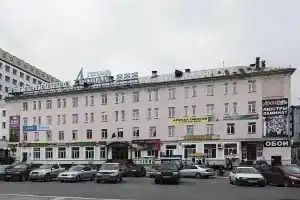 from 30 USDGorniy Altay Hotel
Apartments
 from 47 USD(c)Kvartirka Apartments
Hostels
 Like Hostel
 EtnO Hostel
 from 15 USDGorny Hostel
 High ratingfrom 18 USDArt Hostel