
Dagestan
Description
The Republic of Dagestan , also spelled Daghestan, is a federal subject (a republic) of Russia, located in the North Caucasus region. Its capital and largest city is Makhachkala, located at the center of Dagestan on the Caspian Sea.
With a population of 2,910,249, Dagestan is very ethnically diverse, and is Russia's most heterogeneous republic, with none of its several dozen ethnicities and subgroups forming a majority. Largest among these ethnicities are the Avar, Dargin, Kumyk, Lezgian, Laks, Azerbaijani, Tabasaran and Chechen. Ethnic Russians comprise about 3.6% of Dagestan's total population. Russian is the primary official language and the lingua franca among the ethnicities.
Dagestan has been a scene of Islamic insurgency, occasional outbreaks of separatism, and ethnic tension since the 1990s. According to International Crisis Group, the militant Islamist organization Shariat Jamaat is responsible for much of the violence. Much of the tension is rooted in an internal Islamic conflict between traditional Sufi groups advocating secular government and more recently introduced Salafist teachers preaching the implementation of Sharia in Dagestan.
Toponymy
The word Dagestan is of Turkic and Persian origin. Dağ means 'mountain' in Turkic and -stan is a Persian suffix meaning 'land'. Dagestan used to be called Kohestan (Kuhistan, "mountainous place") in Persian. When the Persian language gradually faded in those regions and the Turkic language prevailed, the Persian koh (kuh in contemporary Persian) was replaced with its Turkic equivalent dagh. Some areas of Dagestan were known as Albania, Avaria, and Tarkov at various times.
The name Dagestan referred to Dagestan Oblast during 1860 to 1920, corresponding to the southeastern part of the present-day Republic. The current borders were created with the establishment of the Dagestan Autonomous Soviet Socialist Republic in 1921, by inclusion of the eastern part of Terek Oblast, which is not "mountainous" at all but includes the Terek littoral at the southern end of the Caspian Depression.
Names for Dagestan
- Russian – Респу́блика Дагеста́н (Respublika Dagestan)
- Persian – جمهوری داغستان (Jomhuriye Dâghestân)
- Turkish – Dağıstan Cumhuriyeti
- Arabic – جمهورية داغستان (Jumhūrīyat Dāghistān)
- Armenian – Դաղստանի Հանրապետություն (Daghstani Hanrapetutyun)
- Azerbaijani – Дағыстан Республикасы / Dağıstan Respublikası
- Georgian – დაღესტნის რესპუბლიკა (Daghestnis Respublika)
- Avar – Дагъистаналъул Жумгьурият (Daɣistanałul Zhumhuriyat)
- Dargin – Дагъистанес Республика (Daɣistanes Respublika)
- Kumyk – Дагъыстан Республикасы (Dağıstan Respublikası)
- Lezgian – Республика Дагъустан (Suwarin xalq'pačaħ)
- Lak – Дагъустаннал Республика (Daɣustannal Respublika)
- Tabasaran – Дагъустан Республика (Daɣustan Respublika)
- Chechen – Деxастан пачхьалкъ (Dexastan Pačxalqʼ)
- Nogai – Дагестан Республикасы (Dağıstan Respublikası)
- Aghul – Республика Дагъустан (Respublika Daɣustan)
- Rutul – Республика Дагъустан (Respublika Daɣustan)
- Tsakhur – Республика Дагъустан (Respublika Daɣustan)
Geography
The republic is situated in the North Caucasus mountains. It is the southernmost part of Russia, and is bordered on its eastern side by the Caspian Sea.
- Area: 50,300 square km
- Borders:
- internal: Republic of Kalmykia (N), Chechen Republic (W), and Stavropol Krai (NW)
- international: Azerbaijan (S), Georgia (SW)
- water: Caspian Sea (E)
- Highest point: Mount Bazardüzü/Bazardyuzyu (4,466 m)
- Maximum north-south distance: 400 km
- Maximum east-west distance: 200 km
Rivers
There are over 1,800 rivers in the republic. Major rivers include:
- Sulak River
- Samur River
- Terek River
- Rubas River
- Avar Koisu
Lakes
Dagestan has about 405 km of coast line on the Caspian Sea.
Mountains
Most of the Republic is mountainous, with the Greater Caucasus Mountains covering the south. The highest point is the Bazardüzü/Bazardyuzyu peak at 4,470 meters (14,670 ft) on the border with Azerbaijan. The southernmost point of Russia is located about seven kilometers southwest of the peak.
Natural resources
Dagestan is rich in oil, natural gas, coal, and many other minerals.
History
In the first few centuries AD, Caucasian Albania (corresponding to modern Azerbaijan and southern Dagestan) became a vassal and eventually subordinate to the Parthian Empire. With the advent of the Sassanian Empire, it became a satrapy (province) within the vast domains of the empire. In later, antiquity it was a few times fought over by the Roman Empire and the Sassanid Persians and as the former sought to contest the latter's rule over the region, without success. Over the centuries, to a relatively large extent, the peoples within the Dagestan territory converted to Christianity alongside Zoroastrianism.
In the 5th century AD, the Samian peregrinations took place from Ukraine to this land, they returned to their natal country by 150 BC. The Sassanids gained the upper hand and constructed a strong citadel at Derbent, known henceforward as the Caspian Gates, while the northern part of Dagestan was overrun by the Huns, followed by the Caucasian Avars. During the Sassanian era, southern Dagestan became a bastion of Iranian culture and civilisation, with its centre at Derbent, and a policy of "Persianisation" can be traced over many centuries.
In 664, the Persians were succeeded in Derbent by the Arabs, who in the 8th century repeatedly clashed with the Khazars. Although the local population rose against the Arabs of Derbent in 905 and 913, Islam was eventually adopted in urban centers, such as Samandar and Kubachi (Zerechgeran), from where it steadily penetrated into the highlands. By the 15th century, Albanian Christianity had died away, leaving a 10th-century church at Datuna as the sole monument to its existence.
Kaitag embroidered textile, early 19th century, from southwest DagestanAs Mongolian authority gradually eroded, new centers of power emerged in Kaitagi and Tarki. In the early 16th century the Persians (under the Safavids) reconsolidated their rule over the region, which would, intermittently, last till the early 19th century. In the 16th and 17th centuries, legal traditions were codified and mountainous communities (djamaats) obtained a considerable degree of autonomy, while the Kumyk potentates (shamhals) asked for the Tsar's protection following the Russo-Persian War (1651–53), despite a Russian loss. The Russians intensified their hold in the region for the first time in the 18th century, when Peter the Great annexed maritime Dagestan from Safavid Persia in the course of the Russo-Persian War (1722–23). The territories however were returned to Persia in 1735 per the Treaty of Ganja.
Between 1730 and the early course of the 1740s, following his brother's murder in Dagestan, the new Iranian ruler and military genius Nader Shah led a lengthy campaign in swaths of Dagestan in order to fully conquer the region, which was met with considerable success, although he was eventually inflicted several decisive defeats by various of the ethnic groups of Dagestan, fording him to retreat with his army. From 1747 and on, the Iranian ruled part of Dagestan became administered through the Derbent Khanate, with its centre at Derbent. The Persian Expedition of 1796 resulted in the Russian capture of Derbent in 1796. However, the Russians were again forced to retreat from the entire Caucasus following internal governmental problems, making Iran recapture the territory again. In 1806 the khanate voluntarily submitted to Russian authority, but it was not until the aftermath of the Russo-Persian War (1804-1813) that Russian power over Dagestan was confirmed, and that Persia officially ceded the territory to Russia. In 1813, following Russia's victory in the war, Persia was forced to cede southern Dagestan with its principal city of Derbent, alongside other vast territories in the Caucasus to Russia, conform the Treaty of Gulistan.
The Russian administration, however, disappointed and embittered the highlanders. The institution of heavy taxation, coupled with the expropriation of estates and the construction of fortresses (including Makhachkala), electrified highlanders into rising under the aegis of the Muslim Imamate of Dagestan, led by Ghazi Mohammed (1828–32), Gamzat-bek (1832–34) and Shamil (1834–59). This Caucasian War raged until 1864.
Dagestan and Chechnya profited from the Russo-Turkish War (1877–78), to rise together against Imperial Russia for the last time (Chechnya rose again various times throughout the late 19th and 20th centuries). 21 December 1917 Ingushetia, Chechnya, and Dagestan declared independence from Russia and formed a single state "United Mountain Dwellers of the North Caucasus" (also known as Mountainous Republic of the Northern Caucasus) which was recognized by major world powers. The capital of the new state was moved to Temir-Khan-Shura (Dagestan) The first prime minister of the state was elected Tapa Chermoyev a Chechen prominent statesman, second prime minister was elected an Ingush statesman Vassan-Girey Dzhabagiev who also was the author of the Constitution of the land in 1917, in 1920 he was reelected for the third term. In 1921 Russians attack and occupy the country and forcefully join in to the Soviet state. Caucasian war for independence continues the government goes into exile. After the Bolshevik Revolution, Ottoman armies occupied Azerbaijan and Dagestan and the region became part of the short-lived Mountainous Republic of the Northern Caucasus. After more than three years of fighting White movement and local nationalists, the Bolsheviks achieved victory and the Dagestan Autonomous Soviet Socialist Republic was proclaimed on January 20, 1921. Nevertheless, Stalin's industrialization largely bypassed Dagestan and the economy stagnated, making the republic the poorest region in Russia.
In 1999, an Islamist group from Chechnya, led by Shamil Basayev and Ibn Al-Khattab, launched a military invasion of Dagestan, with the aim of creating an "independent Islamic State of Dagestan". The invaders were driven back by Russian military. As a retaliation, Russian forces subsequently reinvaded Chechnya later that year. Violence in the Republic exploded from the beginning of 2010 to the end of 2012. This upsurge led many people to claim that Dagestan was about to enter into a situation of sectarian civil war. Dagestan became the epicenter of violence in the North Caucasus with Makhachkala, Kaspiisk, Derbent, Khasavyurt, Kizlyar, Sergokala, Untsukul, and Tsumada all becoming hotbeds of militant activities.
Dagestani conflict
Since 2000, Dagestan has been the venue of a low-level guerrilla war, bleeding over from Chechnya; the fighting has claimed the lives of hundreds of federal servicemen and officials—mostly members of local police forces—as well as many Dagestani national rebels and civilians.
More recently, among other incidents:
- On May 15, 2008, two MVD officers were killed and one police officer heavily wounded during an ambush on their vehicle in Gubden.
- On September 8, 2008, Abdul Madzhid and several rebels were killed in an ambush by Russian special forces.
- On October 21, 2008, rebels ambushed a Russian military truck, killing five soldiers and wounding nine others.
- On January 6, 2010, a suicide bomber attempted to blow up a police station in Makhachkala, killing six officers and wounding 14 others.
- On March 31, 2010, 12 people were killed and 18 wounded by two suicide bombings in the town of Kizlyar outside the offices of the local interior ministry and the FSB security agency. The second bomb went off twenty minutes after the first, as a crowd had gathered. In the early hours of the next morning two people died as a bomb went off in their car, apparently prematurely, near the village of Toturbiikala.
- On July 15, 2010, Pastor Artur Suleimanov, a Muslim convert to Christianity, was murdered by a gunman. The pastor was killed in his car as he was leaving the Hosanna House of Prayer in Makhachkala, Dagestan in the North Caucasus region, according to a religious persecution watchdog group, Voice of the Martyrs, report. Pastor Suleimanov's church is one of the largest Protestant churches in Dagestan. Christians in the Russian Republic of Dagestan, which borders Chechnya, face harassment and intimidation from various groups. Pastor Suleimanov's life had been threatened on several previous occasions.
- On September 23, 2011, Magomed Murtuzaliyev, a high-level law enforcement official, was shot and killed by gunmen.
- On September 28, 2011, 7 civilians and a police officer were killed by a car bomb in the village of Hajjalmakhi.
- On May 4, 2012, 12 people were killed in two separate explosions on the outskirts of Makhachkala, capital of Russia's Dagestan region.
- On August 28, 2012, Sheikh Said Afandi, an influential 75-year-old Sufi cleric, was killed along with six others in a suicide bombing. Afandi, a Sufi Muslim, opposed violent jihad in Dagestan.
Towns

All accomodation types
Hotels
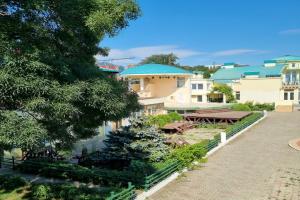 Hazar Hotel
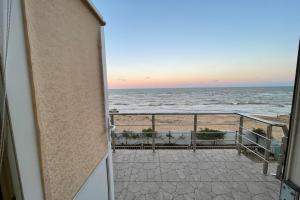 Grand Hotel
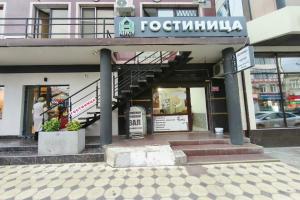 Nefrit Hotel
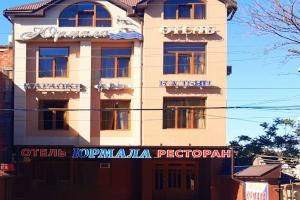 Yurmala Hotel
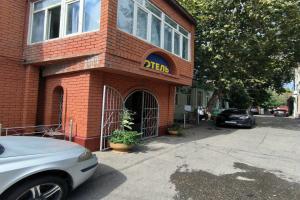 Ekzotika Hotel
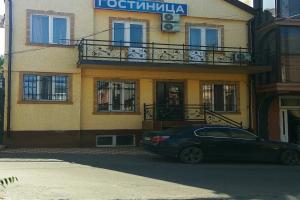 De-lux Hotel
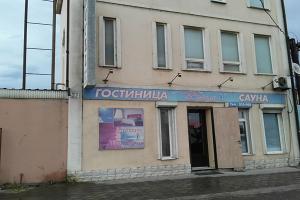 Briz Hotel
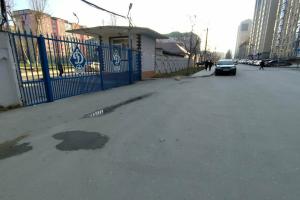 Primorskaya
 Akaro Hotel
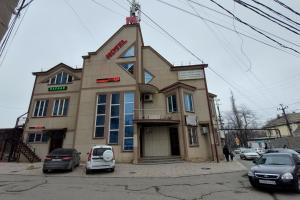 M-tsentr Hotel
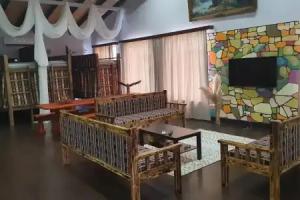 from 6 USDChalet
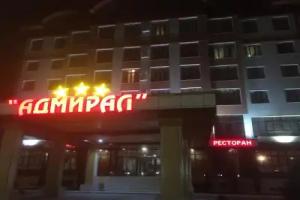 High ratingfrom 6 USDAdmiral Hotel
 from 9 USDFlet Hotel
Hostels
 from 9 USDPandur Hostel