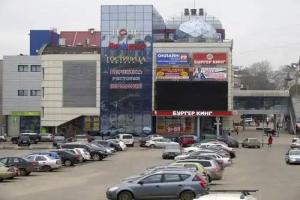
Kursk Region
Description
Kursk Oblast is a federal subject of Russia (an oblast). Its administrative center is the city of Kursk. Population: 1,127,081 (2010 Census).
Geography
The oblast occupies the southern slopes of the middle-Russian plateau, and its average elevation is from 177 to 225 meters (580–738 ft). The surface is hilly, and intersected by ravines. The central part of Kursk oblast is more elevated than the Seym Valley to the west. The Timsko-Shchigrinsky ridge contains the highest point in the oblast at 288 meters (945 ft) above the sea level. The low relief, gentler slopes, and mild winter make the area suitable for farming, and much of the forest has been cleared.
The chernozem soils cover around 70% of the oblast's territory; podsol soils cover 26%.
- Borders:
- internal: Bryansk Oblast (NW) (border line length: 120 km), Oryol Oblast (N, 325 km), Lipetsk Oblast (NE, 65 km), Voronezh Oblast (E, 145 km), Belgorod Oblast (S, 335 km)
- international: Sumy Oblast of Ukraine (W, 245 km)
- highest point: 288 m
Rivers
Kursk Oblast contributes to two major drainage areas—the Dnieper River and the Don River (78% and 22% respectively). There are 902 rivers and streams in the oblast, with their total length of approximately 8,000 km. Major rivers are the Seym and the Psyol.
Lakes
The inland waters of Kursk oblast consist of 145 artificial lakes and about 550 small ponds.
Natural resources
Kursk Oblast is one of the nation's major producers of iron ore. The area of Kursk Magnetic Anomaly has one of the richest iron ore deposits in the world. Also, rare-earth and base metals occur in commercial quantities in several locations. Refractory loam, mineral sands, and chalk are quarried and processed in the region. Oblast's sufficient reserves of artesian well water are proving useful for medical purposes.
Flora and fauna
Kursk Oblast is a part of the Eastern European forest-steppe. One-quarter of Kursk oblast was once heavily wooded. Hardwood timbers included oak, ash, and elm. Now forests cover only 10% of the oblast. Animals native to the area are numerous. Pike, bleak, and perch are abundant in local rivers. Otter and badger, as well as wild boar, red deer, and Roe Deer remain numerous in many parts of the area.
History
Although territory of Kursk Oblast had been populated since the end of the last Ice Age, information about the area was scanty until 1596 when the Kursk stronghold was built. A real growth of the area around Kursk began soon after that, with a large migration from Central Russia after famine in the beginning of the 17th century. Between 1708 and 1719, Kursk was a part of the newly created Kiev Governorate. From 1719 to 1727 it was a part of Belgorod province of Kiev Governorate. Later Kursk uyezd was a part of Belgorod Governorate. On May 23, 1779, Kursk Governorate was established. The latter subdivision existed until 1928, when the territory of Kursk Governorate became a part of Central Black Earth Oblast. As Central Chernozem Oblast was very large its administration was very difficult, on June 13, 1934 it was divided into two oblasts: Kursk Oblast and Voronezh Oblast. In the period between 1934 and 1954, oblasts' borders were frequently adjusted. However, the area and borders of the oblast have remained stable from 1954.
During World War II, the territory of Kursk Oblast was occupied by the German troops from fall of 1941 until summer of 1943. The Battle of Kursk, which was one of the major battles of World War II, took place in the region between July 5 and August 23, 1943.
Tourism
Kursk Oblast's natural attraction is the State Central-Chernozem national park, which offers great opportunity for hiking. Oblast's forests and others undeveloped areas are ideal for hunting, fishing, and camping. Traditional art and architecture are preserved in the town-museum of Rylsk and others historical towns of Kursk Oblast.
Towns


All accomodation types
Hotels
 Cherepaha Hotel
 High ratingKuvshin Hotel
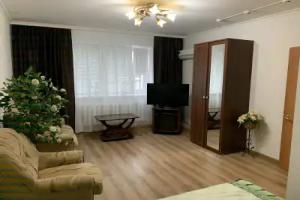 Vizit Hotel
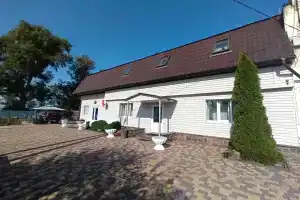 Vorontsovskiy dvorik Hotel
 Gostinichno-razvlekatelnyy kompleks Oazis Hotel
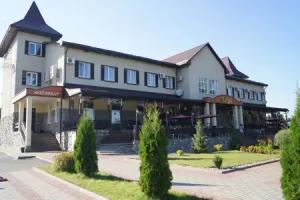 Hotel Prichal