Magadan Region
Description
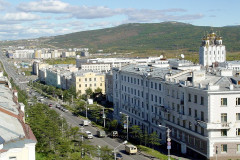
Magadan Oblast is a federal subject of Russia (an oblast) in the Far Eastern Federal District. It borders with Chukotka Autonomous Okrug in the north, Kamchatka Krai in the east, Khabarovsk Krai in the south, and with the Sakha Republic in the west. Its administrative center is the city of Magadan. Population: 156,996 (2010 Census).
History
Magadan Oblast was established on December 3, 1953 in what had popularly been known as Kolyma. As a result of considerable raw resources, especially gold, silver, tin, and tungsten deposits, mining activities and road building had been developed during the Stalin era in the 1930s and 1940s under the coordination of Dalstroy and its forced labor camps. Upon Stalin's death, Dalstroy was disbanded and the regional administration took over many of its former responsibilities.
From then on, paid labor replaced most of the convict-based manpower, attracted by the region's rapid economic expansion, especially the gold-mining interests.
The indigenous peoples of the region, including the Evens, Koryaks, Yupiks, Chukchis, Orochs, Chuvans and Itelmens, who had traditionally lived from fishing along the Sea of Okhotsk coast or from reindeer herding in the River Kolyma valley, suffered from the industrialization of the area but were able to rely on institutional support until 1987 when Perestroika started to cause many of the older structures to close. As a result, many of those who can no longer rely on traditional sources of income are now unemployed.
Chukotka Autonomous Okrug was formerly administratively subordinated to Magadan Oblast, but declared its separation in 1991.
Terrain and wildlife
Magadan Oblast consists principally of mountainous desert, tundra, and taiga. The southern part of the region is partly forested with birch, willow, mountain ash, larch and alder.
The animal species in the south include snow sheep, reindeer, moose and brown bears. There are also many varieties of birds, including ducks and seabirds. The Sea of Okhotsk has rich fishing grounds for pollock, herring, cod, flounder and salmon, as well as crabs and shellfish.
Present situation
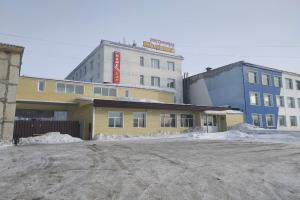
Unfortunately, despite these rich natural resources, the economy has not prospered as much as might have been expected in recent years. The severe climate and poorly developed infrastructure are partly to blame, but the difficult transition from Soviet times has led to the collapse of a number of companies with the result that many inhabitants have left the region. Recently, there do seem to have been renewed efforts to encourage foreign investment which could lead to improvements in the economy. Indeed, on a visit to Magadan in November 2005, President Vladimir Putin supported the extension of special tax advantages for the region in order to encourage gold exploitation.
While official unemployment in Magadan Region is around 12%, it is higher in remote areas where a large segment of the population is indigenous (16–18%). The actual unemployment figures must be much higher, because many people who live in remote areas have no opportunity to register as unemployed. In some places unemployment is probably almost 20%, although this is not officially recognized. While reindeer herding is ruined in many places, and fishing quotas are nearly impossible to get, the fraction of indigenous workers in industry and mining is almost invisible.