
Mordovia
Description
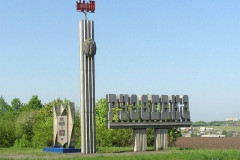
The Republic of Mordovia , also known in English as Mordvinia, is a federal subject of Russia (a republic). Its capital is the city of Saransk. As of the 2010 Census, the population of the republic was 834,755. Ethnic Russians (53.4%) and Mordvins (40,0%) account for the majority of the population.
Geography
The republic is located in the eastern part of the East European Plain of Russia. The western part of the republic is situated in the Oka Don Plain; its eastern and central parts in the Volga Elevation.
- Area: 26,200 square km
- Borders:
- internal: Nizhny Novgorod Oblast (N), Chuvash Republic (NE/E), Ulyanovsk Oblast (E/SE), Penza Oblast (S/SW), Ryazan Oblast (W/NW)
- Highest point: 324 meters (1,063 ft) (crossing of the road from Bolshoy Maresev with the roads to Mokshaley, Pyaigiley, and Picheury)
Rivers
There are 114 rivers in the republic. Major rivers include:
- Alatyr River (Erzya: Rator)
- Issa River
- Moksha River
- Satis River
- Sivin River
- Sura River
- Vad River
Lakes
There are approximately five hundred lakes in the republic.
Natural resources
Natural resources include peat, mineral waters, and others.
History
Early history
Earliest archaeological signs of human beings in the area of Mordovia are from the Neolithic era. Finno-Ugric Mordvins are mentioned in written sources in 6th century. Later, Mordvins were under the influence of both Volga Bulgaria and Kievan Rus. Mordvin princes sometimes raided Muroma and Volga Bulgaria, and often despoiled each other's holdings.
Mongol rule
The Mongols conquered vast areas of Eastern Europe in the 13th century. They established the khanate of the Golden Horde in 1241, subjugating the area of Mordovia. Mordvins fought against Mongols and later alongside Russians. Mordvin lands territorially belonged to Mukhsha Ulus. The Golden Horde disintegrated in 1430s, which resulted in some Mordvins becoming subjects of the Khanate of Kazan, whereas others were incorporated into Muscovy.
Russian rule
When Ivan IV of Russia annexed the Khanate of Kazan in 1552, the Mordvin lands were subjugated to the Russian tsars. The Mordvin elite rapidly adopted Russian language and customs, whereas 1821 saw the publication of the New Testament in Erzya to address the non-elite population. In rural areas, Mordvin culture was preserved. Russians started to convert Mordvins to Orthodox Christianity in the mid-18th century. Mordvins gave up their own shamanist religion only slowly, however, and many of shamanist features were preserved as parts of local culture though the population became nominally Christian. Translations of literature to Mordvin languages were mostly religious books. In the 18th century, the Latin alphabet was used in writing Mordvin, but from the mid-19th century, Cyrillic was used.
Part of the Soviet Union
During the Russian revolution and civil war, Mordovia was held by Bolsheviks from the beginning of the war. When the Bolsheviks prevailed in the war, Mordovia became a part of the Russian SFSR. In 1925, the Soviet government founded autonomous districts and village councils in the area of the Mordvins. During the Soviet era, two written languages were developed, one based on the Erzya dialect in 1922 and one on the Moksha dialect in 1923, both using Cyrillic script. The Mordovian Okrug was founded on July 16, 1928, and it was elevated to the status of an autonomous oblast on January 10, 1930. The autonomous oblast was transformed into the Mordovian Autonomous Socialist Soviet Republic on December 20, 1934.
Part of the Russian Federation
When the Soviet Union disintegrated, the Mordovian ASSR proclaimed itself the Republic of Mordovia in 1990, and remained a part of the Russian Federation. The Republic of Mordovia in its present form has existed since January 25, 1994.
Culture
There are many museums in the republic. The largest ones include the Mordovian Republican United Museum of Regional Studies and the Museum of Mordvinian Culture in Saransk.
The National Library of the Republic of Mordovia is the largest library in the republic.
The State Puppet Theater of the Republic of Mordovia, located in Saransk, is well known in Russia. Most of the plays played in this theater are Russian fairy-tales.
Erzya literature experienced a renaissance in the 1920s and 1930s.
House and Museum of F. Sychkov was opened March 11, 1970 at Kochelaevo, Kovylkinsky District after a reconstruction.
Mordovian cuisine is widespread in the country
Education and sport
The most important facilities of higher education include Mordovian State University and Mordovian State Pedagogical Institute in Saransk. Mordovia, along with neighbour Chuvashia and Penza Oblast, has given some of the best modern racewalking athletes, both women (Olga Kaniskina, Anisya Kirdyapkina, Elena Lashmanova, Olena Shumkina, Irina Stankina) or men (Sergey Bakulin, Valeriy Borchin, Stanislav Emelyanov, Vladimir Kanaykin, Sergey Kirdyapkin, Sergey Morozov, Denis Nizhegorodov, Roman Rasskazov), apart from Alexei Nemov (see more in the article History of Mordovian sport).
Language
The Mordvinic languages, alternatively Mordvin languages, or Mordvinian languages, (Russian: Мордовские языки, Mordovskiye yazyki, the official Russian term for the language pair) are a subgroup of the Uralic languages, comprising the closely related Erzya language and Moksha language. Previously considered a single "Mordvin language", it is now treated as a small language family. Due to differences in phonology, lexicon, and grammar, Erzya and Moksha are not mutually intelligible, so that the Russian language is often used for intergroup communications.
The two Mordvinic languages also have separate literary forms. The Erzya literary language was created in 1922 and the Mokshan in 1923.
The two Mordvinic languages are official languages of Mordovia alongside Russian.
Towns

Hotels
All accomodation types
Hotels
 KaZaN Hotel
 Rassvet Hotel
 Uyut Hotel
 High ratingHotel Makarovskaya
 Hotel Victoria at the sports school
 5 Hotel