
Sverdlovsk Region
Description
Sverdlovsk Oblast is a federal subject (an oblast) of Russia located in the Urals Federal District. Its administrative center is the city of Yekaterinburg, formerly known as Sverdlovsk. Its population is 4,297,747 (according to the 2010 Census).
Geography
Most of the oblast is spread over the eastern slopes of the Middle and North Urals and the Western Siberian Plain. Only in the southwest does the oblast stretch onto the western slopes of the Ural Mountains.
The highest mountains all rise in the North Urals, Konzhakovsky Kamen at 1,569 metres (5,148 ft) and Denezhkin Kamen at 1,492 metres (4,895 ft). The Middle Urals is mostly hilly country with no discernible peaks; the mean elevation is closer to 300 to 500 metres (980 to 1,640 ft) above the sea level. Principal rivers include the Tavda, the Tura, the Chusovaya, and the Ufa, the latter two being tributaries of the Kama.
Sverdlovsk Oblast borders with, clockwise from the west, Perm Krai, the Komi Republic, Khanty–Mansi Autonomous Okrug, Tyumen Oblast, Kurgan, and Chelyabinsk Oblasts, and the Republic of Bashkortostan.
The area is traversed by the northeasterly line of equal latitude and longitude.
Natural resources
Rich in natural resources, the oblast is especially famous for metals (iron, copper, gold, platinum), minerals (asbestos, gemstones, talcum), marble and coal. It is mostly here that the bulk of Russian industry was concentrated in the 18th and 19th centuries.
History
Medieval history and the Russian expansion
Before the first Russian colonists arrived to the region, it was populated by various Turkic and Ugric tribes. By the 16th century, when the Middle Urals were under influence of various Tatar khanates, the strongest local state was the Vogul Pelym principality.
The Russian conquest of the Khanate of Kazan in the 1550s paved the way further east, which was now free from Tatar depredations (see Yermak Timofeyevich). The first surviving Russian settlements in the area date back to the late 16th – early 17th centuries (Verkhoturye, 1598; Turinsk, 1600; Irbit, 1633; Alapayevsk, 1639). At that time, those small trading posts were governed under Siberian administration in Tobolsk. After the 1708 administrative reform, Verkhoturye, Pelym and Turinsk became a part of the new Siberian Governorate, in 1737 their territories were assigned to the Kazan Governorate.
Rise of the mining-metallurgical era
During the 18th century, rich resources of iron and coal made Ural an industrial heartland of Russia. After getting control over Ural mines, the Demidov family put the region in the forefront of Russian industrialization. Yekaterinburg, Nevyansk and Tagil ironworks, founded in the 1700s to 1720s, soon joined the ranks of the major producers in Europe. Throughout the 18th and 19th century those newly founded factory towns enjoyed a status of special mining-metallurgical districts allowed to have a certain rate of financial and proprietary autonomy. During the 1781 reform middle Ural finally got its own regional administration in the form of the Perm Governorate.
When in 1812 the Russian government legalized gold digging for its citizens, Middle Ural became a center of gold mining. Entrepreneurs of the Perm Governorate also started the gold rush in West Siberia, soon Yekaterinburgers began to dominate the Russian market of precious metals and gemstones.
After the emancipation reform of 1861, major Middle Uralian industries that were heavily dependent on serf labor entered decline, although it also allowed light industry to thrive. In 1878, Perm and Yekaterinburg were connected with a railroad, in 1888, railroads reached Tyumen, and ultimately, in 1897, Yekaterinburg joined the Trans-Siberian network. Emergence of railroad transportation helped to revitalize economy of Ural.
Soviet Ural
The Bolsheviks established their power in Yekaterinburg and Perm during the first days of the October Revolution of 1917. In early 1918 dethroned Nicholas II and his family were transferred under custody to Yekaterinburg. To prevent the rescue of the royal family by the approaching White Army forces, local Bolsheviks decided to execute it on their own on July 17, 1918. Ten days later Yekaterinburg was captured by the Czechoslovak troops of Sergei Wojciechowski, for the next year the Anti-bolshevik forces took control over the region. On 19 August 1918, Provisional Government of Ural was formed in Yekaterinburg by a coalition of liberal and democratic socialist parties, it was supposed to serve as a buffer between the Komuch and Provisional Siberian governments. After the Kolchak coup d'état in Omsk in November 1918, the Government of Ural was disbanded.
In July 1919, in the course of the Yekaterinburg offense, Yekaterinburg and the surrounding areas were recaptured by the Red Army forces under command of Vasily Shorin. On the July 15th, the Perm Governorate was split by the Soviets and the east, for the first time in history, became a separate region, the Yekateriburg Governorate.
In the 1930s many industrial enterprises were established and built with the help of forced labour. Local industry received another impetus during World War II, when important producing facilities were relocated here from the European part of Russia to safeguard them from the advancing Germans (for example, IMZ-Ural, Kamensk-Uralsky Metallurgical Works). In the postwar period much of the region was off-limits to foreigners and it was over Sverdlovsk that the American pilot Gary Powers was shot down on May 1, 1960, while on a reconnaissance mission.
Post-Soviet transition
In 1993, Governor Eduard Rossel responded to perceived economic inequality by attempting to create a "Urals Republic." Sverdlovsk led the "Urals Five" (Kurgan Oblast, Orenburg Oblast, Perm Krai, Chelyabinsk Oblast and Sverdlovsk) in a call for greater regional power. They argued that the oblasts deserved as much power as the ethnic homeland republics. The Urals Republic Constitution went into effect on October 27, 1993. Then Russian President Boris Yeltsin dissolved the Urals Republic and the Sverdlovsk Parliament 10 days later (on November 9).
Economy and transportation
Even though it could do with modernizing, the region's industries are quite diverse. 12% of Russia's iron and steel industry is still concentrated in Sverdlovsk oblast. Iron and copper are mined and processed here, the logging industry and wood-processing are important, too.
Yekaterinburg is a prominent road, rail and air hub in the Urals region. As the economic slump subsided, several European airlines started or resumed flights to the city. These include Lufthansa, British Airways, CSA, Turkish Airlines, Austrian Airlines and Finnair. Malév Hungarian Airlines used to be among those carriers but they had to drop their flights to SVX (IATA airport code for Sverdlovsk) after a few months.
The Alapaevsk narrow-gauge railway serves the communities around Alapayevsk.
Towns


All accomodation types
Hotels
 Home-Hotel
 Berloga Hotel
 Realist Hotel
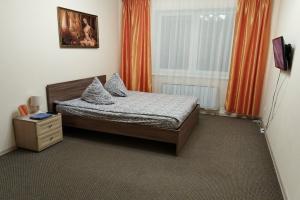 High ratingChetyre komnaty Hotel
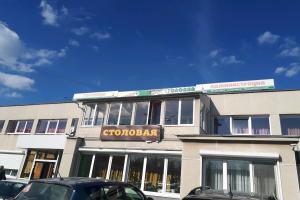 Uralmashevskaya Hotel
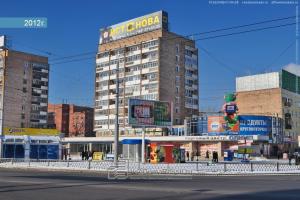 Stolitsa Hotel
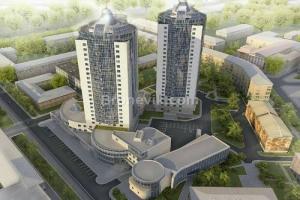 Sonata Hotel
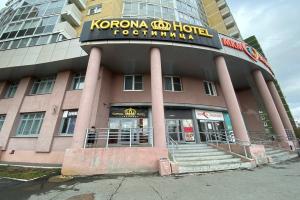 Korona Hotel
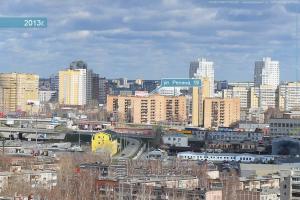 Stil Hotel
 Mat i ditya Hotel
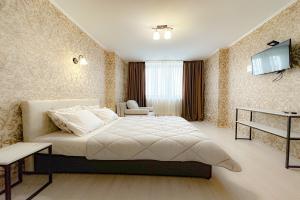 Kvartotel Rich
 Kurort Belokuriha Hotel
 Yamal Hotel
 Blyuz Hotel
Hostels
 Vdvoem Hostel
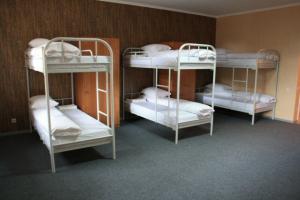 Ekb-Hostel