
Tula region
Description
Tula Oblast is a federal subject of Russia (an oblast) with its present borders formed on September 26, 1937. Its administrative center is the city of Tula. The oblast has an area of 25,700 square km and a population of 1,553,925 (2010).
History
People have inhabited Tula area since ancient times, as shown by discoveries of burial mounds (kurgans) and old settlements. These lands were occupied by the Slavic Vyatichi tribe, who cultivated the land, traded, and worked at crafts. This is confirmed by records in property registers, which mention an "ancient settlement" located at the place where the small Tulitsa River flows into the Upa River. In those long-ago times, its inhabitants may also have defended their settlements against raids by Tatars and nomadic tribes, but history is silent on this matter. The first mention of Tula is found in Nikon's chronicle in reference to the campaign of Prince Svyatoslav Olgovich of Chernigov. The chronicle notes that in 1146, the prince, who was heading for Ryazan, passed through a number of other settlements, including Tula, which at the time belonged to the Ryazan Principality.
Geography
Tula Oblast is located in Russia's Central Federal District and borders Moscow, Ryazan, Lipetsk, Oryol, and Kaluga Oblasts.
Rivers
Tula Oblast contains more than 1,600 rivers and streams. Major rivers include:
- Don River
- Oka River
- Upa River
Natural resources
The oblast is rich in iron ore, clay, limestone, and deposits of lignite (coal). The lignite deposit is part of the Moscow coal basin.
Climate
Tula Oblast has a moderate continental climate, with warm summers and cold winters. Average January temperature is −10 °C (14 °F) in north and −9 °C (16 °F) in south. Average July temperature is about +19 °C (66 °F) to +20 °C (68 °F). Annual precipitation is 470 millimetres (19 in) in southeast and 575 millimetres (22.6 in) in northwest.
Religion
According to a 2012 official survey 62% of the population of Tula Oblast adheres to the Russian Orthodox Church, 2% are unaffiliated generic Christians, 1% are Muslims. In addition, 19% of the population deems itself to be "spiritual but not religious", 13% is atheist, and 3% follows other religions or did not give an answer to the question.
Economy
Tula Oblast is part of the Central economic region. It is a prominent industrial center with metalworking, engineering, coalmining, and chemical industries. Major industrial cities include Novomoskovsk and Aleksin. Historical industries, such as firearm, samovar, and accordion manufacturing, still play an important role in the region.
The oblast also has a developed agricultural sector, which ranks 33rd in Russia in agricultural production. The sector includes farming grain (wheat and rye), potatoes, sugar beets, and vegetable growing, livestock raising, and dairying.
Culture
Leo Tolstoy's estate in Yasnaya Polyana
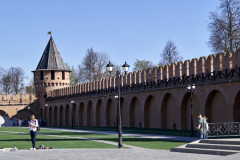
Tula Oblast has as many as 32 museums. Several are located in the administrative center of the oblast, the city of Tula, notably the Tula State Arms Museum, the Tula Kremlin, and the Tula Samovar Museum . Another important cultural tourist attractions is the home and country estate of Leo Tolstoy, Yasnaya Polyana, located 12 km outside of the city of Tula.
The oblast also has four professional theaters, a philharmonic orchestra, and a circus.
Towns


All accomodation types
Hotels
 Splav Hotel
 High ratingSherer Hotel
 Oazis Hotel
 YuliAnna Hotel
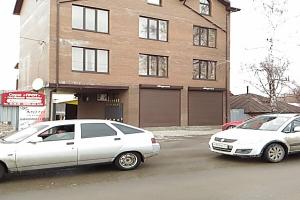 Grot Hotel
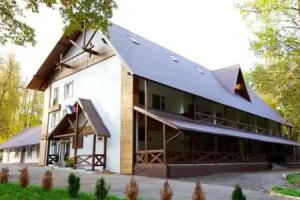 Park Hotel Green House
 Daikiri Hotel
Hostels
 Tulskiy Hostel on Demidovskaya
 High ratingfrom 4 USDHoroshaya sdelka Hostel
 from 48 USDChemodan Hostel
 from 5 USDHostel "Halva"
 from 21 USDHotel na Kosoy Gore
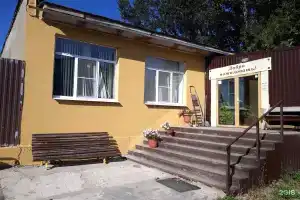 from 6 USDHostel Vybor
 from 7 USDTsentralny Park Hostel
 from 8 USDLike Hostel