
Udmurtia
Description
Udmurtia , or the Udmurt Republic (Russian: Удму́ртская Pеспу́блика, tr. Udmurtskaya Respublika; IPA: [ʊˈdmurtskəjə rʲɪsˈpublʲɪkə]; Udmurt: Удмурт Элькун) is a federal subject of Russia (a republic). Its capital is the city of Izhevsk. Population: 1,521,420 (2010 Census).
History
Part of a series on the History of Udmurtia- Volga Bulgaria
- Mongol invasion
- Golden Horde
- Khanate of Kazan
- Ar begs
- Muscovy
- Kazan Governorate
- Udmurt Autonomous Oblast
- Udmurt ASSR
- Udmurt Republic
- v
- t
- e
The Udmurt language is a member of the Permic branch of the Uralic family, which originated in the late Stone Age in the Ural region. Proto-Udmurts diverged from the Permic group at the end of the first millennium CE. Originally, the Proto-Udmurts lived in the middle Kama River region, then began to settle around the mouth of the Vyatka River.
On November 4, 1920, Votsk Autonomous Oblast was formed. On January 1, 1932, it was renamed Udmurt Autonomous Oblast, which was then reorganized into the Udmurt ASSR on December 28, 1934. During World War II, many industrial factories were evacuated from Ukraine and western borderlands to Udmurtia.
Geography
The republic is located in the eastern portion of the Eastern European Plain, between the Kama and Vyatka Rivers.
Borders Kind Polity or geographical feature Direction Internal Kirov Oblast SW/W/NW/N Perm Krai NE/E Republic of Bashkortostan SE Republic of Tatarstan S/SW Water Votkinsk Reservoir E- Highest point: 332 m (1,089 ft)
- Maximum North-South distance:320 km
- Maximum East-West distance: 200 km
Rivers
Major rivers include:
- Cheptsa River
- Izh River
- Kama River (navigable)
- Kilmez River
- Siva River
Natural resources
The republic's natural resources include oil, peat, mineral waters, and more. Oil reserves are estimated to be 820 million tons (as of 2002). Approximately 7–8 million tons are extracted annually.
Forests cover over 40% of the republic's territory. Most of the forests are coniferous.
Culture
In Udmurtia, there are eight professional theaters, a Philharmonic Society, and more than ten state and numerous public museums, which tell of the history and culture of Udmurtia and its people, like the Museum of History and Culture in Sarapul, or the Tchaikovsky Museum in Votkinsk. One of the oldest arms museums is located in Izhevsk, as well as the newer Kalashnikov Museum (dedicated in November 2004), which has recently become a general small-arms museum. Since the breakup of the Soviet Union a new, pan-Uralic cultural movement has evolved called "Ethnofuturism".
Towns

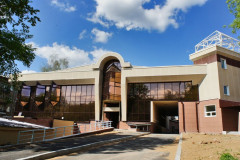

All accomodation types
Hotels
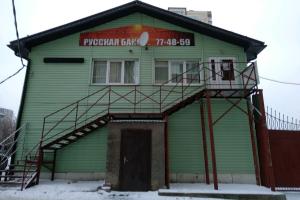 Russkaya banya Hotel
 Bannyy Ray Hotel
 Raduga Hotel Club
Hostels
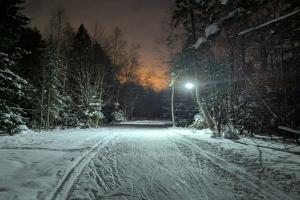 Iskra Hostel