
Seychelles
Hotels
Regions (3)
Towns (3)
Description
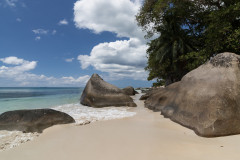
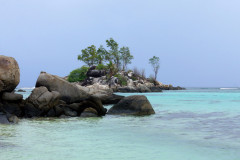
Seychelles is an archipelago and country in the Indian Ocean. The 115-island country, whose capital is Victoria, lies 1,500 kilometres (932 mi) east of mainland East Africa. Other nearby island countries and territories include Comoros, Mayotte (region of France), Madagascar, Réunion (region of France) and Mauritius to the south. With a population of roughly 92,000, it has the smallest population of any sovereign African country; however, it does have a larger population than the British overseas territory Saint Helena, Ascension and Tristan da Cunha.
Seychelles is a member of the African Union, the Southern African Development Community, the Commonwealth of Nations, and the United Nations. After proclamation of independence from the United Kingdom in 1976, Seychelles has developed from a largely agricultural society to a market-based diversified economy, with agriculture being supplanted by rapidly rising service and public sectors as well as tourism. Since 1976, per capita output has increased nearly sevenfold. In recent years, the government has encouraged foreign investment in order to upgrade these sectors. Today, Seychelles boasts the highest nominal per capita GDP in Africa, excluding the French regions. It is one of only a handful of countries in Africa with high Human Development Index. Despite the country's newfound economic prosperity, poverty remains widespread due to very high level of income inequality, one of the highest in the world, and low wealth distribution.
History
The Seychelles were uninhabited throughout most of recorded history. Some scholars assume that Austronesian seafarers and later Maldivian and Arab traders were the first to visit the uninhabited Seychelles. The earliest recorded sighting by Europeans took place in 1502 by the Portuguese Admiral Vasco da Gama, who passed through the Amirantes and named them after himself (islands of the Admiral). The earliest recorded landing was in January 1609, by the crew of the "Ascension" under Captain Alexander Sharpeigh during the fourth voyage of the British East India Company.
A transit point for trade between Africa and Asia, the islands were occasionally used by pirates until the French began to take control starting in 1756 when a Stone of Possession was laid by Captain Nicholas Morphey. The islands were named after Jean Moreau de Séchelles, Louis XV's Minister of Finance.
The British controlled the islands between 1794 and 1810. Jean Baptiste Quéau de Quincy, French administrator of Seychelles during the years of war with the United Kingdom, declined to resist when armed enemy warships arrived. Instead, he successfully negotiated the status of capitulation to Britain which gave the settlers a privileged position of neutrality.
Britain eventually assumed full control upon the surrender of Mauritius in 1810, formalised in 1814 at the Treaty of Paris. Seychelles became a crown colony separate from Mauritius in 1903. Elections were held in 1966 and 1970.
Independence (1976)
Independence was granted in 1976 as a republic within the Commonwealth. In the 1970s Seychelles was "the place to be seen, a playground for film stars and the international jet set". In 1977, a coup d'état by France Albert René ousted the first president of the republic, James Mancham. René discouraged over-dependence on tourism and declared that he wanted "to keep the Seychelles for the Seychellois".
The 1979 constitution declared a socialist one-party state, which lasted until 1991.
In the 1980s there were a series of coup attempts against President France-Albert René, some of which were supported by South Africa. In 1981, Mike Hoare led a team of 43 South African mercenaries masquerading as holidaying Rugby players in a coup attempt in what is known as the Seychelles affair. There was a gun battle at the airport, and most of the mercenaries later escaped in a hijacked Air India plane. The leader of this hijacking was the infamous German mercenary D. Clodo, a former member of the Rhodesian SAS. Clodo later stood trial in South Africa (where he was acquitted) as well as in his home country Germany for air-piracy.
In 1986, an attempted coup led by the Seychelles Minister of Defence, Ogilvy Berlouis, caused President René to request assistance from India. In Operation Flowers are Blooming, the Indian naval vessel INS Vindhyagiri arrived in Port Victoria to help avert the coup.
The first draft of a new constitution failed to receive the requisite 60% of voters in 1992, but an amended version was approved in 1993.
In January 2013, Seychelles declared a state of emergency; the tropical cyclone Felleng caused torrential rain, and flooding and landslides destroyed hundreds of houses.
Geography
An island nation, Seychelles is located in the Indian Ocean, northeast of Madagascar and about 1,600 km (994 mi) east of Kenya. The archipelago consists of 115 islands. The majority of the islands are uninhabited, with many dedicated as nature reserves.
The islands as per the Constitution are divided into groups as follows.
There are 45 granite-based islands known as the Granitic Seychelles. These are in descending order of size: Mahé, Praslin, Silhouette Island, La Digue, Curieuse, Felicite, Frégate, Ste-Anne, North, Cerf, Marianne, Grand Sœur, Thérèse, Aride, Conception, Petite Sœur, Cousin, Cousine, Long, Récif, Round (Praslin), Anonyme, Mamelles, Moyenne, Eden, Ile Soleil, Romainville, Île aux Vaches Marines, L'Islette, Beacon (Île Sèche), Cachée, Cocos, Round (Mahé), L'Ilot Frégate, Booby, Chauve Souris (Mahé), Chauve Souris (Praslin), Île La Fouche, Hodoul, L'Ilot, Rat, Souris, St. Pierre (Praslin), Zavé, Harrison Rocks (Grand Rocher).
There are two coral sand cays north of the granitics: Denis and Bird.
There are two coral islands south of the Granitics: Coëtivy and Platte.
There are 29 coral islands in the Amirantes group, west of the granitics: Desroches, Poivre Atoll (comprising three islands—Poivre, Florentin and South Island), Alphonse, D'Arros, St. Joseph Atoll (comprising 14 islands—St. Joseph Île aux Fouquets, Resource, Petit Carcassaye, Grand Carcassaye, Benjamin, Bancs Ferrari, Chiens, Pélicans, Vars, Île Paul, Banc de Sable, Banc aux Cocos and Île aux Poules), Marie Louise, Desnoeufs, African Banks (comprising two islands—African Banks and South Island), Rémire, St. François, Boudeuse, Etoile, Bijoutier.
There are 13 coral islands in the Farquhar Group, south-southwest of the Amirantes: Farquhar Atoll (comprising 10 islands—Bancs de Sable Déposés Île aux Goëlettes Lapins Île du Milieu North Manaha South Manaha Middle Manaha North Island and South Island), Providence Atoll (comprising two islands—Providence and Bancs Providence) and St Pierre.
There are 67 raised coral islands in the Aldabra Group, west of the Farquhar Group: Aldabra Atoll (comprising 46 islands—Grande Terre, Picard, Polymnie, Malabar, Île Michel, Île Esprit, Île aux Moustiques, Ilot Parc, Ilot Emile, Ilot Yangue, Ilot Magnan, Île Lanier, Champignon des Os, Euphrate, Grand Mentor, Grand Ilot, Gros Ilot Gionnet, Gros Ilot Sésame, Heron Rock, Hide Island, Île aux Aigrettes, Île aux Cèdres, Îles Chalands, Île Fangame, Île Héron, Île Michel, Île Squacco, Île Sylvestre, Île Verte, Ilot Déder, Ilot du Sud, Ilot du Milieu, Ilot du Nord, Ilot Dubois, Ilot Macoa, Ilot Marquoix, Ilots Niçois, Ilot Salade, Middle Row Island, Noddy Rock, North Row Island, Petit Mentor, Petit Mentor Endans, Petits Ilots, Pink Rock and Table Ronde), Assumption Island, Astove and Cosmoledo Atoll (comprising 19 islands—Menai, Île du Nord (West North), Île Nord-Est (East North), Île du Trou, Goëlettes, Grand Polyte, Petit Polyte, Grand Île (Wizard), Pagode, Île du Sud-Ouest (South), Île aux Moustiques, Île Baleine, Île aux Chauve-Souris, Île aux Macaques, Île aux Rats, Île du Nord-Ouest, Île Observation, Île Sud-Est and Ilot la Croix).
Wildlife
Environmental legislation is very strict, and every tourism project must undergo an environmental review and a lengthy process of consultations with the public and conservationists. Seychelles is a world leader in sustainable tourism. The end result of this sustainable development is an intact and stable natural environment, which attracts financially strong visitors (150,000 in 2007) rather than short-term mass tourism. Since 1993 a law guarantees the citizens the right to a clean environment and at the same time obliges them to protect this environment. The country holds a record for the highest percentage of land under natural conservation—nearly 50% of the total land area.
Like many fragile island ecosystems, Seychelles saw the loss of biodiversity when humans first settled in the area, including the disappearance of most of the giant tortoises from the granitic islands, the felling of coastal and mid-level forests, and the extinction of species such as the chestnut flanked white eye, the Seychelles parakeet, and the saltwater crocodile. However, extinctions were far fewer than on islands such as Mauritius or Hawaii, partly due to a shorter period of human occupation (since 1770). Seychelles today is known for success stories in protecting its flora and fauna. The rare Seychelles black parrot, the national bird of the country, is now protected.
The granitic islands of Seychelles are home to about 75 endemic plant species, with a further 25 or so species in the Aldabra group. Particularly well-known is the coco de mer, a species of palm that grows only on the islands of Praslin and neighbouring Curieuse. Sometimes nicknamed the "love nut" because the shape of its "double" coconut resembles buttocks, the coco-de-mer produces the world's heaviest seed. The jellyfish tree is to be found in only a few locations on Mahe. This strange and ancient plant in a genus of its own (Medusagyne) seems to reproduce only in cultivation and not in the wild. Other unique plant species include Wright's gardenia (Rothmannia annae) found only on Aride Island Special Reserve.
The freshwater crab genus Seychellum is endemic to the granitic Seychelles, and a further 26 species of crabs and five species of hermit crabs live on the islands.
The Aldabra giant tortoise now populates many of the islands of Seychelles; the Aldabra population is the largest remaining. These unique reptiles can be found even in captive herds. The granitic islands of Seychelles may support distinct species of Seychelles giant tortoises; the status of the different populations is currently unclear.
There are several unique species of orchid on the islands.
Seychelles hosts some of the largest seabird colonies in the world, notably on the outer islands of Aldabra and Cosmoledo. In granitic Seychelles the largest colonies are on Aride Island including the world's largest numbers of two species. Sooty terns also breed on the islands. Other birds include Cattle egrets (Bubulcus ibis) and Fairy terns (Gygis alba).
The marine life around the islands, especially the more remote coral islands, can be spectacular. More than 1,000 species of fish have been recorded.
Environmental issues
Since the use of spearguns and dynamite for fishing was banned through efforts of local conservationists in the 1960s, the wildlife is unafraid of snorkelers and divers. Coral bleaching in 1998 has damaged most reefs, but some reefs show healthy recovery (e.g., Silhouette Island).
Despite huge disparities across nations, Seychelles claims to have achieved nearly all of its Millennium Development Goals. 17 MDGS and 169 targets have been achieved. Environmental protection is becoming a cultural value.
Their government's Seychelles Climate Guide describes the nation's climate as rainy, with a dry season with an ocean economy in the ocean regions. The Southeast Trades is on the decline but still fairly strong. Reportedly, weather patterns there are becoming less predictable.
Population
Religion
According to the 2010 census, most Seychellois are Christians: 76.2% were Roman Catholic, pastorally served by the exempt Diocese of Port Victoria or Seychelles (immediately dependent on the Holy See); 10.6% were Protestant, (Anglican 6.1%, Pentecostal Assembly 1.5%, Seventh-Day Adventist 1.2%, other Protestant 1.6%).
Hinduism is practiced by 2.4%, and Islam by 1.6%. Other non-Christian faiths accounted for 1.1% of the population while a further 5.9% were non-religious or did not specify a religion.
Culture
Seychellois society is essentially matriarchal. Mothers tend to be dominant in the household, controlling most expenditures and looking after the interests of the children. Unwed mothers are the societal norm, and the law requires fathers to support their children. Men are important for their earning ability, but their domestic role is relatively peripheral.
Cuisine
Staple foods include fish, seafood and shellfish dishes, often accompanied with rice. Fish dishes are cooked in several ways, such as steamed, grilled, wrapped in banana leaves, baked, salted and smoked. Curry dishes with rice are also a significant aspect of the country's cuisine.
Additional food staples include coconut, breadfruit, mangoes and kordonnyen fish. Dishes are often garnished with fresh flowers.
- Chicken dishes, such as chicken curry and coconut milk.
- Coconut curry
- Dhal (lentils)
- Fish curry
- Saffron rice
- Fresh tropical fruits
- Ladob is eaten either as a savoury dish or as a dessert. The dessert version usually consists of ripe plantain and sweet potatoes (but may also include cassava, breadfruit or even corossol) boiled with coconut milk, sugar, nutmeg and vanilla in the form of a pod until the fruit is soft and the sauce is creamy. The savoury dish usually includes salted fish, cooked in a similar fashion to the dessert version, with plantain, cassava and breadfruit, but with salt used in place of sugar (and omitting vanilla).
- Shark chutney typically consists of boiled skinned shark, finely mashed, and cooked with squeezed bilimbi juice and lime. It is mixed with onion and spices, and the onion is fried and it is cooked in oil.
- Vegetables
Music
The music of Seychelles is diverse, a reflection of the fusion of cultures through its history. The folk music of the islands incorporates multiple influences in a syncretic fashion, including African rhythms, aesthetic and instrumentation—such as the zez and the bom (known in Brazil as berimbau), European contredanse, polka and mazurka, French folk and pop, sega from Mauritius and Réunion, taarab, soukous and other pan-African genres, and Polynesian, Indian and Arcadian music.
A form of percussion music called contombley is popular, as is Moutya, a fusion of native folk rhythms with Kenyan benga. Kontredans (based on European contredanse) is popular, especially in District and School competitions during the annual Festival Kreol (International Creole Festival). Moutya playing and dancing can often be seen at beach bazaars. Their main languages are Seychellois Creole of The French Language, French and English.
Security
Incarceration
In 2014, Seychelles had the highest incarceration rate in the world of 799 prisoners per 100,000 population, exceeding the United States rate by 15%. Note however, the country's actual population is less than 100,000; as of September 2014, Seychelles had 735 actual prisoners, only 6% of whom were female, incarcerated in three prisons. Note that the high prison population was not incarcerated citizens; rather 68% of the country's prisoners were Somalian hijackers.
Modern piracy
Seychelles is a key participant in the fight against Indian Ocean piracy mainly by Somalis. Former president James Michel said that piracy costs between $7–12 million a year to the international community: “The pirates cost 4% of the Seychelles GDP, including direct and indirect costs for the loss of boats, fishing, and tourism, and the indirect investment for the maritime security,” factors affecting local fishing – one of the country’s main national resources – which had a 46% loss in 2008–9. International contributions of patrol boats, planes or drones have been provided to help Seychelles combat sea piracy.