Archaeological Museum of Thessaloniki
Description
The Archaeological Museum of Thessaloniki is a museum in Thessaloniki, Central Macedonia, Greece. It holds and interprets artifacts from the Archaic, Classical, Hellenistic and Roman periods, mostly from the city of Thessaloniki but also from the region of Macedonia in general.
The building and the exhibitions
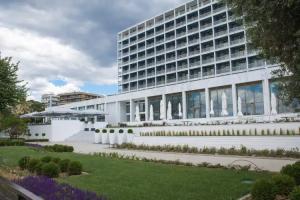
The museum is housed in a building designed by architect Patroklos Karantinos and is an example of the modern architectural trends of Greece. Built in 1962, the museum had a new wing added to it in 1980, in which the findings from Vergina were displayed, up until 1997. In 2001 and 2004, in the run-up to the 2004 Athens Olympics, the museum was extensively renovated and its permanent exhibits reorganized.
The central rooms hold exhibits from the archaeological excavations conducted in Thessaloniki and the broader area of Macedonia. The new wing hosts two exhibitions: The Gold of Macedon, with artefacts from the cemeteries of Sindos, Agia Paraskevi, Nea Filadelfia, Makrygialos, Derveni, Lete, Serres, and Evropos; and The Thessaloniki Area in Prehistory, with material from prehistoric settlements, dating from the Neolithic to the Early and Late Bronze Age.
At present, the collection of Archaic to Late Roman sculptures from Thessaloniki and Macedonia in general is displayed in the central section of the museum. They illustrate the history of Thessaloniki from prehistoric times to Late Antiquity. These rooms display architectural members from an Ionic temple of the 6th century BC, sculptures of all periods from Macedonia, exhibits from the excavations in the palace complex built by Galerius in the Thessaloniki city centre, a reconstruction of the façade of the Macedonian tomb in Agia Paraskevi, with genuine architectural members, and finds (mainly gold artefacts) of the Archaic and Classical periods from the Sindos cemetery. In all these rooms, certain important exhibits have been singled out and further information about them is given to help visitors appreciate the importance of each exhibit and of the area and the period from which it comes.
Apart from its permanent displays, the Archaeological Museum also hosts major temporary and thematic exhibitions. In the Manolis Andronikos Room, for instance, there is an exhibition titled The Coins of Macedonia from the 6th Century to 148 BC, with examples of coins that were circulating in Macedonia in that period. A showcase in the lobby of the museum displays some finds from the excavation of the Neolithic settlement at Makrygialos in Pieria, accompanied by information about the progress of the excavation.
In the new wing, the The Gold of Macedon exhibition includes finds from numerous excavations in Central Macedonia. Taking the history of gold as its central theme, it presents the culture of Macedonia from the 6th century BC to 148 BC, discussing the use of gold (jewellery, sartorial decoration, gilding of objects and vessels, coins), the technology of the manufacture of gold jewellery, and the techniques of gold mining. There are also numerous finds from cemeteries, and their role in burial customs is described.
The Thessaloniki in Prehistory exhibition aims to recreate a picture of the Thermaic Gulf littoral before the city of Thessaloniki was built. It presents the first excavations, which were carried out during the First World War by British and French troops, and finds from the most important prehistoric settlements in the area (Thermi, Vassilika, Stavroupoli, Oraiokastro, Assiros, Toumba, and Kastana) divided into three chronological groups (Neolithic, and Early and Late Bronze Age).
Discovery of possible original statue of Alexander
On 26 February 2010, Greek authorities arrested two men found in illegal possession of various antiquities, including a bronze statue of Alexander, which is possibly a work of Lysippos. If confirmed, this would make it the first original work of Lysippos ever discovered. The statue is currently being examined at the laboratory of the Archaeological Museum of Thessaloniki, which is expected to confirm or deny its authenticity.
Notable exhibits
- Derveni krater
- The statue of Harpocrates (end of 2nd century BC)
- The Head of Serapis (2nd century BC)
- Bronze helmet and gold mask (cemetery of Sindos, end of 6th century BC)
- Marble door (Macedonia tomb of Agia Paraskevi)
- Copy of "Unveiling" Aphrodite (421/420 BC)
- Gold medals (250–225 BC)
- Inlaid floors (mosaic)
- Gold diadems, gold disks and gold Medusa heads (350-325 BC)
- Derveni Papyrus (end of 5th century BC)