
Arkhangelsk region
Description
Arkhangelsk Oblast is a federal subject of Russia (an oblast). It includes the Arctic archipelagos of Franz Josef Land and Novaya Zemlya, as well as the Solovetsky Islands in the White Sea.
Arkhangelsk Oblast also has administrative jurisdiction over Nenets Autonomous Okrug (Nenetsia). Including Nenetsia, Arkhangelsk Oblast has an area of 587,400 km2. Its population (including Nenetsia) was 1,227,626 as of the 2010 Census.
The city of Arkhangelsk, with a population of 348,716 as of the 2010 Census, is the administrative center of the oblast. The second largest city is the nearby Severodvinsk, home to Sevmash, the main shipyard for the Russian Navy.
Among the oldest cities of the region are Kholmogory, Kargopol, and Solvychegodsk; there are a number of Russian Orthodox monasteries, including the Antoniev Siysky Monastery and the World Heritage Site of the Solovetsky Islands in the White Sea.
Plesetsk Cosmodrome is one of three spaceports in Russia (the other two are Kapustin Yar in Astrakhan Oblast and Yasny in Orenburg Oblast).
History
The area of Arkhangelsk Oblast has been settled by Finno-Ugric peoples since prehistoric times, and most of the toponyms in the region are in fact Finno-Ugric. It was subsequently colonized by the Novgorod Republic. Kargopol was first mentioned in the chronicles in 1146, Shenkursk was mentioned in 1315, and Solvychegodsk was founded in the 14th century. By the 13th century the Novgorodian merchants had already reached the White Sea, attracted to the area for fur trading. The Novgorodians penetrated the area using the waterways, and this is why most of the ancient (as well as the modern) settlements were located into the main river valleys. The main historical areas of the Arkhangelsk region were Poonezhye (Поонежье) along the Onega, the Dvina Land along the Northern Dvina, Pinezhye (Пинежье) along the Pinega, Mezen Lands along the Mezen, and Pomorye (Поморье) on the White Sea coast. The main waterway was the Northern Dvina, and Novgorod merchants used the Volga and its tributary, the Sheksna, along the Slavyanka River into Lake Nikolskoye, then the boats were taken by land to Lake Blagoveshchenskoye, from there downstream along the Porozovitsa River into Lake Kubenskoye and further to the Sukhona and the Northern Dvina. Portages from the Northern Dvina Basin led further to the Mezen and the Pechora.
After the fall of Novgorod in 1478, all these lands became a part of the Great Duchy of Moscow. Until 1703, the Northern Dvina served as the main export trading route of Muscovy. The local centers were Veliky Ustyug and Kholmogory, however, during the 17th century, Kholmogory lost its significance, and its role was gradually replaced by Arkhangelsk. In 1708, when the governorates were established by Tsar Peter the Great, Arkhangelsk became the seat of one of the seven governorates of the Russian Empire.
At the same time, Arkhangelsk lands were one of the most remote areas in Russia. This fact was attractive for monks fleeing the crowds. In 1436, Solovetsky Monastery was founded, and it quickly became one of the richest and most influential Russian monasteries. Other monasteries followed. For instance, Kozheozersky Monastery, founded in 1552, still remains one of the most remote Russian Orthodox monasteries. After the great schism in the Russian Orthodox Church in 1653, the area attracted many Old Believers, who were persecuted by the state. Most would later flee to even more remote locations such as Siberia.
In 1703, with the construction of St. Petersburg, Arkhangelsk, which lacked St. Petersburg's geographical proximity to Europe and the non-freezing harbour of Murmansk, lost its significance as the main trading harbour of the Russian Empire. However, in the early 20th century Arkhangelsk was an important starting point for Russian Arctic expeditions. For instance, in the 1830s Pyotr Pakhtusov sailed twice from Arkhangelsk to investigate and map Novaya Zemlya. In 1932 the Icebreaker Sibiryakov under the command of Vladimir Voronin, sailing from Arkhangelsk, crossed the Northern Sea Route in a single navigation.
In 1918 and 1919, Arkhangelsk Governorate became one of the most active battlegrounds of the Civil War in Russia. On August 2, 1918, Arkhangelsk was occupied by British and American troops, allied with the White movement. Administratively, they established Northern Oblast with the center in Arkhangelsk. This episode of the Civil War is known as North Russia Intervention. The troops advanced to the south, occupied the station of Obozerskaya in September 1918, and moving along the Northern Dvina and the Vaga Rivers. The southernmost points occupied by the allies were Shenkursk and Verkhnyaya Toyma. The allies were hoping that the Aleksandr Kolchak's forces would move in the direction of Kotlas, however, the White Army was unable to advance in this direction. In January 1919, after the Battle of Shenkursk, the allied forces were driven out of the Shenkursk area. Battles around the station of Plesetskaya followed. On February 20, 1920, the Red Army entered Arkhangelsk. By that time, all allied troops were already evacuated.
In the 1930s, the Soviets carried out the same experiments in economics as elsewhere in Soviet Union. The peasants and fishermen were forcibly organized into collective farms. These were heavily subsidized, which eventually brought the agriculture to the collapse in the 1990s, when the subsidies stopped. Arkhangelsk Oblast was and remains attractive as an area for exile, forcible resettlement, and prison camps. Actually, the first prison camp, Solovki Prison Camp, was created in 1920 on the premises of the former Solovetsky Monastery. Novaya Zemlya from the 1950s, when its population (mostly Nenets) was strongly recommended to leave, became the military ground for nuclear bomb testing.
Arkhangelsk Oblast proper was established in 1937. Before 1991, the high authority in the oblast was shared between three persons: The first secretary of the Arkhangelsk Oblast CPSU Committee (who in reality had the biggest authority), the chairman of the oblast Soviet (legislative power), and the Chairman of the oblast Executive Committee (executive power). In 1991 the CPSU lost all power. The head of the Oblast administration, and eventually the governor, came to be elected or appointed.
The economic crisis of 1990s, after the fall of the Soviet Union, struck Arkhangelsk Oblast very badly. Although there remains a strong demand for timber, the basis of the oblast's economy, the population of Archangeslk Oblast has steadily declined, especially in rural areas. Many villages either have been deserted, or are on the verge of disappearing.
Geography
Plesetsky District of Arkhangelsk Oblast
Arkhangelsk Oblast, which includes Nenets Autonomous Okrug, borders Kirov Oblast, Vologda Oblast, the Republic of Karelia, the Komi Republic, and the White, Pechora, Barents and Kara seas. Cape Fligely in Franz Josef Land (the northernmost point of Russia, Europe and Eurasia) and Cape Zhelaniya in Novaya Zemlya (the easternmost point of Europe) are both located within Arkhangelsk Oblast.
Arkhangelsk Oblast is located on the East European Plain, and most of it represents forested hilly landscape. The north-eastern part belongs to the Timan Ridge, a highland mostly situated east from the oblast. The Nenets Autonomous Okrug is essentially a flat tundra (Bolshezemelskaya Tundra) with several hill chains like Pay-Khoy Ridge. The Arctic islands including Novaya Zemlya and Franz Joseph Land are mountainous with glaciers and eternally snow-covered. This region has a genetically distinct population of polar bears associated with the Barents Sea area.
Almost all of the area of the Oblast belongs to the basin of the Arctic Ocean, with the major rivers being (west to east) Onega River, Northern Dvina River (with the major tributaries the Vychegda, the Vaga, and the Pinega), Kuloy River, Mezen River, and Pechora River (with the tributary of the Shapkina River). A minor area in the west of the Oblast, most notably the basin of the Ileksa River, drains into the Lake Onega and eventually to the Baltic Sea. A very minor area in Kargopolsky District in the south-west of the Oblast drains into the Kema River which belongs to the basin of the Caspian Sea. The area in the Onega River basin containing the biggest lakes in the oblast, such as Lake Lacha, Lake Kenozero, Lake Undozero, and Lake Kozhozero. The tundra of the Nenets Autonomous Okrug also contains a number of bigger lakes. The river basin of the Pinega is characteristic of the karst, with a number of caves in the region.
The White Sea coast within the Oblast is split into the Onega Bay (where the Onega is the major tributary), the Dvina Bay (the Northern Dvina), and the Mezen Bay (the Mezen and the Kuloy). Solovetsky Islands, as well as a number of smaller islands, are located in the Onega Bay. The Onega Bay and the Dvina Bay are separated by the Onega Peninsula. The Mezen Bay is separated from the main body of the White Sea by Morzhovets Island.
Almost all of the oblast is covered by taiga, the coniferous forest dominated by pine, spruce, and larch. Large areas in the middle of taiga are devoid of trees and covered by swamps. In the floodplains of the rivers, there are meadows.
A number of areas in Arkhangelsk Oblast have been designated as protected natural areas. These are subdivided into national parks, nature reserves (zapovedniks), and zakazniks of the federal level. The following protected areas have been designated,
- Kenozersky National Park;
- Russkaya Arktika National Park (which included previously established Franz Joseph Land Zakaznik);
- Vodlozersky National Park (shared with the Republic of Karelia);
- Pinezhsky Nature Reserve;
- Siysky Zakaznik.
Kenozersky and Vodlozersky National Parks have the status of UNESCO Biosphere Reserve. In addition, there are two protected areas in the Nenets Autonomous Okrug, adjacent to each other, Nenetsky Nature Reserve and Nenetsky Zakaznik. It was planned that one more national park, Onezhskoye Pomorye National Park, would be opened at the coast of the Onega Peninsula to protect pristine forests, however, the creation of the park was delayed and is not currently on the agenda.
Arts and culture
Architecture
Arkhangelsk Oblast is famous for its wooden buildings which include churches, chapels, peasant houses and farms, and city houses. The choice of wood as the construction material is natural for a region almost exclusively covered by taiga and still being one of the biggest timber producers. Some of these buildings date from the 17th century. Churches and chapels are considered particularly fine, and almost all of these constructed prior to 1920s have been declared the cultural heritage at the federal or local levels. More than 600 buildings (both of timber and stone) are protected on the federal level. An open-air ethnographic museum was open in the village of Malye Korely close to Arkhangelsk, with the purpose of preserving this heritage.
The most notable wooden churches are triple church ensembles, which consist of two churches (a bigger, not heated, church used in the summer, a smaller, heated church used in the winter, and a bell-tower). Not more than a dozen of these triple wooden ensembles survived, the best known being the one located in the Kizhi Pogost in the Republic of Karelia and is classified as World Heritage. Most of these ensembles are located in the Arkhangelsk Oblast, in particular, in the villages of Varzogory and Abramovskaya (Onezhsky District). Other notable wooden churches are located in Kargopolsky (Oshevenskoye, Krasnaya Lyaga, Saunino and others), Verkhnetoyemsky (Soyezerskaya Pustyn), Onezhsky, Primorsky, and Plesetsky (Porzhensky Pogost) districts. Despite being listed as cultural heritage, most of these buildings are neglested and regularly burn down. As a matter of fact, the majority of the churches considered as masterpieces has been lost. For instance, Verkhnemudyugsky Pogost in Onezhsky District, a triple church ensemble, burned down in 1997. A church and the bell-tower of the triple ensemble in Lyadiny (Kargopolsky District) burned down on May 6, 2013.
The oblast preserves some of the best stone architectural ensembles in Russia. The ensemble of the Solovetsky Monastery (founded 1436, the earliest surviving buildings stem from the 16th century) has been designated as the World Heritage. The town of Kargopol contains a number of white-stone churches, the earliest of which, the Cathedral of the Nativity of Christ, originates from 1552. The Presentation Church (1688–1712) in Solvychegodsk is an acclaimed baroque masterpiece and one of the five surviving Stroganov baroque churches.
Two of the towns in the oblast – Kargopol and Solvychegodsk – are classified as historical towns by the Ministry of Culture of Russian Federation, which implies certain restrictions on construction in their historical centers.
Arts
The monasteries facilitated the development of icon painting which existed in the area well until the 19th century. No single unified icon style arose, and icons produced in current Arkhangelsk and Vologda Oblasts are commonly known as Northern icon painting (Северные письма). Icons were produced in Solovetsky, Antoniev Siysky, Kozheozersky and other monasteries, as well as in the towns of Kholmogory and Solvychegodsk. Solvychegodsk icon painting was sponsored by Stroganovs and generated the Stroganov icon painting school, which in the end of the 17th century was principally active in Moscow.
The icon-painting techniques were transferred to the traditional wood painting known since the 17th century in the valleys of the Northern Dvina (Nizhnyaya Toyma, Borok, Puchuga, Permogorye), the Pinega, and the Mezen. It was used to decorate all kinds of wooden surfaces such as, for example, spinning distaffs or chests, and employed geometrical figures as well as images of plants, animals, and humans. The Arkhangelsk traditional wooden painting is special since the surface was prepared in a particular way before the painting started, similar to icons.
Despite the fact that several notable Russian artists including Vasily Vereshchagin traveled into the region in the 19th century, professional (non-icon) painting did not develop in Arkhangelsk until the 1890s. Alexander Borisov, Stepan Pisakhov, and Tyko Vylka, all of them landscape painters interested in Northern and Arctic landscapes, are considered as the founders of Arkhangelsk painting.
Various handicrafts were developed in the area. The most notable ones are the Kholmogory bone carving, existing since the 17th century, and Kargopol toys, moulded painted clay figures of people and animals.
Emergency handling
In 1998, the Arkhangelsk Regional Rescue Service was established by the governor. The responsibility of the Rescue Service is to handle emergency situations, such as forest fires.
Towns


All accomodation types
Hotels
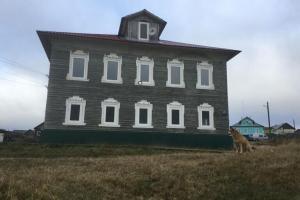 Alekseevskiy Dom Hotel
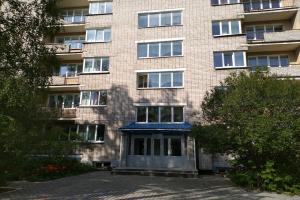 Arhangelskiy meditsinskiy kolledzh Hotel
Hostels
 Hostel Lomonosov
 Hostel Stadion Trud
 Kak Doma Hostel