Karachay-Cherkessia
Description
The Karachay-Cherkess Republic , also called Karachay-Cherkessia (Karachay-Circassia) (Карача́ево-Черке́сия, Karachayevo-Cherkesiya) and the Karachay-Circassian Republic, is a republic of Russia located in the North Caucasus area of southern European Russia.
Karachay-Cherkessia is a landlocked republic, bordered by Krasnodar Krai to the west and northwest, Stavropol Krai to the northeast, Abkhazia to the west, Kabardino-Balkaria to the southeast and Samegrelo-Zemo Svaneti to the south. It covers mostly mountainous terrain. The republic has several distinct ethnic groups, and the government recognizes five official languages. The population in 2010 was just under half a million people.
Geography
The republic is located at the slopes of northwestern Caucasus and borders with Krasnodar Krai in the north and east, the Kabardino-Balkar Republic in the east and southeast, Georgia (including Abkhazia) in the south and southwest, and with Stavropol Krai in the west and northwest. It stretches for 140 km from north to south and for 170 km from east to west. Mountains cover 80% of the republic's territory; Mount Elbrus, which at 5,642 meters (18,510 ft) is the highest peak in Caucasus, is located on the republic's border with Kabardino-Balkaria. The republic is rich in water resources. A total of 172 rivers flow through its territory, with the largest one being the Kuban, Bolshoy Zelenchuk, Maly Zelenchuk, Urup, and Laba. There are about 130 mountain lakes of glacial origin and an abundance of mineral springs. Climate is moderate, with short winters and long, warm, humid summers. The average January temperature is −3.2 °C (26.2 °F), and the average July temperature is +20.6 °C (69.1 °F). Average annual precipitation varies from 550 millimeters (22 in) in the plains to 2,500 millimeters (98 in) in the mountains. Natural resources include gold, coal, clays, and more.
History
The Karachay-Cherkess Autonomous Oblast was created 12 January 1922, in the early years of the Soviet Union. It was split into Karachay Autonomous Oblast and Cherkess National Okrug on 26 April 1926. The Cherkess National District was elevated to an autonomous oblast status on 30 April 1928.
In 1943, Karachay Autonomous Oblast was abolished, the Karachay people were accused of collaboration with the Nazis and subsequently deported to the Kazakh and Uzbek republics. Most of the Karchay territory was split between Stavropol Krai and the Georgian SSR. The remaining territory populated by the Cherkessians was known as Cherkess Autonomous Oblast until 9 January 1957 when it was re-established into Karachay-Cherkess Autonomous Oblast in its former borders due to the rehabilitation of the Karachay.
On July 3, 1991, the autonomous oblast was elevated to the status of the Autonomous Soviet Socialist Republic of Karachay-Cherkessia (under the jurisdiction of the Russian SFSR). With the dissolution of the Soviet Union, congresses of deputies of various nationalities proclaimed:
- Karachay Soviet Socialist Republic (Карачаевская Советская Социалистическая Республика; Къарачай Совет Социалист Республика) on 18 November 1990 (renamed Karachay Republic [Карачаевская Республика; Къарачай Республика] on October 17, 1991)
- Batalpashinsk Cossack Republic (Баталпашинская Казачья Республика) and Zelenchuk-Urup Cossack Soviet Socialist Republic (Зеленчукско-Урупская Казачья Советская Социалистическая Республика) on August 19, 1991 (united as the Upper Kuban Cossack Republic [Верхне-Кубанская Казачья Республика] on November 30, 1991)
- Cherkess Republic (Республика Черкесия) on October 27, 1991
- Abazin Republic (Абазинская Республика) in November 1991
After demonstrations in December 1991, the Supreme Soviet of Karachay-Cherkessia adopted an appeal for the recognition of the individual republics. Also in December 1991, the words "Autonomous Soviet Socialist" were dropped from the official name of Karachay-Cherkessia.
In January 1992, Russian President Boris Yeltsin was prepared to accept the division of Karachay-Cherkessia and introduced draft laws to the Supreme Soviet of Russia for the reconstitution of the Karachai Autonomous Oblast and Cherkess Autonomous Oblast within the Russian Federation. A commission was established Supreme Education Council three autonomous regions - Karachai, Cherkess and Batalpashinsk.
On March 28, 1992, a referendum was held in which, according to official results, the majority of the population of Karachay-Cherkessia voted against splitting the republic and, on December 9, 1992, the republic was recognized as the Karachay-Cherkess Republic.
Science
The republic is the home of what was the largest telescope of the world from 1975 until 1993 (the BTA-6), a very large radio telescope (600 meters in diameter, RATAN-600), and the Special Astrophysical Observatory of the Russian Academy of Science dedicated to the study of astronomy. These facilities are located on the bank of the Zelenchuk River, between the villages of Zelenchukskaya and Arkhyz.
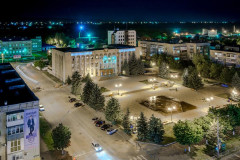
Towns
All accomodation types
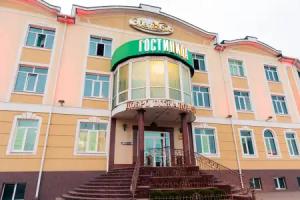
Hotels
 Neptun Hotel
 Kuban Hotel
 Hotel RUM
 Cerkessk Hotel
 from 19 USDOliviya Hotel
 from 36 USDHotel Imperial
 High ratingfrom 37 USDGUSTO Hotel
 from 39 USDEvropa Hotel
 Staryi Zamok
 from 50 USDPark Hotel
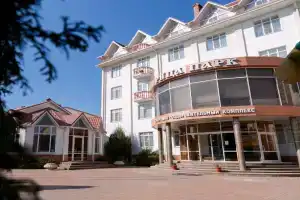 from 47 USDRitsa Park Hotel
 from 58 USDHotel Royal hall