
Khabarovsk Region
Description
Khabarovsk Krai is a federal subject of Russia (a krai), located in the Russian Far East. It lies mostly in the basin of the lower Amur River, but also occupies a vast mountainous area along the coastline of the Sea of Okhotsk, an arm of the Pacific Ocean. The administrative center of the krai is the city of Khabarovsk. Population: 1,343,869 (2010 Census).
The indigenous people of the area are various Tungusic peoples (Evenks, Negidals, Ulchs, Nanai, Oroch, Udege) and Amur Nivkhs.
Geography
Khabarovsk Krai shares its borders with Magadan Oblast in the north, with the Sakha Republic and Amur Oblast in the west, with the Jewish Autonomous Oblast, China, and Primorsky Krai in the south, and is limited by the Sea of Okhotsk in the east. In terms of area, it is the fourth-largest federal subject within Russia.
Taiga and tundra in the north, swampy forest in the central depression, and deciduous forest in the south are the natural vegetation in the area.
History
According to various Chinese and Korean records, the southern part of Khabarovsk Krai was originally occupied by one of the five semi-nomadic Shiwei, the Bo Shiwei tribes and the Black Water Mohe tribes living respectively on the west and the east of the Bureinsky and the Lesser Khingan ranges.
In 1643, Vassili Poyarkov's boats descended the Amur, returning to Yakutsk by the Sea of Okhotsk and the Aldan River, and in 1649–1650 Yerofey Khabarov occupied the banks of the Amur. The resistance of the Chinese, however, obliged the Cossacks to quit their forts, and by the Treaty of Nerchinsk (1689) Russia abandoned her advance into the basin of the river.
Although the Russians were thus deprived of the right to navigate the Amur River, the territorial claim over the lower courses of the river was not settled in the Treaty of Nerchinsk of 1689. The area between Uda River and Greater Khingan mountain range (i.e. most of Lower Amuria) was left undemarcated and the Sino-Russian border was allowed to fluctuate.
Later in the nineteenth century, Nikolay Muravyov would conduct an aggressive policy with China by claiming that the lower reaches of the Amur River belonged to Russia. In 1852, a Russian military expedition under Muravyov explored the Amur, and by 1857 a chain of Russian Cossacks and peasants had been settled along the whole course of the river. In 1858, in the Treaty of Aigun, China recognized the Amur River downstream as far as the Ussuri River as the boundary between Russia and the Qing Empire, and granted Russia free access to the Pacific Ocean. The Sino-Russian border was later further delineated in the Treaty of Peking of 1860 when the Ussuri Territory (the Maritime Territory), which was previously a joint possession, became Russian.
Modern Khabarovsk Krai was established on October 20, 1938, when the Far Eastern Krai was split into the Khabarovsk and Primorsky Krais.
Towns


All accomodation types
Hotels
 Zvezdnaya noch Hotel
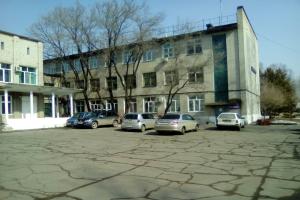 HF FGBOU SPbGU Ga Hotel
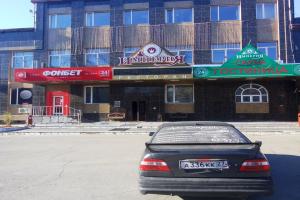 Imperiya Hotel
 Yunkhe Hotel
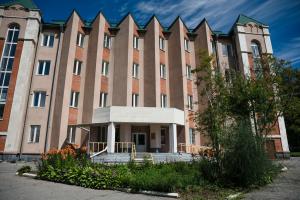 Tsirka Hotel
 Voskhod Hotel
 from 11 USDHotel Abrikol/Germes 27
 from 11 USDPyatyj Element Hotel
Hostels
 Hostel Raduga
 Hostel Sova
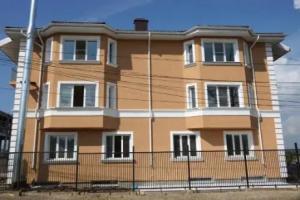 Hostel Na Kostromskoy
 from 5 USDVizit Hostel
 from 6 USDHostel B&B Na Stantsionnoy
 from 7 USDHostel Nochleg
 from 8 USDZhili-Byili Hostel
 from 9 USDROMAShKA Hostel
 from 10 USDNa Karla Marksa Hostel
 from 10 USD№2 Hostel
 from 10 USDHostel Apelsin
 from 12 USDHostel
 from 12 USDHostel Sfera
 Yut Hostel
 from 12 USDZhilalyans Hostel
 Mini Hotel Astoria
 from 16 USDHostel Fabrika
 Offerfrom 15 USDHostel U Vokzala Brandson
 High ratingfrom 17 USDHostel Kayut-Kompaniya
 from 16 USDHostel Kapsulny Kapitan Kuk
 from 15 USDOrion Hostel