
Murmansk Region
Description
Murmansk Oblast is a federal subject of Russia (an oblast), located in the northwestern part of Russia. Its administrative center is the city of Murmansk. As of the 2010 Census, its population was 795,409.
Geography
Geographically, Murmansk Oblast is located mainly on the Kola Peninsula almost completely north of the Arctic Circle and is a part of the larger Lapland region that spans over four countries. The oblast borders with the Republic of Karelia in Russia in the south, Lapland Region in Finland in the west, Finnmark County in Norway in the northwest, and is washed by the Barents Sea in the north and the White Sea in the south and east. Arkhangelsk Oblast of Russia lies across the White Sea.
Much of the oblast's relief is hilly, with the Khibiny and Lovozero ranges rising as high as 1,200 meters (3,900 ft) above sea level and stretching from west to east. The north of the oblast is mostly covered by tundra; forest tundra prevails further south, while the southern regions are in the taiga zone. There are over 100,000 lakes and 18,000 rivers in the oblast.
The climate is harsh and unstable, due to the proximity of the Gulf Stream on one side and Arctic cold fronts on the other. Sharp temperature changes, high winds, and abundant precipitation are common throughout the year, with the heating season lasting for ten straight months. However, the waters of the Murman Coast in the south remain warm enough to remain ice-free even in winter.
History
The Saami, now a very small minority, are the indigenous people of the region. However, Russians started to explore the shores of the White Sea as early as the 12th century. Despite these early settlements, the area remained undeveloped for centuries, with the city of Murmansk being founded only in 1916.
The oblast was established on May 28, 1938 from Murmansk Okrug of Leningrad Oblast (comprising the city of Murmansk, Kirovsky, Kolsky, Lovozersky, Polyarny, Saamsky, Teribersky, and Tersky Districts) and Kandalakshsky District of the Karelian ASSR.
The area of Pechengsky District (Petsamo in Finnish), which was ceded to Finland by the 1920 Treaty of Tartu, giving this country access to the Barents Sea, was recaptured by the Soviet Union in 1940. After the Paris Peace Treaties of 1947, the local Saami population was given the choice either of staying in Soviet Russia or resettling in Finland. Most of them chose the second option.
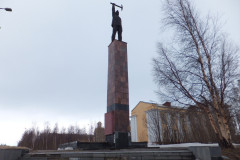
Towns


All accomodation types
Hotels
 Kolorit Hotel
 Belyy Medved Hotel
Hostels
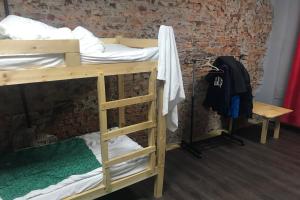 Season's Hostel
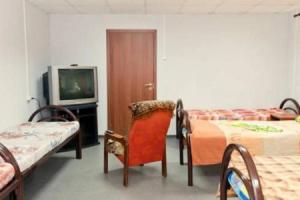 from 4 USDEvroEkonom Hostel
 from 6 USDHostel Prichal