
Zabaykalsky Krai
Description
Zabaykalsky Krai is a federal subject of Russia (a krai) that was created on March 1, 2008 as a result of a merger of Chita Oblast and Agin-Buryat Autonomous Okrug, after a referendum held on the issue on March 11, 2007. The administrative center of the krai is located in the city of Chita. Population: 1,107,107 (2010 Census).
Geography
The krai is located within the historical region of Transbaikalia and has extensive international borders with China (998 km) and Mongolia (868 km); its internal borders are with Irkutsk and Amur Oblasts, as well as with the Republic of Buryatia and the Sakha Republic.
History
The first traces of human presence in the area dates to 150-35 thousand years ago. Early evidence was found on the surface of ancient river gravels Gyrshelunki (tributary of the Khilok River) near the city of Chita, near Ust-Menza on the Chikoy River.
Slab Grave cultural monuments are found in northern, central and eastern Mongolia, Inner Mongolia, north-western China, southern, central-eastern and southern Baikal territory. The people of Slab Grave culture were Mongols.
The Xiongnu Empire (209 BC-93 CE) governed the territory of modern Zabaykalsky Krai. The identity of the ethnic core of Xiongnu has been a subject of varied hypotheses and proposals by scholars include Mongolic and Turkic.
The Merkit-Mongols was one of the five major tribal confederations (khanlig) in the Mongolian plateau in the 12th century. The Merkits lived in the basins of the Selenge River and lower Orkhon River. Jalayir is one of the Darligin Mongol tribes according to Rashid-al-Din Hamadani's Jami' al-tawarikh and they lived along the Shilka and Onon Rivers. The Tayichiud-Mongols was one of the three core tribes in the Khamag Mongol Khanate of Mongolia during the 12th century and they lived in the southern part of the krai. Zabaykalsky Krai and Mongolian Khentii Province were core region of the Khamag Mongol Khanate.
In the 17th century, some or all of Mongolic Daurs lived along the Shilka, upper Amur, and on the Bureya River. They thus gave their name to the region of Dauria, also called Transbaikal, now the area of Russia east of Lake Baikal. The territory of modern Zabaykalsky Krai has been ruled by the Mongolic Xianbei state (93-234), Rouran Khaganate (330-555), Mongol Empire (1206-1368) and Northern Yuan (1368-1691).
Preliminary work on the unification of the Chita Oblast and Agin-Buryat Autonomous Okrug was started at the level of regional authorities in April 2006. The governor of Chita Oblast Ravil Geniatulin, mayor of the Agin-Buryat Autonomous Okrug Bair Zhamsuyev, head of the regional parliament Anatoly Romanov, and Dashi Dugarov sent a letter to the President of Russia, Vladimir Putin, and on November 17, 2006, he supported the initiative.
Referendum on unification took place on March 11, 2007. In Chita Oblast, "yes" was the predominant answer to the following question:
"Do you agree that the Chita Oblast and Agin-Buryat Autonomous Okrug merged into a new entity of the Russian Federation - Zabaykalsky Krai, which included Agin-Buryat Autonomous Okrug will be an administrative-territorial unit with special status, defined by the charter of the province in accordance with the legislation of the Russian Federation?"
In Chita Oblast, 90.29% (535,045 voters) of the voters voted for the union versus - 8.89% (52,698 voters) who voted against it. 72.82% of the electorate participated. In the Aga Buryat Autonomous Region 94% (38,814 voters) voted for the union versus - 5.16% (2129 voters) 82.95% of the electorate voters participated.
On July 23, 2007, Russian President Vladimir Putin signed a federal constitutional law "On Establishment in the Russian Federation of a new subject of the Russian Federation in the merger of Chita Oblast and Agin-Buryat Autonomous Okrug", adopted by the State Duma on July 5, 2007. and approved by the Federation Council on July 11, 2007.
Religion
As of a 2012 official survey 24.6% of the population of Zabaykalsky Krai adheres to the Russian Orthodox Church, 6.25% to Buddhism, 6% declares to be generically unaffiliated Christian (excluding Protestant churches), 2% is an Orthodox Christian believer without belonging to any church or being member of other (non-Russian) Orthodox churches. In addition, 28% of the population declares to be "spiritual but not religious", 17% to be atheist, and 16.15% follows other religion or did not give an answer to the survey.
Towns

All accomodation types
Hotels
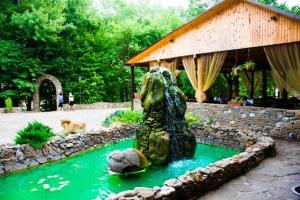 Staryy Zamok Hotel
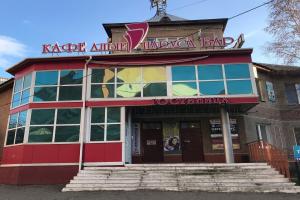 Alye parusa Hotel
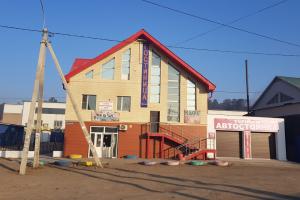 Solnechnaya Hotel
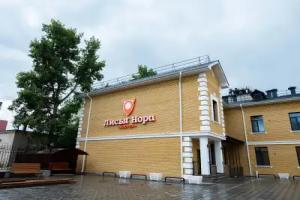 High ratingfrom 14 USDLisya Nora Hostel
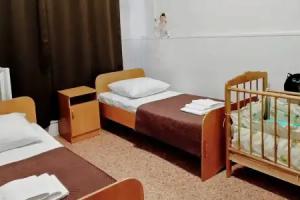 from 16 USDSmart Hotel KDO

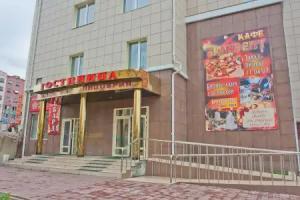
Hostels
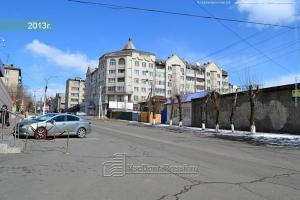 Mini-otel Hostel
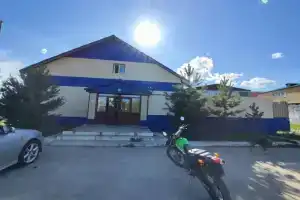 Hostel
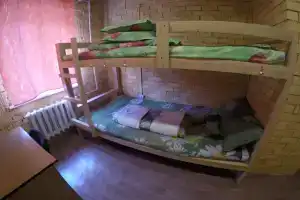 Privet! Hostel
 from 8 USDMoy gorod Hostel
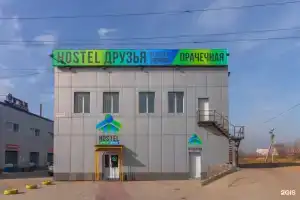 from 8 USDHostel Friends
 from 8 USDDekabrist V Geofizicheskom Hostel
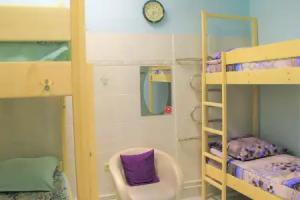 from 9 USDLIKE ROOM Hostels
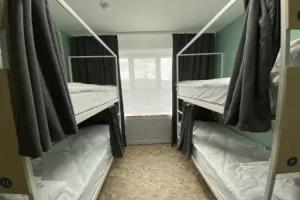 High ratingfrom 15 USDDekabrist Hostel
 from 14 USDUtro Hostel
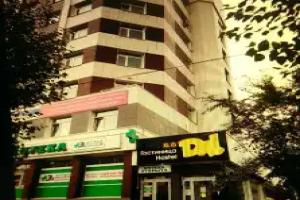 from 17 USDHotel Hostel Da