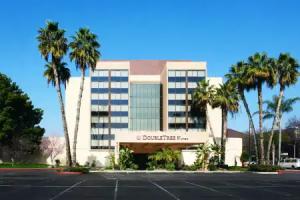
Fresno

Description

Fresno , the county seat of Fresno County, is a city in the U.S. state of California. As of 2016, the city's population was 520,000, making it the fifth-largest city in California, the largest inland city in California and the 34th-largest in the nation. Fresno is in the center of the San Joaquin Valley and is the largest city in the Central Valley, which contains the San Joaquin Valley. It is approximately 220 miles (350 km) northwest of Los Angeles, 170 miles (270 km) south of the state capital, Sacramento, or 185 miles (300 km) south of San Francisco. The name Fresno means "ash tree" in Spanish, and an ash leaf is featured on the city's flag.

History

The original inhabitants of the San Joaquin Valley region were the Yokuts people, who engaged in trading with other Californian tribes of Native Americans including coastal peoples such as the Chumash of the Central California coast, with whom they are thought to have traded plant and animal products.

The county of Fresno was formed in 1856 after the California Gold Rush. It was named for the abundant ash trees lining the San Joaquin River. The county was much larger than it is today as part of Tulare County, comprising its current area plus all of what became Madera County and parts of what are now San Benito, Kings, Inyo, and Mono counties.

Millerton, then on the banks of the free-flowing San Joaquin River and close to Fort Miller, became the county seat after becoming a focal point for settlers. Other early county settlements included Firebaugh's Ferry, Scottsburg and Elkhorn Springs.

The San Joaquin River flooded on December 24, 1867, inundating Millerton. Some residents rebuilt, others moved. Flooding also destroyed the town of Scottsburg on the nearby Kings River that winter. Rebuilt on higher ground, Scottsburg was renamed Centerville.

In 1867, Anthony "McQeen" Easterby purchased land bounded by the present Chestnut, Belmont, Clovis and California avenues, that today is called the Sunnyside district. Unable to grow wheat for lack of water, he hired sheep man Moses J. Church in 1871 to create an irrigation system. Building new canals and purchasing existing ditches, Church then formed the Fresno Canal and Irrigation Company, a predecessor of the Fresno Irrigation District.

In 1872, the Central Pacific Railroad established a station near Easterby's—by now a hugely productive wheat farm—for its new Southern Pacific line. Soon there was a store around the station and the store grew the town of Fresno Station, later called Fresno. Many Millerton residents, drawn by the convenience of the railroad and worried about flooding, moved to the new community. Fresno became an incorporated city in 1885. By 1931 the Fresno Traction Company operated 47 streetcars over 49 miles of track.

In 1877, William Helm made Fresno his home with a five-acre tract of land at the corner of Fresno and R streets. Helm was the largest individual sheep grower in Fresno County. In carrying his wool to market at Stockton, he used three wagons, each drawn by ten mules, and spent twelve days in making the round trip.

Two years after the station was established, county residents voted to move the county seat from Millerton to Fresno. When the Friant Dam was completed in 1944, the site of Millerton became inundated by the waters of Millerton Lake. In extreme droughts, when the reservoir shrinks, ruins of the original county seat can still be observed.

In the nineteenth century, with so much wooden construction and in the absence of sophisticated firefighting resources, fires often ravaged American frontier towns. The greatest of Fresno's early-day fires, in 1882, destroyed an entire block of the city. Another devastating blaze struck in 1883.

In 1909, Fresno's first and oldest synagogue, Temple Beth Israel, was founded.

The population of Fresno proper soared in the second half of the 20th century. It entered the ranks of the 100 largest United States cities in 1960 census with a population of 134,000. In the 1990 census it moved up to 47th place with 354,000, and in the census of 2000 it achieved 37th place with 428,000, a 21 percent increase during the preceding decade.

The Fresno Municipal Sanitary Landfill was the first modern landfill in the United States, and incorporated several important innovations to waste disposal, including trenching, compacting, and the daily covering of trash with dirt. It was opened in 1937 and closed in 1987. Today, it has the unusual distinction of being a National Historic Landmark as well as a Superfund site.

Before World War II, Fresno had many ethnic neighborhoods, including Little Armenia, German Town, Little Italy, and Chinatown. In 1940, the Census Bureau reported Fresno's population as 94.0% white, 3.3% black and 2.7% Asian. (Incongruously, Chinatown was primarily a Japanese neighborhood and today Japanese-American businesses still remain). During 1942, Pinedale, in what is now North Fresno, was the site of the Pinedale Assembly Center, an interim facility for the relocation of Fresno area Japanese Americans to internment camps. The Fresno Fairgrounds were also utilized as an assembly center.

Row crops and orchards gave way to urban development particularly in the period after World War II; this transition was particularly vividly demonstrated in locations such as the Blackstone Avenue corridor.

In September 1958, Bank of America launched a new product called BankAmericard in Fresno. After a troubled gestation during which its creator resigned, BankAmericard went on to become the first successful credit card; that is, a financial instrument that was usable across a large number of merchants and also allowed cardholders to revolve a balance (earlier financial products could do one or the other but not both). In 1976, BankAmericard was renamed and spun off into a separate company known today as Visa Inc.

The dance style commonly known as popping evolved in Fresno in the 1970s.

In the 1970s, the city was the subject of a song, "Walking Into Fresno", written by Hall Of Fame guitarist Bill Aken and recorded by Bob Gallion of the world-famous "WWVA Jamboree" radio and television show in Wheeling, West Virginia. Aken, adopted by Mexican movie actress Lupe Mayorga, grew up in the neighboring town of Madera and his song chronicled the hardships faced by the migrant farm workers he saw as a child. Aken also made his first TV appearance playing guitar on the old country-western show at The Fresno Barn.

Fictional residents of the town were portrayed in a 1986 comedic mini series titled "Fresno", featuring Carol Burnett, Dabney Coleman, Teri Garr and Charles Grodin, along with numerous other celebrities. The mini series was presented as a parody of the prime time soap operas popular in the 1980s.

In 1995, the Federal Bureau of Investigation's Operation Rezone sting resulted in several prominent Fresno and Clovis politicians being charged in connection with taking bribes in return for rezoning farmland for housing developments. Before the sting brought a halt to it, housing developers could buy farmland cheaply, pay off council members to have it rezoned, and make a large profit building and selling inexpensive housing. Sixteen people were eventually convicted as a result of the sting.

Geography

Fresno is at 36°44′52″N 119°46′21″W / 36.74778°N 119.77250°W / 36.74778; -119.77250. as having a total area of 112.3 square miles (291 km2) with 99.69% land covering 112.0 square miles (290 km2), and 0.31% water, 0.4 square miles (1.0 km2).

Fresno's location, very near the geographical center of California, places the city a comfortable distance from several of the major recreation areas and urban centers in the state. Just 60 mi (97 km) south of Yosemite National Park, it is the nearest major city to the park. Likewise, Sierra National Forest is 40 mi (64 km), Kings Canyon National Park is 60 mi (97 km) and Sequoia National Park is 75 mi (121 km).

Because Fresno sits at the junction of Highways 41 and 99 (41 is Yosemite National Park's southern access road, and 99 branches east from Interstate 5 to serve the urban centers of the San Joaquin Valley), the city is a major gateway for Yosemite visitors coming from Los Angeles. The city also serves as an entrance into Sierra National Forest via highway 168, and Sequoia and Kings Canyon National Parks via Highway 180.

Fresno has three large public parks, two in the city limits and one in county land to the southwest. Woodward Park, which features the Shinzen Japanese Gardens, numerous picnic areas and several miles of trails, is in North Fresno and is adjacent to the San Joaquin River Parkway. Roeding Park, near Downtown Fresno, is home to the Fresno Chaffee Zoo, and Rotary Storyland and Playland. Kearney Park is the largest of the Fresno region's park system and is home to historic Kearney Mansion and plays host to the annual Civil War Revisited, the largest reenactment of the Civil War in the west coast of the U.S.

In its 2013 ParkScore ranking, The Trust for Public Land, a national land conservation organization, reported that Fresno had the worst park system among the 50 most populous U.S. cities. The survey measures median park size, park acres as percent of city area, residents' access to parks, spending on parks per resident, and playgrounds per 10,000 residents.

Neighborhoods

Downtown

Fresno was born with the establishment of the then Central Pacific Railroad Depot in 1872. In 1889 Southern Pacific Railroad, which had acquired Central Pacific, constructed a new depot on the original depot site. The brick Queen Anne style depot was a jewel for the city and is currently one of Fresno's oldest standing buildings. In 1971, 99 years after it first opened for business on its current site, the Depot closed its rail operations due to the decline in business.

Between the 1880s and World War II, Downtown Fresno flourished, filled with electric Street Cars, and contained some of the San Joaquin Valley's most beautiful architectural buildings. Among them, the original Fresno County Courthouse (demolished), the Fresno Carnegie Public Library (demolished), the Fresno Water Tower, the Bank of Italy Building, the Pacific Southwest Building, the San Joaquin Light & Power Building (currently known as the Grand 1401), and the Hughes Hotel (burned down), to name a few.

Fulton Street in Downtown Fresno was Fresno's main financial and commercial district before being converted into one of the nation's first pedestrian malls in 1964. Renamed the Fulton Mall, the area contains the densest collection of historic buildings in Fresno. While the Fulton Mall corridor has suffered a sharp decline from its heyday, the Mall includes some of the finest public art pieces in the country, including a casting of Pierre-Auguste Renoir's bronze "The Washer Woman", reportedly the only one of the six castings that one can walk up to and touch. Current plans call for the reopening of the Fulton Mall to automobile traffic. The public art pieces will be restored and placed near their current locations and will feature wide sidewalks (up to 28' on the east side of the street) to continue with the pedestrian friendly environment of the district.

Sunnyside

The neighborhood of Sunnyside is on Fresno's far southeast side, bounded by Chestnut Avenue to the West. Its major thoroughfares are Kings Canyon Avenue and Clovis Avenue. Although parts of Sunnyside are within the City of Fresno, much of the neighborhood is a "county island" within Fresno County. Largely developed in the 1950s through the 1970s, it has recently experienced a surge in new home construction. It is also the home of the Sunnyside Country Club, which maintains a golf course designed by William P. Bell.

Tower District

The popular neighborhood known as the Tower District is centered around the historic Tower Theatre, which is included on the National List of Historic Places. The theater was built in 1939 and is at Olive and Wishon Avenues in the heart of the Tower District. (The name of the theater refers to a well-known landmark water tower, which is actually in another nearby area). The Tower District neighborhood is just north of downtown Fresno proper, and one-half mile south of Fresno City College. Although the neighborhood was known as a residential area prior, the early commercial establishments of the Tower District began with small shops and services that flocked to the area shortly after World War II. The character of small local businesses largely remains today. To some extent, the businesses of the Tower District were developed due to the proximity of the original Fresno Normal School, (later renamed California State University at Fresno). In 1916 the college moved to what is now the site of Fresno City College one-half mile north of the Tower District.

This vibrant and culturally diverse area of retail businesses and residences experienced a renewal after a significant decline in the late 1960s and 1970s. After decades of neglect and suburban flight, the neighborhood revival followed the re-opening of the Tower Theatre in the late 1970s, which at that time showed second and third run movies, along with classic films. Roger Rocka's Dinner Theater & Good Company Players also opened nearby in 1978, at Olive and Wishon Avenues. Fresno native Audra McDonald performed in the leading roles of Evita and The Wiz at the theater while she was a high school student. McDonald subsequently became a leading performer on Broadway in New York City and a Tony award winning actress. Also in the Tower District is Good Company Players' 2nd Space Theatre.

The Tower District has become a hub for community events such as Jamaica My Weekend, Mardi Gras in February, Gay Pride Parade, Car Shows, A Taste of The Tower, Halloween in the Tower, and the opened Farmer's Market on the North-West Corner of Olive and Van Ness.

The neighborhood features restaurants, live theater and nightclubs, as well as several independent shops and bookstores, currently operating on or near Olive Avenue, and all within a few hundred feet of each other. Since renewal, the Tower District has become an attractive area for restaurant and other local businesses. Today, the Tower District is also known as the center of Fresno's LGBT and hipster Communities.; Additionally, Tower District is also known as the center of Fresno's local punk/goth/deathrock and heavy metal community.

The area is also known for its early twentieth century homes, many of which have been restored in recent decades. The area includes many California Bungalow and American Craftsman style homes, Spanish Colonial Revival Style architecture, Mediterranean Revival Style architecture, Mission Revival Style architecture, and many Storybook houses designed by Fresno architects, Hilliard, Taylor & Wheeler. The residential architecture of the Tower District contrasts with the newer areas of tract homes urban sprawl in north and east areas of Fresno.

Huntington Boulevard

Homes from the early 20th century line this boulevard in the heart of the historic Alta Vista Tract. The section of Huntington Boulevard between First Street on the west to Cedar Avenue on the east is the home to many large, stately homes. The original development of this area began circa 1910, on 190 acres of what had been an alfalfa field. The Alta Vista Tract, as the land would become known, was mapped by William Stranahan for the Pacific Improvement Corporation, and was officially platted in 1911. The tract's boundaries were Balch Avenue on the south, Cedar Avenue on the east, the rear property line of Platt Avenue (east of Sixth Street) and Platt Avenue (west of Sixth Street) on the north, and First Street on the west. The subdivision was annexed to the city in January 1912, in an election that was the first in which women voted in the community. At the time of its admission to the city, the Alta Vista Tract was uninhabited but landscaped, although the trees had to be watered by tank wagon. In 1914 developers Billings & Meyering acquired the tract, completed street development, provided the last of the necessary municipal improvements including water service, and began marketing the property with fervor. A mere half decade later the tract had 267 homes. This rapid development was no doubt hastened by the Fresno Traction Company right-of-way along Huntington Boulevard, which provided streetcar connections between downtown and the County Hospital.

The surrounding streets, Kerckhoff and Balch Avenues (which are part of the original Alta Vista tract), have homes from the Arts and Crafts era, which, like the downtown, are being renovated and brought back to their historic roots. During Christmas, the homes along the boulevard are adorned with lights and decorations. The nation's tallest living Christmas Tree, at Huntington and 6th Street, is the highlight of the event.

Huntington Boulevard has been referred to as Fresno's "anti-gated community".

Van Ness Extension

North of Shaw Avenue, Van Ness continues as the Van Ness Extension, between Marks Avenue and West Avenue. Van Ness Extension is considered the most prestigious neighborhood in the city, and boasts some of Fresno's most elaborate homes and most affluent citizens. Residents include many notable doctors, business owners, entrepreneurs, and stock traders.

West Side

The "West Side" of Fresno, also often called "Southwest Fresno", is one of the oldest neighborhoods in the city. The neighborhood lies southwest of the 99 freeway (which divides it from Downtown Fresno), west of the 41 freeway and south of Nielsen Ave (or the newly constructed 180 Freeway), and extends to the city limits to the west and south. The neighborhood is traditionally considered to be the center of Fresno's African-American community. It is culturally diverse and also includes significant Mexican-American and Asian-American (principally Hmong or Laotian) populations.

The neighborhood includes Kearney Boulevard, named after early 20th century entrepreneur and millionaire M. Theo Kearney, which extends from Fresno Street in Southwest Fresno about 20 mi (32 km) west to Kerman, California. A small, two-lane rural road for most of its length, Kearney Boulevard is lined with tall palm trees. The roughly half-mile stretch of Kearney Boulevard between Fresno Street and Thorne Ave was at one time the preferred neighborhood for Fresno's elite African-American families. Another section, Brookhaven, on the southern edge of the West Side south of Jensen and west of Elm, was given the name by the Fresno City Council in an effort to revitalize the neighborhood's image. The isolated subdivision was for years known as the "Dogg Pound" in reference to a local gang, and as of late 2008 was still known for high levels of violent crime.

While many homes in the neighborhood date back to the 1930s or before, the neighborhood is also home to several public housing developments built between the 1960s and 1990s by the Fresno Housing Authority. The US Department of Housing and Urban Development has also built small subdivisions of single-family homes in the area for purchase by low-income working families. There have been numerous attempts to revitalize the neighborhood, including the construction of a modern shopping center on the corner of Fresno and B streets, an aborted attempt to build luxury homes and a golf course on the western edge of the neighborhood, and some new section 8 apartments have been built along Church Ave west of Elm St. Cargill Meat Solutions and Foster Farms both have large processing facilities in the neighborhood, and the stench from these (and other small industrial facilities) has long plagued area residents. The Fresno Chandler Executive Airport is also on the West Side. Due to its position on the edge of the city and years of neglect by developers, is not a true "inner-city" neighborhood, and there are many vacant lots, strawberry fields and vineyards throughout the neighborhood. The neighborhood has very little retail activity, aside from the area near Fresno Street and State Route 99 Freeway (Kearney Palm Shopping Center, built in the late 1990s) and small corner markets scattered throughout.

Woodward Park

In the north eastern part of Fresno, Woodward Park was founded by the late Ralph Woodward, a long-time Fresno resident. He bequeathed a major portion of his estate in 1968 to provide a regional park and bird sanctuary in Northeast Fresno. The park lies on the South bank of the San Joaquin River between Highway 41 and Friant Road. The initial 235 acres (0.95 km2), combined with additional acres acquired later by the city, brings the park to a sizable 300 acres (1.2 km2). Now packed with amenities, Woodward Park is the only Regional Park of its size in the Central Valley. The Southeast corner of the park harbors numerous bird species offering bird enthusiasts an excellent opportunity for viewing. The park has a multi-use amphitheatre that seats up to 2,500 people, authentic Japanese Garden, fenced dog park, two-mile (3 km) equestrian trail, exercise par course, three children's playgrounds, a lake, 3 small ponds, 7 picnic areas and five miles (8 km) of multipurpose trails that are part of the San Joaquin River Parkway's Lewis S. Eaton Trail. When complete, the Lewis S. Eaton trail system will cover 22 miles (35 km) between Highway 99 and Friant Dam. The park's numerous picnic tables make for a great picnic destination and a convenient escape from city life. The park's amphetheatre was renovated in 2010, and has hosted performances by acts such as Deftones, Tech N9ne, and Sevendust as well as numerous others. The park is open April through October, 6am to 10pm and November through March, 6am to 7pm. Woodward Park is home to the annual CIF(California Interscholastic Federation) State Championship cross country meet, which takes place in late November. It is also the home of the Woodward Shakespeare Festival which began performances in the park in 2005.

Sierra Sky Park

Formed in 1946, Sierra Sky Park Airport is a residential airport community born of a unique agreement in transportation law to allow personal aircraft and automobiles to share certain roads. Sierra Sky Park was the first aviation community to be built and there are now numerous such communities across the United States and around the world. Developer William Smilie created the nation's first planned aviation community. Still in operation today, the public use airport provides a unique neighborhood that spawned interest and similar communities nationwide.

Culture

Performing arts and music

  • Artists' Repertory Theatre
  • Children's Musical Theatreworks
  • Center State Productions
  • Fresno Grand Opera
  • Fresno Philharmonic
  • Roger Rocka's Dinner Theater & 2nd Space Theatre (Good Company Players)
  • Youth Orchestras of Fresno
  • Rogue Festival
  • Woodward Shakespeare Festival

Historic theaters

  • Azteca Theater
  • Crest Theatre
  • Liberty Theatre – currently Victory Church
  • Saroyan Theatre (at the Fresno Convention Center)
  • Tower Theatre – Tower Theatre for the Performing Arts
  • Warnors Theatre – Warnor's Center for the Performing Arts
  • Wilson Theatre – currently Cornerstone Church
  • Veteran's Memorial Auditorium

Museums and other attractions

  • African-American Museum of the San Joaquin Valley
  • Arte Américas
  • Discovery Center
  • Forestiere Underground Gardens
  • Fresno Art Museum
  • Kearney Mansion Museum
  • Legion of Valor Museum
  • Meux Home Museum
  • Old Fresno Water Tower Tourist Center
  • Fresno's Chaffee Zoo
  • Sierra Endangered Cat Haven (Fresno County)

Annual events

  • Armenian Grape Blessing (August)
  • ArtHop (monthly)
  • The Big Fresno Fair Around October
  • Central California Taco Truck Throwdown
  • Cinco de Mayo at Fulton Mall
  • Christmas Tree Lane Every December
  • Fall Wine Cornucopia Usually in April
  • Fiestas Patrias at Fulton Mall Usually in September
  • Fresno County Blossom Trail Late February to April
  • Fresno Film Festival November
  • Fresno Gay Lesbian Bisexual and Transgender Pride Parade June
  • Fresno Greek Fest Late August
  • Fresno Maker Month April
  • Miss California Pageant Usually in June
  • Reel Pride Gay & Lesbian Film Festival September
  • Rogue Festival March
  • Sudz in the City October
  • Swede Fest November

Transportation

Airports

Fresno Yosemite International Airport (FAT), formerly known as Fresno Air Terminal, provides regularly scheduled commercial airline service. The airport serves an estimated 1.3 million passengers annually.

Fresno Chandler Executive Airport (FCH) is 2 mi (3.2 km) southwest of Downtown Fresno. Built in the 1920s by the Works Projects Administration, it is one of the oldest operational airports in California. The airport currently serves as a general aviation airport.

Sierra Sky Park Airport in Northwest Fresno is a privately owned airport, but is open to the public. The airport was America's first aviation community. Extra-wide streets surrounding the airport allow for residents of the community to land, taxi down extra-wide avenues, and park in the driveway at home.

Rail

Passenger rail service is provided by Amtrak San Joaquins. The main passenger rail station is the recently renovated historic Santa Fe Railroad Depot in Downtown Fresno. The Bakersfield-Stockton mainlines of the Burlington Northern Santa Fe Railway and Union Pacific Railroad railroads cross in Fresno, and both railroads maintain railyards within the city; the San Joaquin Valley Railroad also operates former Southern Pacific branchlines heading west and south out of the city. The city of Fresno is planned to serve the future California High Speed Rail.

Public transportation

Public transit is provided by the Fresno Area Express (FAX) (formerly Fresno Area Rapid Transit). It consists entirely of buses serving the greater Fresno metropolitan area. Intercity and long-distance bus service is provided by Greyhound and Orange Belt Stages.

The city once provided trolley service during the late 19th and early 20th century. Known as the Fresno City Railway Company and later the Fresno Traction Company, the service operated horse-drawn streetcars from 1887 to 1901. Electric streetcars were introduced in 1903. The electric streetcars were used until 1939.

Military units

US Army

US Army Reserve:

Army Maintenance Support Activity 14, 63rd Regional Support Command.

729 Transportation Company, 63rd Regional Support Command.

924 Training Camp Detachment, 63rd Regional Support Command.

All at the US Army Reserve Center at the Fresno Chandler Executive Airport.

US Marine Corps

US Marine Corps Forces Reserve:

Detachment Alpha, Marine Wing Support Squadron 473, Marine Wing Support Group 47, 4th Marine Aircraft Wing

Formerly at The Fresno Yosemite international Airport. The unit is now based out of Lemoore Naval Air Station in Lemoore, California, about 30 miles outside Fresno.

US Navy

Naval Air Station Lemoore, the Navy's west coast Master Jet Base is 30 miles (48 km) south of downtown Fresno.

US Air Force

US Air Force Auxiliary, Civil Air Patrol:

Fresno Composite Squadron 112, Central California group 6, California Wing.

Central California group 6, California Wing.

Located at the Army National Guard Armory on the Fresno Fairgrounds; hangar at Fresno Yosemite International Airport.

California Army National Guard

40th Aviation Brigade, 40th Infantry Division. Located at Hammer Army Air Field Armory.

Echo Company, 79th Brigade Support Battalion, 79th Infantry Brigade Combat Team, 40th Infantry Division.

1106th Aviation Classification Repair Depot, 1106th Theater Aviation Maintenance Sustainment Group. Located at the Aviation Classification Repair Depot on the Fresno Yosemite International Airport.

Detachment 1, 649th MP Company, 185th Military Police Battalion, 49th Military Police Brigade. Located at the Army National Guard Armory on the Fresno Fairgrounds.

California Air National Guard

144th Fighter Wing. Located at the Fresno Air National Guard Base at Fresno Yosemite International Airport.

California State Military Reserve

40th Combat Aviation Brigade (CAB).

100th Troop Command Support Brigade.

1st Task Force Civil Support, Regional Support Command – North.

At The Fresno Armed Forces Reserve Center adjacent to Hammer Army Air Field Armory.

Street view

Hotels

2 guests
Adults2+
Children under 170+
Age7+
Age7+
Age7+
Age7+
Age7+
Age7+
Age7+
Age7+
Age7+
Age7+
Search hotel

Reviews

Share your experiences, help others make the right choice!
Think about what you would like to know if you were looking for a review about a place to relax. Please describe in detail what you liked and what you didn't. What would you advise to other guests and to the hotel owner. The more fully you tell about the hotel, the easier it will be for other people to make a choice and they will be very grateful to you!

Map

X