Cincinnati
Description
Cincinnati is a city in the U.S. state of Ohio that serves as county seat of Hamilton County. Settled in 1788, the city is located on the north side of the confluence of the Licking with the Ohio River. The latter forms the border between the states of Ohio and Kentucky. Cincinnati is the third-largest city in Ohio and the 65th-largest city in the United States with a population of 298,165 people (2014), making it the 28th-largest Metropolitan Statistical Area (MSA) in the United States and the largest centered in Ohio. The city is also part of the larger Cincinnati–Middletown–Wilmington Combined Statistical Area (CSA), which had a population of 2,172,191 in the 2010 census.
In the early 19th century, Cincinnati was an American boomtown in the heart of the country; it rivaled the larger coastal cities in size and wealth. Throughout much of the 19th century, it was listed among the top 10 U.S. cities by population, surpassed only by New Orleans and the older, established settlements of the Eastern Seaboard; at one point holding the position of America's sixth-largest city for a period spanning consecutive census reports from 1840 until 1860. It was by far the largest city in the west. Because it is the first major American city founded after the American Revolution as well as the first major inland city in the country, Cincinnati is sometimes thought of as the first purely "American" city.
Cincinnati developed with less European immigration or influence than eastern cities attracted in the same period; however, it received a significant number of German immigrants, who founded many of the city's cultural institutions. By the end of the 19th century, with the shift from steamboats to railroads drawing off freight shipping, trade patterns had altered and Cincinnati's growth slowed considerably. The city was surpassed in population by other inland cities, particularly Chicago, which developed based on commodity exploitation and the railroads, and St. Louis, for decades after the Civil War the gateway to westward migration.
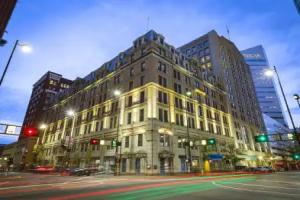
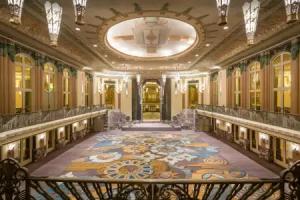
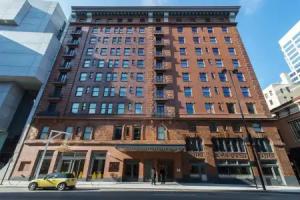
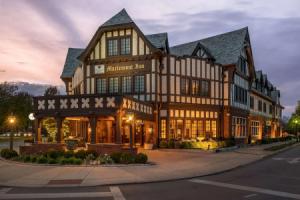
Cincinnati is home to two major sports teams, the Cincinnati Reds, the oldest franchise in Major League Baseball, and the Cincinnati Bengals of the National Football League. The University of Cincinnati, founded in 1819, is one of the 50 largest in the United States. Cincinnati is known for its historic architecture. In the late 1800s, Cincinnati was commonly referred to as "Paris of America", due mainly to such ambitious architectural projects as the Music Hall, Cincinnatian Hotel, and Shillito Department Store.
History
Cincinnati in 1812 with a population of 2,000Cincinnati was founded by European Americans in 1788 when Mathias Denman, Colonel Robert Patterson and Israel Ludlow landed at the spot on the north bank of the Ohio River opposite the mouth of the Licking River and decided to settle there. The original surveyor, John Filson, named it "Losantiville". In 1790, Arthur St. Clair, the governor of the Northwest Territory, changed the name of the settlement to "Cincinnati" in honor of the Society of the Cincinnati, made up of Revolutionary War veterans, of which he was a member.
Ethnic Germans were among the early settlers, migrating from Pennsylvania and the backcountry of Virginia and Tennessee. General David Ziegler succeeded General St. Clair in command at Fort Washington. After the conclusion of the Northwest Indian Wars and removal of Native Americans to the west, he was elected as the mayor of Cincinnati in 1802.
The introduction of steamboats on the Ohio River in 1811 opened up its trade to more rapid shipping, and the city established commercial ties with St. Louis, Missouri and especially New Orleans downriver. Cincinnati was incorporated as a city in 1819. Exporting pork products and hay, it became a center of pork processing in the region. From 1810 to 1830 its population nearly tripled, from 9,642 to 24,831. Completion of the Miami and Erie Canal in 1827 to Middletown, Ohio further stimulated businesses, and employers struggled to hire enough people to fill positions. The city had a labor shortage until large waves of immigration by Irish and Germans in the late 1840s. The city grew rapidly over the next two decades, reaching 115,000 persons by 1850.
Construction on the Miami and Erie Canal began on July 21, 1825, when it was called the Miami Canal, related to its origin at the Great Miami River. The first section of the canal was opened for business in 1827. In 1827, the canal connected Cincinnati to nearby Middletown; by 1840, it had reached Toledo. During this period of rapid expansion and prominence, residents of Cincinnati began referring to the city as the "Queen City".
Cincinnati depended on trade with the slave states south of the Ohio River, at a time when thousands of blacks were settling in the free state of Ohio, most from Kentucky and Virginia and some of them fugitives seeking freedom in the North. Many came to find work in Cincinnati. In the antebellum years, the majority of native-born whites in the city came from northern states, primarily Pennsylvania. In 1841 26 percent of whites were from the South and 57 percent from the eastern states, primarily Pennsylvania. They retained their cultural support for slavery. This led to tensions between pro-slavery residents and those in favor of abolitionism and lifting restrictions on free people of color, as codified in the "Black Code" of 1804.
The volatile social conditions produced white-led riots against blacks occurred in 1829, when many blacks lost their homes and property. As Irish immigrants entered the city in the late 1840s, they competed with blacks at the lower levels of the economy. White-led riots against blacks occurred in 1836, when an abolitionist press was twice destroyed; and in 1842. More than one thousand blacks abandoned the city after the 1829 riots. Blacks in Philadelphia and other major cities raised money to help the refugees recover from the destruction. By 1842 blacks had become better established in the city; they defended their persons and property in the riot, and worked politically as well.
After the steamboats, railroads were the first major form of commercial transportation to come to Cincinnati. In 1836, the Little Miami Railroad was chartered. Construction began soon after, to connect Cincinnati with the Mad River and Lake Erie Railroad, and provide access to the ports of the Sandusky Bay on Lake Erie.
In 1859, Cincinnati laid out six streetcar lines; the cars were pulled by horses and the lines made it easier for people to get around the city. By 1872, Cincinnatians could travel on the streetcars within the city and transfer to rail cars for travel to the hill communities. The Cincinnati Inclined Plane Company began transporting people to the top of Mount Auburn that year.
In 1880, the city government completed the Cincinnati Southern Railway to Chattanooga, Tennessee. It is the only municipality-owned interstate railway in the United States.
In 1884, outrage over a manslaughter verdict in what many observers thought was a clear case of murder triggered the Courthouse riots, one of the most destructive riots in American history. Over the course of three days, 56 people were killed and over 300 were injured. The riots ended the regime of political bosses John Roll McLean and Thomas C. Campbell in Cincinnati. In 1889, the Cincinnati streetcar system began converting its horsecar lines to electric streetcars.
An early rejuvenation of downtown began in the 1920s and continued into the next decade with the construction of Union Terminal, the post office, and the large Cincinnati and Suburban Telephone Company Building. Cincinnati weathered the Great Depression better than most American cities of its size, largely because of a resurgence in river trade, which was less expensive than transporting goods by rail. The flood of 1937 was one of the worst in the nation's history and destroyed many areas along the Ohio Valley. Afterward the city built protective flood walls.
Geography
A major city of the Ohio Valley, Cincinnati is situated on the north bank of the Ohio River in Hamilton County, which is the extreme southwestern county of the state of Ohio. It is midway by river between the cities of Pittsburgh, Pennsylvania and Cairo, Illinois. The city lies opposite the mouth of the Licking River, an important factor in its being sited where it is.
Cincinnati's core metro area spans parts of southern Ohio and northern Kentucky. According to the United States Census Bureau, the city has a total area of 79.54 square miles (206.01 km2), of which 77.94 square miles (201.86 km2) is land and 1.60 square miles (4.14 km2) is water. The city spreads over a number of hills, bluffs, and low ridges overlooking the Ohio River in the Bluegrass region of the country. Cincinnati is geographically located within the Midwest and is on the far northern periphery of the Upland South. Two-thirds of the American population live within a one-day drive of the city.
Unusually, Cincinnati has 3 smaller municipalities within its borders: Norwood, Elmwood Place, and Saint Bernard. Norwood is a significant business and industrial city, while Elmwood Place and Saint Bernard are small, primarily residential, villages.
This topography is often used for physical activity. The Steps of Cincinnati carry pedestrians up and down the many hills in the city. In addition to practical use linking hillside neighborhoods, the 400 stairways provide visitors scenic views of the Cincinnati area.
Hydrography
Cincinnati includes 22 miles (35 km) of riverfront along the northern banks of the Ohio River, stretching from California to Sayler Park, giving the river and its movements a prominent place in the life of the city. Frequent flooding has hampered the growth of Cincinnati's municipal airport at Lunken Field and the Coney Island amusement park. Downtown Cincinnati is protected from flooding by the Serpentine Wall at Yeatman's Cove and another flood wall built into Fort Washington Way. Parts of Cincinnati also experience flooding from the Little Miami River and Mill Creek.
Since April 1, 1922, the Ohio River's flood stage at Cincinnati has officially been set at 52 feet (16 m), as measured from the John A. Roebling Suspension Bridge. At this depth, the pumping station at the mouth of Mill Creek is activated. From 1873 to 1898, the flood stage was 45 feet (14 m). From 1899 to March 31, 1922, it was 50 feet (15 m). The Ohio River reached its lowest level, less than 2 feet (0.61 m), in 1881; conversely, its all-time high water mark is 79 feet 11 7⁄8 inches (24.381 m), having crested on January 26, 1937, during the Flood of 1937. Various parts of Cincinnati flood at different points: Riverbend Music Center in the California neighborhood floods at 42 feet (13 m), while Sayler Park floods at 71 feet (22 m) and the Freeman Avenue flood gate closes at 75 feet (23 m).
Arts and culture
Cincinnati's culture is strongly influenced by its history of German and Irish immigrants and its geographical position on the border of the Southern United States and Midwestern United States. In the mid to late nineteenth century, Cincinnati became a major destination for German and Irish immigrants. In 1830 residents with German roots made up 5 percent of the population, as many had migrated from Pennsylvania; ten years later the number had risen to 30 percent. Thousands of German immigrants entered the city after the revolutions in the German states in 1848 and by 1900, more than 60 percent of its population was of German background.
Cincinnati's Jewish community was developed by immigrants from England and Germany. They developed Reform Judaism in response to the influences of the Enlightenment and making their new lives in the United States. Isaac M. Wise Temple was the first Reform Judaism temple to be built, breaking away from Conservative and Orthodox Judaism.
Fountain Square serves as one of the cultural cornerstones of the region.
Food
Cincinnati's food specialities reflect the city's German heritage. Many restaurants specialize in schnitzels and in Bavarian cooking, as many immigrants originated in southern Germany. Two annual festivals focus on traditional German foods: Oktoberfest Zinzinnati, billed[by whom?] as the largest Oktoberfest celebration outside Munich, and Bockfest, the oldest German-style bock-beer festival in the United States.
Cincinnati has many[quantify] gourmet restaurants. The Maisonette in Cincinnati had the distinction of being Mobil Travel Guide's longest-running five-star restaurant in the United States of America, holding that distinction for 41 consecutive years until it closed in 2005. Jean-Robert de Cavel has opened four new restaurants in the area since 2001, including Jean-Robert's at Pigall's; this closed in March 2009.
One of America's oldest and most celebrated bars, Arnold's Bar and Grill in Downtown Cincinnati has won awards and accolades from several national and regional media publications, including Esquire magazine's "Best Bars in America", Thrillist's "Most Iconic Bar in Ohio", The Daily Meal's "150 Best bars in America" and Seriouseats.com's "The Cincinnati 10". America's Foremost Cocktail Guru, David Wondrich stated that "if Arnold's were in New York, San Francisco, Chicago, or Boston – somewhere, in short, that people actually visit – it would be world-famous."
Cincinnati is noted for two unique foods common in the area but seldom found outside Greater Cincinnati: Cincinnati chili, and Goetta.
Cincinnati chiliCincinnati chili, a Mediterranean-spiced meat sauce served over spaghetti or hot dogs, is the area's "best-known regional food." Several chains serve it, including Skyline Chili, Gold Star Chili, and Dixie Chili and Deli, plus independent chili-parlors including Camp Washington Chili. Cincinnati has been called[by whom?] the "Chili Capital of America" and "of the World" because it has more chili restaurants per capita than any other city in the United States or in the world.
GoettaGoetta is a German-inspired meat-and-grain sausage made of ground pork and pinhead oatmeal, usually fried and eaten as a breakfast food.
Events
Cincinnati hosts a number of large annual events. Oktoberfest Zinzinnati, Bockfest, and the Taste of Cincinnati that feature local restaurateurs. Music-related events include the Cincinnati May Festival, MidPoint Music Festival, and Cincinnati Bell/WEBN Riverfest. The Flying Pig Marathon is an annual event attracting many serious and amateur runners. Tall Stacks, held every three or four years, celebrates the city's riverboat heritage.
Dialect
Cincinnati lies at the periphery of a region that speaks Midland American English, a dialect closely associated with General American. Unlike the rest of the Midwest, Southwest Ohio shares some aspects of its vowel system with northern New Jersey English. However, the most distinctive local features have gradually diminished among younger speakers in favor of Midland American. There is also some influence from the Southern American dialect found in Kentucky.
An element of German culture remains audible in the local vernacular: some residents use the word please when asking a speaker to repeat a statement. This usage is taken from the German practice, when bitte (a shortening of the formal, "Wie bitte?" or "How please?" rendered word for word from German into English), was used as shorthand for asking someone to repeat.
Theatre
Professional theatre has operated in Cincinnati since at least as early as the 1800s. Among the professional companies based in the city are Ensemble Theatre Cincinnati, Cincinnati Shakespeare Company, the Know Theatre of Cincinnati, Stage First Cincinnati, Cincinnati Public Theatre, Cincinnati Opera, The Performance Gallery and Clear Stage Cincinnati. The city is also home to Cincinnati Playhouse in the Park, which hosts regional premieres, and the Aronoff Center, which hosts touring Broadway shows each year via Broadway Across America. The city has community theatres, such as the Cincinnati Young People's Theatre, the Showboat Majestic (which is the last surviving showboat in the United States and possibly[original research?] the world), and the Mariemont Players.
In 2015, Cincinnati held the USITT 2015 Conference and Stage Expo at the Duke Energy Convention Center, bringing 5,000+ students, university educators, theatrical designers and performers, and other personnel to the city. The USITT Conference is considered the main annual conference for Theatre, Opera, and Dance in the United States.
Transportation
Transportation in Cincinnati is dominated by private automobiles. Public transit ridership has been in decline for at least several decades and bicycles and walking account for a relatively small portion of all trips. Like many other middle-western cities though, bicycle use is growing fairly rapidly in the 2000s and 2010s.
Transportation issues
In 1916 the mayor of Cincinnati and its citizens voted to spend $6 million to build the Cincinnati Subway. The subway was planned to be a 16-mile loop from Downtown to Norwood to Oakley and back to the east side of Downtown. World War I delayed the construction in 1920 and inflation raised the costs causing the Oakley portion never to be built. Mayor Seasonwood who took office later on argued in would cost too much money to finish the system. If the Cincinnati Streetcar is finished it will cross directly above the unfinished subway.
The Riverfront Transit Center, built under 2nd Street, is about the size of eight football fields. It is only used for sports games. When it was built, it was designed for public transit buses, charter buses, school buses, inter-city coach buses, light rail, and possibly commuter rail. On days it is not in use for sports games, it is closed off and rented to a private parking vendor.
The Cincinnati Streetcar has also been met by many delays and funding issues.
Inner-city transit
Cincinnati is served by the Southwest Ohio Regional Transit Authority (SORTA), the Transit Authority of Northern Kentucky (TANK) and the Clermont Transportation Connection. SORTA and TANK primarily operate 40-foot diesel buses, though some lines are served by longer articulated or hybrid-engine buses. Cincinnati is also currently constructing a streetcar line in Downtown and Over-the-Rhine. This modern version of the streetcar is scheduled to be ready by September 2016.
Inter-city Transit
The city is served by Cincinnati/Northern Kentucky International Airport (IATA: CVG) which is actually located in Hebron, Kentucky. The airport is a hub for Delta Air Lines and express mail service company DHL Express, in addition the airport is a focus city for Allegiant Air and Frontier Airlines. In addition, Cincinnati Municipal Lunken Airport (IATA: LUK), has daily service on commercial charter flights, and is located in Ohio. The airport serves as hub for Ultimate Air Shuttle and Flamingo Air.
Cincinnati is served by Amtrak's Cardinal, an intercity passenger train which makes three weekly trips in each direction between Chicago and New York City through Cincinnati Union Terminal.
Megabus and Greyhound as well as several other, smaller motor coach companies operate out of Cincinnati, making trips within the midwest or beyond.
Major roads
The city has an outer-belt, Interstate 275 (which is the longest circle highway in the country) and a spur, Interstate 471, to Kentucky. It is also served by Interstate 71, Interstate 74, Interstate 75 and numerous U.S. highways: US 22, US 25, US 27, US 42, US 50, US 52, and US 127.