Famagusta
Description
Famagusta /ˌfæməˈɡʊstə, ˌfɑː-/ (Greek: Αμμόχωστος [locally [aˈmːoxostos]]; Turkish: Mağusa [mɑˈɰusɑ], or Gazimağusa [gɑːzimɑˈɰusɑ]), is a city on the east coast of Cyprus. It is located east of Nicosia, and possesses the deepest harbour of the island. During the medieval period (especially under the maritime republics of Genoa and Venice), Famagusta was the island's most important port city, and a gateway to trade with the ports of the Levant, from where the Silk Road merchants carried their goods to Western Europe. The old walled city and parts of the modern town presently fall within the de facto Turkish Republic of Northern Cyprus in Gazimağusa District of which it is the capital.
Name
In antiquity, the town was known as Arsinoe (Ancient Greek: Ἀρσινόη), after Arsinoe II of Egypt, and was mentioned by that name by Strabo. In Greek it is called Ammochostos (Αμμόχωστος), meaning "hidden in [the] sand". This name developed into Famagusta (originally Famagouste in French and Famagosta in Italian), used in Western European languages, and to its Turkish name, Mağusa. In Turkish, the city is also called Gazimağusa; Gazi means veteran in Turkish, and the city has been officially awarded with the title after 1974 (compare Gaziantep). In Armenian, Famagusta is called Ֆամակուսթա Famagust'a. The old town is nicknamed "the city of 365 churches" owing to a legend that at its peak, Famagusta boasted one church for each day of the year.
History
The city was founded in around 274 BC, after the serious damage to Salamis by an earthquake, by Ptolemy II Philadelphus and named "Arsinoe" after his sister. Arsinoe was described as a "fishing town" by Strabo in his Geographica in the first century BC. It remained a small fishing village for a long time. Later, as a result of the gradual evacuation of Salamis due to the Arab invasion led by Muawiyah I, it developed into a small port.
Medieval Famagusta
The turning point for Famagusta was 1192 with the onset of Lusignan rule. It was during this period that Famagusta developed as a fully-fledged town. It increased in importance to the Eastern Mediterranean due to its natural harbour and the walls that protected its inner town. Its population began to increase. This development accelerated in the 13th century as the town became a centre of commerce for both the East and West. An influx of Christian refugees fleeing the downfall of Acre (1291) in Palestine transformed it from a tiny village into one of the richest cities in Christendom.
In 1372 the port was seized by Genoa and in 1489 by Venice. This commercial activity turned Famagusta into a place where merchants and ship owners led lives of luxury. The belief that people's wealth could be measured by the churches they built inspired these merchants to have churches built in varying styles. These churches, which still exist, were the reason Famagusta came to be known as "the district of churches". The development of the town focused on the social lives of the wealthy people and was centred upon the Lusignan palace, the Cathedral, the Square and the harbour.
-
Territories, colonies and trade routes of the Republic of Genoa
-
Territories, colonies and trade routes of the Republic of Venice
-
View of Famagusta in the 1480s, from Beschreibung der Reise von Konstanz nach Jerusalem
Ottoman Famagusta
Further information: Marco Antonio BragadinIn 1570–1571, Famagusta was the last stronghold in Venetian Cyprus to hold out against the Turks under Mustafa Pasha. It resisted a siege of thirteen months and a terrible bombardment, until at last the garrison surrendered. The Ottoman forces had lost 50,000 men, including Mustafa Pasha's son. Although the surrender terms had stipulated that the Venetian forces be allowed to return home, the Venetian commander, Marco Antonio Bragadin, was flayed alive, his lieutenant Tiepolo was hanged, and many other Christians were killed.
With the advent of the Ottoman rule, Latins lost their privileged status in Famagusta and were expelled from the city. Greek Cypriots were at first allowed to own and buy property in the city, but were banished from the walled city in 1573-74 and had to settle outside in the area that later developed into Varosha. Turkish families from Anatolia were resettled in the walled city but could not fill the buildings that previously hosted a population of 10,000. This caused a drastic decrease in the population of Famagusta. Merchants from Famagusta, who mostly consisted of Latins that had been expelled, resettled in Larnaca and as Larnaca flourished, Famagusta lost its importance as a trade centre. Over time, Varosha developed into a prosperous agricultural town thanks to its location away from the marshes, whilst the walled city remained dilapidated.
In the walled city, some buildings were repurposed to serve the interests of the Muslim population: the Cathedral of St. Nicholas was converted to a mosque (now known as Lala Mustafa Pasha Mosque), a bazaar was developed, public baths, fountains and a theological school were built to accommodate the inhabitants' needs. Dead end streets, an Ottoman urban characteristic, was imported to the city and a communal spirit developed in which a small number of two-storey houses inhabited by the small upper class co-existed with the widespread one-storey houses.
British rule
With the British takeover, Famagusta regained its significance as a port and an economic centre and its development was specifically targeted in British plans. As soon as the British took over the island, a Famagusta Development Act was passed that aimed at the reconstruction and redevelopment of the city's streets and dilapidated buildings as well as better hygiene. The port was developed and expanded between 1903 and 1906 and Cyprus Government Railway, with its terminus in Famagusta, was started to be built in 1904. Whilst Larnaca continued to be used as the main port of the island for some time, after Famagusta's use as a military base in World War I trade significantly shifted to Famagusta. The city outside the walls grew at an accelerated rate, with development being centred around Varosha. Varosha became the administrative centre as the British moved their headquarters and residences there and tourism grew significantly in the last years of the British rule. Pottery and production of citrus and potatoes also significantly grew in the city outside the walls, whilst agriculture within the walled city declined to non-existence. New residential areas were built to accommodate the increasing population towards the end of the British rule, and by 1960, Famagusta was a modern colonial port city extending far beyond Varosha and the walled city.
The British period also saw a significant demographic shift in the city. In 1881, Christians constituted 60% of the city's population whilst Muslims were at 40%. By 1960, Turkish Cypriot population had dropped to 17.5% of the overall population, whilst the Greek Cypriot population had risen to 70%. The city was also the site for one of the British internment camps for nearly 50,000 Jewish survivors of the Holocaust trying to emigrate to Palestine.
After independence
From independence in 1960 to the Turkish invasion of Cyprus of 1974, Famagusta developed toward the south west of Varosha as a tourist centre. In the late 1960s Famagusta became one of the world's best-known entertainment and tourist centres. The contribution of Famagusta to the country's economic activity by 1974 far exceeded its proportional dimensions within the country. It possessed over 50% of the total hotel accommodation of Cyprus. Whilst its population was only about 7% of the total of the country, Famagusta by 1974 accounted for over 10% of the total industrial employment and production of Cyprus, concentrating mainly on light industry compatible with its activity as a tourist resort and turning out high quality products ranging from food, beverages and tobacco, to clothing, footwear, plastics, light machinery and transport equipment. It based 19.3% of the business units and employing 21.3% of the total number of persons engaged in commerce all over the island. It acted as the main tourist destination of Cyprus, hosting 31.5% of the hotels and 45% of the total bed capacity of the island. Varosha acted as the main touristic and business quarters.
In this period, the urbanisation of Famagusta slowed down and the development of the rural areas accelerated. Therefore, economic growth was shared between the city of Famagusta and the district, which had a balanced agricultural economy, with citrus, potatoes, tobacco and wheat as main products. Famagusta maintained good communications with this hinterland. The city's port remained the island's main seaport and in 1961, it was expanded to double its capacity in order to accommodate the growing volume of exports and imports. The port handled 42.7% of Cypriot exports, 48.6% of imports and 49% of passenger traffic.
There has not been an official census since 1960 but the population of the town in 1974 was estimated to be around 60,000 not counting about 12,000–15,000 persons commuting daily from the surrounding villages and suburbs to work in Famagusta. This population would swell during the peak summer tourist period to about 90,000–100,000 with the influx of tourists from numerous European countries, mainly Britain, France, Germany and the Scandinavian countries.
The population of the city before 1974 was approximately 60,000. The plurality (26,500) was Greek Cypriots, apart with 8,500 Turkish Cypriots and 4,000 from other ethnic groups.
During the second phase of the Turkish invasion of Cyprus on 14 August 1974 the Mesaoria plain was overrun by Turkish tanks and Famagusta bombed by Turkish aircraft. In two days the Turkish Army occupied the city, which had been completely evacuated by its Greek Cypriot population, who had fled into surrounding fields before the army's arrival. Most believed that once the initial violence calmed down they would be allowed to return.
As a result of the Turkish airstrikes dozens of civilians died, including tourists.
Unlike other parts of the Turkish-controlled areas of Cyprus, the Varosha suburb of Famagusta was fenced off by the Turkish army immediately after being captured and still remains in that state today. The Greek Cypriots who had fled from Varosha were not allowed to return, and journalists are banned. It has been frozen in time with, today, houses, department stores and hotels empty and looted, even to the tiles on bathroom walls.
Culture
The walled city of Famagusta contains many unique buildings. Famagusta has a walled city popular with tourists. Every year, the International Famagusta Art and Culture Festival is organized in Famagusta. Concerts, dance shows and theater plays take place during the festival.
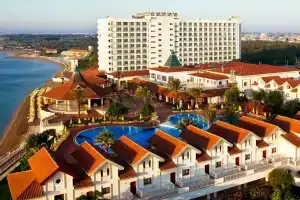
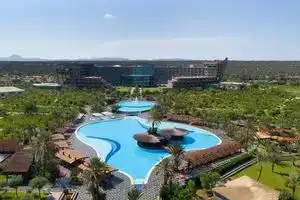
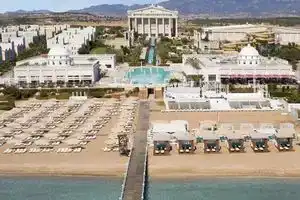
A growth in tourism and the city's university have fueled the development of Famagusta's vibrant nightlife. Nightlife in the city is especially active on Wednesday, Friday and Saturday nights and in the hotter months of the year, starting from April. Larger hotels in the city have casinos that cater to their customers. Salamis Road is an area of Famagusta where bars frequented by students and locals are concentrated and is very vibrant, especially in the summer.
Famagusta's Othello Castle is the setting for William Shakespeare's play Othello. The city is also the setting for Victoria Hislop's 2015 novel The Sunrise, and Michael Paraskos's 2016 novel In Search of Sixpence.
Healthcare
Famagusta has three general hospitals. Gazimağusa Devlet Hastahanesi, a state hospital, is the biggest hospital in city. Gazimağusa Tıp Merkezi and Gazimağusa Yaşam Hastahanesi are private hospitals.