Gaziantep
Description
Gaziantep , previously and still informally called Antep (pronounced [anˈtep]), is a city in the western part of Turkey's Southeastern Anatolia Region, some 185 kilometres (115 mi) east of Adana and 97 kilometres (60 mi) north of Aleppo, Syria. The city has two urban districts under its administration, Şahinbey and Şehitkamil. It is the sixth most populous city in Turkey. In 2014 the city of Gaziantep had a population of 1,465,019.
Name
Gaziantep was formerly called Antep or Aïntab (عين تاب) in Ottoman Turkish, ˁAīntāb (عينتاب) in Arabic. There are several theories for the origin of the name:
- "Aïntap" may be derived from "Khantap", meaning "king's land" in the Hittite language.
- "Aïn", an Arabic (and Aramaic) meaning "spring", and "tap" word of praise, may have combined to form the name.
- "Antep" could be a corruption of the Arabic "ayn tayyib" meaning good spring
- "Ayn dab" (Aramaic), or "Ayn debo", meaning "spring of the wolf"
- "Ayin ţaba" means "good spring" in Aramaic (however, the Arabic name for the city is spelled with t, not ṭ)
The Crusaders called the city and its castle "Hantab", "Hamtab", and "Hatab".
In February 1921, the Turkish parliament honored the city as غازى عينتاب "Ghazi Ayintab" 'Antep the war hero' to commemorate its resistance to the French Siege of Aintab during the Franco-Turkish War, part of the Turkish War of Independence, and that name was officially adopted in 1928 as Gaziantep.
History
Early history
There are traces of settlement going back to the 4th millennium BC.[unreliable source?] The archaeological site of Tell Tülük, eponymous of the Neolithic Dulicien culture, are situated a few kilometers to the north of the city center.
Gaziantep is the probable site of the Hellenistic city of Antiochia ad Taurum ("Antiochia in the Taurus Mountains").[unreliable source?] A "travel" blog of The Telegraph placed it among "world's 20 oldest cities" in a picture gallery in 2014.[unreliable source?]
In the center of the city stands the Gaziantep Fortress and the Ravanda citadel, which were restored by the Byzantines in the 6th century.
Medieval history
Following the Muslim conquest of the Levant, the city passed to the Umayyads in 661 and the Abbasids in 750. It was ravaged several times during the Arab–Byzantine wars. After the disintegration of the Abbasid dynasty, the city was ruled successively by the Tulunids, the Ikhshidids and the Hamdanids. In 962, it was recaptured by the Byzantines.
The Anatolian Seljuks took Aintab in 1067. They gave way to the Syrian Seljuks in 1086. Tutush I appointed Thoros of Edessa as governor of the region.
It was captured by the Crusaders and united to the Maras Seigneurship in the County of Edessa in 1098.
It reverted to the Seljuk Sultanate of Rûm in 1150, controlled by the Armenian Kingdom of Cilicia between 1155–1157 and 1204–1206 and captured by the Zengids in 1172 and the Ayyubids in 1181. It was retaken by Seljuk Sultanate of Rûm in 1218. It was ruled by the Ilkhanate between 1260–1261, 1271–1272, 1280–1281 and 1299–1317 and by the Mamluks between 1261–1271, 1272–1280, 1281–1299, 1317–1341, 1353–1378, 1381–1389 and 1395–1516. It was also governed by the Dulkadirids, which was a Turkish vassal state of the Mamluks.
Ottoman period
The Ottoman Empire captured Gaziantep after the Battle of Marj Dabiq in 1516, under the reign of Sultan Selim I. In the Ottoman period, Aintab was a sanjak centered initially in the Dulkadir Eyalet (1516–1818), and later in the Aleppo vilayet (1908–1918). It was also a kaza in the Aleppo vilayet (1818–1908). The city established itself as a centre for commerce due to its location straddling trade routes.
The 17th century Turkish traveler Evliya Celebi noted that there were 3900 shops and 2 bedesten.
By the end of the 19th century, Aintab had a population of about 45,000, ⅔ of which was Muslim, largely Turkish, but also Arabs and Kurdish. Of the Christians, there was a large Armenian community. In the 19th century, there was considerable American Protestant Christian missionary activity in Aintab. In particular, Central Turkey College was founded in 1874 by the American Mission Board and largely served the Armenian community. The Gregorian Armenians suffered from the massacres of 1895, but the Armenian Protestants thrived, drawn by Central Turkey College, until the Armenian Genocide in 1915. Consequently, the Central Turkey College was transferred to Aleppo in 1916.
Places of interest
Museums in Gaziantep
The Gaziantep Museum of Archaeology has collections of ceramic pieces from the Neolithic Age; various objects, figures and seals from the Chalcolithic and Bronze Ages; stone and bronze objects, jewellery, ceramics, coins, glass objects, mosaics and statues from the Hittite, Urartu, Persian, Roman, Commagene, and Byzantine periods.
The Zeugma Mosaic Museum houses mosaics from Zeugma and other mosaics, a total of 1700m2. It opened to the public on 9 September 2011.
The Hasan Süzer Ethnography Museum, a restored late-Ottoman stone building, has the old life style decoration and collections of various weapons, documents, instruments used in the defense of the city as well as the photographs of local resistance heroes. It was originally built in 1906 as the home of Garouj Karamanoukian.
Some of the other historical remains are the Zeugma (called also Belkıs in Turkish), and Kargamış ruins by the town of Nizip and slightly more to the north, Rumkale.
Yesemek Open-Air Museum is located in the village known by the same name, 30 km (19 mi) south of the town of Islahiye. It is the largest open-air sculpture workshop in the Near East and the ruins in the area date back to Hittites.
The Gaziantep Defence Museum: Before you enter the Panorama Museum located within the Gaziantep Castle, you encounter the statues of three local heroes Molla Mehmet Karayılan, Şehit Mehmet Kâmil and Şahin Bey at the entrance. As you enter the museum, you hear the echoes: "I am from Antep. I am a hawk (Şahin)."
The Gaziantep War Museum, in a historic Antep house (also known as the Nakıpoğlu House) is dedicated to the memory of the 6,317 who died defending the city, becoming symbols of Turkey's national unity and resolve for maintaining independence. The story of how the Battle of Antep is narrated with audio devices and chronological panels.
Gaziantep Mevlevi Lodge Foundation Museum The dervish lodge is part of the mosque's külliye (Islamic-Ottoman social complex centered around a mosque). It was built in the 17th century. The Mevlevi Lodge Monastery is entered via a courtyard which opens off the courtyard of the mosque.
Emine Göğüş Cuisine Museum Gaziantep is known for its cuisine and food culture. A historical stone house built in 1904 has been restored and turned into the Emine Göğüş Cuisine Museum. The museum opened as part of the celebrations for the 87th anniversary of Gaziantep's liberation from French occupation.
Gaziantep Historical Places
Zeugma is an ancient city which was established at the shallowest passable part of the river Euphrates, within the boundaries of the present-day Belkıs village in Gaziantep Province. Due to the strategic character of the region in terms of military and commerce since antiquity (Zeugma was the headquarters of an important Roman legion, the Legio IV Scythica, near the border with Parthia) the city has maintained its importance for centuries, also during the Byzantine period.
Gaziantep Citadel Gaziantep Citadel, also known as the Kale, located in the centre of the city displays the historic past and architectural style of the city. Although the history of castle is a mystery, as a result of the excavations conducted there, Bronze Age settlement layers are thought to exist under the section existing on the surface of the soil.
Armenian Church The former Holy Mother of God (Surp Asdvadzadzin) Cathedral converted into the Liberation mosque after the Armenian Genocide
Boyacı Mosque A historic Mosque in Şahinbey built by Kadı Kemalettin in 1211 and completed in 1357. It has one of the world's oldest wooden minbars which elaborately adorned with Koranic verses, stars and geometric patterns. Its minaret is considered one of the syymbols of the city.
Şirvani Mosque (Şirvani Mehmet Efendi Mosque), also called 'İki Şerefeli Cami' - One of the oldest Mosques of Gaziantep located in Seferpaşa. It was built by Şirvani Mehmet Efendi.
Ömeriye Mosque A mosque in Dügmeci. Tradition states that it was first built during the period of the Muslim Caliphate under the second Caliph Umar (hence its name), which would make it the oldest known mosque in Gaziantep. The modern mosque was restored at the site in 1850. It is known for its black and red marble mihrab.
Şeyh Fethullah Mosque A historic mosque built in 1563 and located in Kepenek. It has adjoining Turkish baths and a medrese.
Nuri Mehmet Pasha Mosque Mosque in Çukur built in 1786 by nobleman Nuri Mehmet Pasha. Between 1958 and 1968, it was changed into museum but was reinstated as a mosque after an extensive restoration.
Ahmet Çelebi Mosque Mosque in Ulucanlar that was built by Hacı Osman, in 1672. It is noted for its elaborate wooden interior.
Tahtali Mosque Wodden Mosque located in Fiekeroglu, that was built in 1557. The mosque has a unique red marble mihrab.
Alaüddevle Mosque (Ali Dola Mosque) built by Dulkadir bey Alaüddevle Bozkurt. Construction started in 1479 and it was completed in 1515. It has been restored recently with the addition of new entrance.
Ali Nacar Mosque Mosque in Yaprak ŞehitKamil one of the biggest Mosques in Gaziantep originally built by Ali Nacar. It was enlarged in 1816.
Eyüpoğlu Mosque Mosque built by the local Islamic saint Eyüboğlu Ahmet during the 14th century. There has been a major restoration, so much that that the present structure hardly resembles the original building.
Kendirli Church The Church was built in 1860 by means of assistance of French missionaries and Napoleon the Third. It is a Catholic Armenian Church. It has a rectangular plan and was built through white cut stones on a foundation of black cut stone within a large garden.
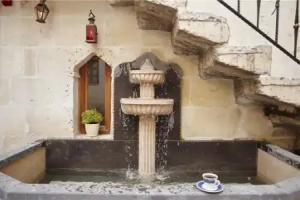
Pişirici Kastel The "kastel" (fountain) used to be part of a bigger group of buildings, and it is thought to have been built in 1282. "Kastels" are water fountains built below ground, and they are structures peculiar to Gaziantep. They are places for ablution, prayer, washing and relaxation.
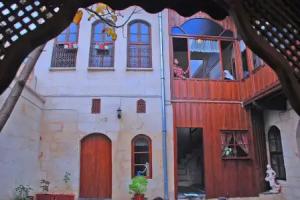
Old houses of Gaziantep The traditional houses of Gaziantep are located in the old city: Eyüboğlu, Türktepe, Tepebaşı, Bostancı, Kozluca, Şehreküstü and Kale. They are made of locally found keymik rock and have an inner courtyard called the 'Hayat' which the focal point of the house.
Tahmis Coffee House The Tahmis Coffee House was built by the Turkmen Ağa and Flag Officer, Mustafa Ağa Bin Yusuf in 1635–1638, in order to provide an income for the dervish lodge. The building suffered two big fires in 1901 and 1903.
Gaziantep Zoo
Gaziantep Zoo is one of the largest zoos in Turkey. Especially interesting are the bird pavilion and the aquarium. Gaziantep Zoo offers a large variety of animals, attractive picnic grounds, and a cafeteria. The facility is established on 1.000.000 m2 field. There are 264 species and 6.814 animals. Aquarium is fascinating.
Gaziantep Historical Bazaars
Zincirli Bedesten is the Ottoman era covered bazaar of Gaziantep and was built in 1781 by Hüseyin Pasha of Darende. We know from records that there was formerly an epigraph on the south gate written by Kusuri, however, this inscription is not in place today. This bazaar was used as a wholesale market hall for meat, fruit and vegetables.
Bakırcılar çarşısi is the coppersmith bazaar of Gaziantep. This trade has existed in the region for over 500 years. The bazaar is part of the official culture route designed to help visitors discover traditions and culture of the city.
Gaziantep Historical Inns
Anatolia Inn The exact date of the inn's (caravanserai) construction is unknown, but it is estimated to have been built in the early 19th century. It is a two-storey building with two courtyards. It is said to have been built by Muhsinzade Hadji Mehmet Bey in 1892. The inn was repaired in 1985 and parts of the top floor were rebuilt.
Kürkçü Inn Classic Ottoman Inn in Boyacı built in 1890.
Old Wheat Inn The original building was constructed by Mustafa Ağa in 1640 to provide an income for the dervish lodge, but was completely destroyed in a fire. The exact construction date of the present building is unknown; however the architectural style suggests the 19th Century.
Şire Inn The building is built on rectangular plan and contains many motifs of classical Ottoman inn architecture. It was built with evenly cut stones and the pitched roof is covered by tiles.
Tobacco Inn This inn has no epigraph showing the dates of construction or renovation, but according to historical data, the estimated date of construction is the late 17th Century. Ownership was passed to Hüseyin Ağa, son of Nur Ali Ağa, in the early 19th Century.
Yüzükçü Inn The construction date of this inn is unknown. The epigraph on the main gate of the inn is dated 1800, but the building apparently had been built earlier and was repaired at this date. The first owners of the inn were Asiye, the daughter of Battal Bey and Emine Hatun, the daughter of Hadji Osman Bey.
Turkish baths
The city is home to many Turkish baths (Hamams), most of which date from the Ottoman and Dulkadir beylik period, namely the Hüseyin Pasha Baths, İki kapılı Baths, Tabak Baths, Şeyh Fethullah Baths and Şehitler Baths.
Parks
100. Yıl Atatürk Kültür Parkı (100th Anniversary Atatürk Culture Park) is the largest park in Gaziantep located in the centre of the city along the Alleben river which it borders for 5 km (3 mi).
Cuisine
Food in Gaziantep is different from the cuisine in other parts of Turkey because of the influence of Oğuz Turks and the culinary traditions of nearby Aleppo which was an important regional administrative center of the Seljuk and Ottoman empires. The difference is visible in its rice meals, soups, kebabs, köfte (meatballs), etc. The meatballs come in varieties of çiğ köfte, içli köfte, meatball with malhita (lentils), sour small meatballs, and small meatball with yoghurt.
Antep's desserts include the sweet pastry baklava, burmalı, künefe, kadayıf, etc. In 2013, Gaziantep baklava became the first Turkish product with a European protected designation of origin and geographical indication. Antep is also famous for its slender type of pistachios.
Its kebab varieties include the kıyma (minced meat) kebab, kuşbaşı (meat cut in goulash-type cubes) kebab, simit kebab, patlıcan (aubergine) kebab, ciğer (liver) kebab and soğan (onion) kebab. There is also lahmacun, yuvarlama (mas soup) and karışık (mixed) dolama (a preparation made of different types of vegetables, yoğurtlu patates (potato with yogurt), beyran, etc.)
Transportation
The city is served by Oğuzeli Airport, which has commercial flights to domestic and regional international destinations.
Popular culture
Gaziantep was made famous in Bulgaria and Greece by the Turkish TV series Yabancı Damat (literally The Foreign Groom), known in Bulgaria as Брак с чужденец (Marriage with a Foreigner), a love story between a Turk and a Greek. In Greece, the popular TV series is known as Τα σύνορα της Αγάπης (The Borders of Love). It is a love story between two youngsters, Nikos, a Greek boy, son of a wealthy Athenian ship owner; and Nazlı, daughter of a Gaziantep baklava maker. Due to the historic rivalry and hatred between the Greeks and Turks, a love affair between these two youngsters is received badly by both families. The dislike between the two families increases as the episodes pass, with the Turkish family being more strict towards their daughter. The main culprits, however, are the two grandparents (Nikos' grandmother and Nazlı's grandfather), who reach extreme points in order to stop the youngsters' wedding. The TV series was launched in 2004 and was later also shown in Serbia, Croatia and other Balkan countries.