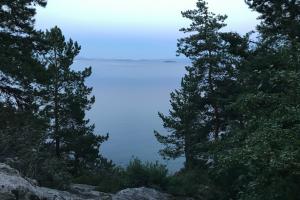
East Kazakhstan Region
Description
East Kazakhstan Region is a region of Kazakhstan. It occupies the easternmost part of Kazakhstan, and includes parts of the Irtysh River, Lake Markakol, and Lake Zaysan. Its administrative center is Oskemen (also known as Ust-Kamenogorsk). The region borders Russia in the north and northeast and the People's Republic of China, via Xinjiang, in the south and southeast. The easternmost point of the Oblast is within about 50 kilometres of the westernmost tip of Mongolia; however, Kazakhstan and Mongolia do not share a common border, the two countries being separated by a small part of Russia and China. The area spans 283,230 square kilometers in area. Population: 1,369,597 (2020).
The region was created by the merger of two Soviet-era Kazakhstan oblasts: the old Vostochno-Kazakhstanskaya (East Kazakhstan) Oblast and Semipalatinsk Oblast.
Geography
East Kazakhstan Region borders the Kazakh regions of Pavlodar Region to the northwest, Karaganda Region to the west, Almaty Region to the south, Russia's Altai Krai and Altai Republic to the north and China's Xinjiang Uyghur Autonomous Region to the east.
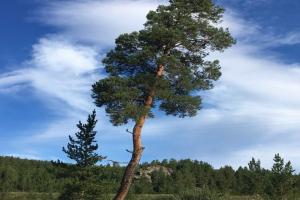
The region occupies a very diverse range of geographic and climatic regions with the Altai Mountains in the east and the eastern margins of the Kazakh Steppe in the west of the region.
Culture
As of 2019, the region has 301 culture clubs, 2 theaters, a zoo, 9 "houses of friendship", 6 cinemas, and 3 parks.
In 2018, the Kazakhstan Ministry of Culture has funded archaeological excavations into the Shilikty Mounds [ru] and other nearby sites in the region to uncover cultural artifacts.
Tourism
The East Kazakhstan Region and neighboring Almaty Region share Lake Alakol, a major domestic tourist site. In 2013, UNESCO established the Alakol Biosphere Reserve, stating that the lake and its surroundings are an important part of the Central Asian Flyway. Birds native to the lake include the Dalmatian Pelican, the Eurasian Spoonbill, the Greater Flamingo, and the Ferruginous Duck. The lake's color changes during the day, from azure-blue in the morning to purple at sunset. On sunny days the lake has a notably bright color, and on cloudy days the water is dark grey. The improvement of infrastructure near the lake, as well as its alleged medicinal properties, have led to increased tourism in recent years.
The Altai Alps ski resort, in the town of Tawlı Ülbi [kk] approximately 24 kilometres east of Oskemen, serves as a popular skiing destination.
The Raxman Spring Sanatorium [kk] and the Katon-Karagay National Park are both located in the Katonkaragay District in the northeastern part of the region.