Nashville

Description

"Nashville" redirects here. For other uses, see Nashville (disambiguation).

Nashville is the capital of the U.S. state of Tennessee and the county seat of Davidson County. Nashville is the second largest city in Tennessee, and the fifth largest city in the southeastern United States. It is located on the Cumberland River in the north central part of the state. The city is a center for the music, healthcare, publishing, banking and transportation industries, and is home to numerous colleges and universities. Reflecting the city's position in state government, Nashville is home to the Tennessee Supreme Court's courthouse for Middle Tennessee. It is known as a center of the country music industry, earning it the nickname "Music City U.S.A."

Since 1963, Nashville has had a consolidated city-county government which includes six smaller municipalities in a two-tier system. Thirty-five of 40 members are elected from single-member districts; five are elected at-large. According to 2013 estimates from the U.S. Census Bureau, the total consolidated city-county population stood at 659,042. The "balance" consolidated population, which excludes the semi-independent municipalities and is the figure listed in most demographic sources and national rankings, was 634,464. The 2013 population of the entire 13-county Nashville metropolitan area was 1,757,912, making it the largest metropolitan statistical area in the state. The 2013 population of the Nashville-Davidson–Murfreesboro–Columbia combined statistical area, a larger trade area, was 1,876,933.

History

The town of Nashville was founded by James Robertson, John Donelson, and a party of Overmountain Men in 1779, near the original Cumberland settlement of Fort Nashborough. It was named for Francis Nash, the American Revolutionary War hero. Nashville quickly grew because of its strategic location, accessibility as a port on the Cumberland River, a tributary of the Ohio River; and its later status as a major railroad center. By 1800, the city had 345 residents, including 136 African American slaves and 14 free blacks. In 1806, Nashville was incorporated as a city and became the county seat of Davidson County, Tennessee. In 1843, the city was named the permanent capital of the state of Tennessee.

By 1860, when the first rumblings of secession began to be heard across the South, antebellum Nashville was a very prosperous city. The city's significance as a shipping port made it a desirable prize as a means of controlling important river and railroad transportation routes. In February 1862, Nashville became the first state capital to fall to Union troops. The state was occupied by Union troops for the duration of the war. The Battle of Nashville (December 15–16, 1864) was a significant Union victory and perhaps the most decisive tactical victory gained by either side in the war; it was also the final major military action of the war, which afterwards became almost entirely a war of attrition consisting largely of guerrilla raids and small skirmishes, with the Confederate forces in the Deep South almost constantly in retreat.

Within a few years after the Civil War, the city had reclaimed its important shipping and trading position and also developed a solid manufacturing base. The post–Civil War years of the late 19th century brought new prosperity to Nashville and Davidson County. These healthy economic times left the city with a legacy of grand classical-style buildings, which can still be seen around the downtown area.

20th century to present

Circa 1950 the state legislature approved a new city charter that provided for election of city council members from single-member districts, rather than at-large voting. This change was supported because at-large voting diluted the minority population's political power in the city. They could seldom gain a majority of the population to support a candidate of their choice.

Apportionment under the single-member districts meant that some districts had black majorities. In 1952 after passage of the new charter, African-American attorneys Z. Alexander Looby and Robert E. Lillard were elected to the city council. The first to gain office since 1911, after disenfranchisement had been achieved by the state government.

The years after World War II were a time of rapid suburbanization as new housing was built outside the city limits. This resulted in a demand for many new schools and other support facilities, which the county found difficult to provide. At the same time, suburbanization had resulted in a declining tax base in the city, although many suburban residents used unique city amenities and services which were supported only by city taxpayers. After years of discussion, a referendum was held in 1958 on the issue of consolidating city and county government. It failed to gain approval although it was supported by elected leaders of both jurisdictions: County Judge Beverly Briley of Davidson and Mayor Ben West of Nashville.

Following the failure of the referendum, Nashville annexed some 42 square miles of suburban jurisdictions in order to expand its tax base. This increased uncertainty among residents, and created resentment among many suburban communities. Under the second charter for metropolitan government, which was approved in 1962, two levels of service provision were proposed: the General Services District and the Urban Services District, to provide for a differential in tax levels. Residents of the Urban Services District had a full range of city services. The areas that comprised the General Services District, however, had a lower tax rate until full services were provided. This helped reconcile aspects of services and taxation among the differing jurisdictions within the large metro region.

In 1963, Nashville consolidated its government with Davidson County, forming a metropolitan government. The membership on the Metro Council, the legislative body, was increased from 21 to 40 seats. Of these, five members are elected at-large and 35 are elected from single-member districts, each to serve a term of four years.

Since the 1970s, the city and county have experienced tremendous growth, particularly during the economic boom of the 1990s under the leadership of then-Mayor and later-Tennessee Governor, Phil Bredesen. He made urban renewal a priority, and fostered the construction or renovation of several city landmarks, including the Country Music Hall of Fame and Museum, the downtown Nashville Public Library, the Bridgestone Arena, and Nissan Stadium.

Nissan Stadium (formerly Adelphia Coliseum and LP Field) was built after the National Football League's (NFL) Houston Oilers agreed to move to the city in 1995. The NFL team debuted in Nashville in 1998 at Vanderbilt Stadium, and Nissan Stadium opened in the summer of 1999. The Oilers changed their name to the Tennessee Titans and finished the season with the Music City Miracle and a close Super Bowl game in which the St. Louis Rams' win was secured in the last play.

In 1997 Nashville was awarded a National Hockey League NHL expansion team; this was named the Nashville Predators. Since the 2003/04 season, the Nashville Predators have made the playoffs every season except for two.

Today, the city along the Cumberland River is a crossroads of American culture, and one of the fastest-growing areas of the Upland South.

Geography

Topography

Nashville lies on the Cumberland River in the northwestern portion of the Nashville Basin. Nashville's elevation ranges from 385 feet (117 m) above sea level at the Cumberland River to 1,160 feet (350 m) above sea level at its highest point.

According to the United States Census Bureau, the city has a total area of 527.9 square miles (1,367 km2), of which 504.0 square miles (1,305 km2) of it is land and 23.9 square miles (62 km2) of it (4.53%) is water.

Neighborhoods

  • Antioch
  • Bellevue
  • Donelson
  • East Nashville
  • Green Hills
  • Hermitage
  • Hillsboro Village
  • Inglewood
  • Joelton
  • Lakewood
  • Lockeland Springs
  • Madison
  • Old Hickory
  • Pasquo
  • Tusculum
  • Whites Creek

Culture

Much of the city's cultural life has revolved around its large university community. Particularly significant in this respect were two groups of critics and writers who were associated with Vanderbilt University in the early twentieth century: the Fugitives and the Agrarians.

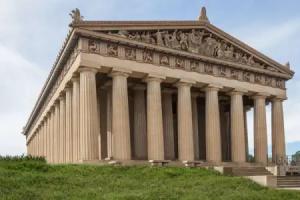
Popular destinations include Fort Nashborough and Fort Negley, the former being a reconstruction of the original settlement, the latter being a semi-restored Civil War battle fort; the Tennessee State Museum; and The Parthenon, a full-scale replica of the original Parthenon in Athens. The Tennessee State Capitol is one of the oldest working state capitol buildings in the nation, while The Hermitage is one of the older presidential homes open to the public.

Dining

Some of the more popular types of local cuisine include hot chicken, hot fish, barbecue, and meat and three. Thanks, in part, to Nashville's foodie culture, the city was ranked as the 13th "snobbiest" city in America according to Travel + Leisure magazine.

Entertainment and performing arts

Nashville has a vibrant music and entertainment scene spanning a variety of genres. The Tennessee Performing Arts Center is the major performing arts center of the city. It is the home of the Tennessee Repertory Theatre, the Nashville Opera, the Music City Drum and Bugle Corps, and the Nashville Ballet. In September 2006, the Schermerhorn Symphony Center opened as the home of the Nashville Symphony.

As the city's name itself is a metonym for the country music industry, many popular tourist sites involve country music, including the Country Music Hall of Fame and Museum, Belcourt Theatre, and Ryman Auditorium. Ryman was home to the Grand Ole Opry until 1974 when the show moved to the Grand Ole Opry House, 9 miles (14 km) east of downtown. The Opry plays there several times a week, except for an annual winter run at the Ryman.

Numerous music clubs and honky-tonk bars can be found in downtown Nashville, especially the area encompassing Lower Broadway, Second Avenue, and Printer's Alley, which is often referred to as "the District".

Each year, the CMA Music Festival (formerly known as Fan Fair) brings thousands of country fans to the city. The Tennessee State Fair is also held annually in September.

Nashville was once home of television shows such as Hee Haw and Pop! Goes the Country, as well as The Nashville Network and later, RFD-TV. Country Music Television and Great American Country currently operate from Nashville. The city was also home to the Opryland USA theme park, which operated from 1972 to 1997 before being closed by its owners (Gaylord Entertainment Company) and soon after demolished to make room for the Opry Mills mega-shopping mall.

The Contemporary Christian music industry is based along Nashville's Music Row, with a great influence in neighboring Williamson County. The Christian record companies include EMI Christian Music Group, Provident Label Group and Word Records.

Music Row houses many gospel music and Contemporary Christian music companies centered around 16th and 17th Avenues South.

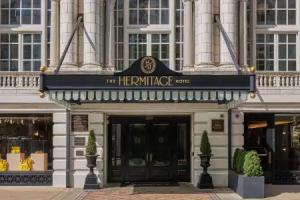
Although Nashville was never known as a jazz town, it did have many great jazz bands, including The Nashville Jazz Machine led by Dave Converse and its current version, the Nashville Jazz Orchestra, led by Jim Williamson, as well as The Establishment, led by Billy Adair. The Francis Craig Orchestra entertained Nashvillians from 1929 to 1945 from the Oak Bar and Grille Room in the Hermitage Hotel. Craig's orchestra was also the first to broadcast over local radio station WSM-AM and enjoyed phenomenal success with a 12-year show on the NBC Radio Network. In the late 1930s, he introduced a newcomer, Dinah Shore, a local graduate of Hume Fogg High School and Vanderbilt University.

Radio station WMOT-FM in nearby Murfreesboro, which formerly programmed jazz almost exclusively and still does so on the weekends, aided significantly in the recent revival of the city's jazz scene, as has the non-profit Nashville Jazz Workshop, which holds concerts and classes in a renovated building in the north Nashville neighborhood of Germantown. Fisk University also maintains a jazz station, WFSK.

Nashville has an active theatre scene, and is home to several professional and community theatre companies. Nashville Children's Theatre, Tennessee Repertory Theatre, the Nashville Shakespeare Festival, the Dance Theatre of Tennessee and the Tennessee Women's Theater Project are among the most prominent professional companies. One community theatre, Circle Players, has been in operation for over 60 years.

Tourism

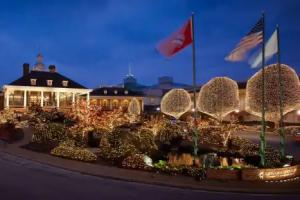
Perhaps the biggest factor in drawing visitors to Nashville is its association with country music. Many visitors to Nashville attend live performances of the Grand Ole Opry, the world's longest running live radio show. The Country Music Hall of Fame and Museum is another major attraction relating to the popularity of country music. The Gaylord Opryland Resort & Convention Center, the Opry Mills regional shopping mall and the General Jackson showboat, are all located in what is known as Music Valley.

Civil War history is important to the city's tourism industry. Sites pertaining to the Battle of Nashville and the nearby Battle of Franklin and Battle of Stones River can be seen, along with several well-preserved antebellum plantation houses such as Belle Meade Plantation, Carnton plantation in Franklin, and Belmont Mansion.

Nashville has several arts centers and museums, including the Frist Center for the Visual Arts, Cheekwood Botanical Garden and Museum of Art, the Tennessee State Museum, the Johnny Cash Museum, Fisk University's Van Vechten and Aaron Douglas Galleries, Vanderbilt University's Fine Art Gallery and Sarratt Gallery, and the full-scale replica of the Parthenon.

Major annual events Event Month held and location Nashville Film Festival A weeklong festival in April that features hundreds of independent films. It is one of the largest film festivals in the Southern United States. Nashville Fashion Week A city-wide event typically held in March or April, this is a celebration of Nashville's fashion and retail community featuring local, regional and national design talent in fashion events and shows. Rock 'n' Roll Nashville Marathon Marathon, half marathon, and 5k race held in April with runners from around the world. In 2012, participation surpassed 30,000 runners. Iroquois Steeplechase Annual steeplechase horse racing event held in May at Percy Warner Park. CMA Music Festival A four-day event in June featuring performances by country music stars, autograph signings, artist/fan interaction, and other activities for country music fans. Nashville Pride A festival held in June at Public Square Park that fosters awareness of and for the LGBT community and culture in Middle Tennessee. The 2015 festival drew an estimated 15,000-20,000 people, possibly making it the event's largest gathering since the festival began. Let Freedom Sing! Held every Fourth of July at Riverfront Park, featuring a street festival and live music, and culminating in one of the largest fireworks shows in the country. An estimated 280,000 people attended the 2014 celebration. Tomato Art Festival Held each August in East Nashville, this event celebrates the Tomato as a Unifier. African Street Festival Held in September on the campus of Tennessee State University. It is committed to connecting and celebrating the extensions of Africa to America. Live on the Green Music Festival A free concert series held in August and September at Public Square Park by local radio station Lightning 100. Tennessee State Fair The State Fair held in September at the State Fairgrounds, which lasts nine days and includes rides, exhibits, rodeos, tractor pulls, and numerous other shows and attractions. Celebrate Nashville Cultural Festival A free event held the first Saturday in October at Centennial Park, it is Middle Tennessee's largest multicultural festival and includes music and dance performances, ethnic food court, children's area, teen area, and marketplace. Nashville Oktoberfest A free event held in the historic Germantown neighborhood since 1981, it celebrates the culture and customs of Germany. Oktoberfest is Nashville's oldest annual festival and is one of the largest in the South. In 2015, over 143,000 people attended the three-day event which raised $60,000 for Nashville non-profits. Southern Festival of Books A festival held in October, featuring readings, panels, and book signings. Country Music Association Awards Award ceremony normally held in November at the Bridgestone Arena and televised to a national audience. Veterans Day Parade A parade running down Broadway on 11/11 at 11:11.11 am since 1951. Features include 101st Airborne Division (Air Assault), Tennessee National Guard, veterans from wars past and present, military plane fly-overs, tanks, motorcycles, first responder vehicles, marching bands and thousands of spectators.

Nicknames

Nashville is a colorful, well-known city in several different arenas. As such, it has earned various sobriquets, including:

  • Music City, USA: WSM-AM announcer David Cobb first used this name during a 1950 broadcast and it stuck. It is now the official nickname used by the Nashville Convention and Visitors Bureau. Nashville is the home of the Grand Ole Opry, the Country Music Hall of Fame, and many major record labels. This name also dates back to 1874, where after receiving and hearing a performance by the Fisk Jubilee Singers, Queen Victoria of England is reported as saying that "These young people must surely come from a musical city."
  • Athens of the South: Home to twenty-four post-secondary educational institutions, Nashville has long been compared to the ancient city of learning, site of Plato's Academy. Since 1897, a full-scale replica of the Athenian Parthenon has stood in Nashville, and many examples of classical and neoclassical architecture can be found in the city. The term was popularized by Philip Lindsley (1786–1855), President of the University of Nashville, though it is unclear whether he was the first person to use the phrase.
  • The Protestant Vatican or The Buckle of the Bible Belt: Nashville has over 700 churches, several seminaries, a number of Christian music companies, and is the headquarters for the publishing arms of the Southern Baptist Convention (LifeWay Christian Resources), the United Methodist Church (United Methodist Publishing House) and the National Baptist Convention (Sunday School Publishing Board). It is also the seat of the National Baptist Convention, the National Association of Free Will Baptists, the Gideons International, the Gospel Music Association, and Thomas Nelson, the world's largest producer of Bibles.
  • Cashville: Nashville native Young Buck released a successful rap album called Straight Outta Cashville that has popularized the nickname among a new generation.
  • Little Kurdistan: Nashville has the United States' largest population of Kurdish people, estimated to be around 11,000.
  • Nash Vegas or Nashvegas

Nashville has additionally earned the moniker "The Hot Chicken Capital", becoming known for the local specialty cuisine hot chicken. The Music City Hot Chicken Festival is hosted annually in Nashville and several restaurants make this spicy version of southern fried chicken.

Parks and gardens

Metro Board of Parks and Recreation owns and manages 10,200 acres (4,100 ha) of land and 99 parks and greenways (comprising more than 3% of the total area of the county).

Warner Parks, situated on 2,684 acres (1,086 ha) of land, consists of a 5,000-square-foot (460 m2) learning center, 20 miles (32 km) of scenic roads, 12 miles (19 km) of hiking trails, and 10 miles (16 km) of horse trails. It is also the home of the annual Iroquois Steeplechase.

The United States Army Corps of Engineers maintains parks on Old Hickory Lake and Percy Priest Lake. These parks are used for activities such as fishing, waterskiing, sailing and boating. The Harbor Island Yacht Club makes its headquarters on Old Hickory Lake, and Percy Priest Lake is home to the Vanderbilt Sailing Club and Nashville Shores.

Other parks in Nashville include Centennial Park, Shelby Park, Cumberland Park, and Radnor Lake State Natural Area.

On August 27, 2013, Nashville mayor Karl Dean revealed plans for two new riverfront parks on the east and west banks of the Cumberland River downtown. Construction on the east bank park began in the fall of 2013, and the projected completion date for the west bank park is 2015. Among many exciting benefits of this Cumberland River re-development project is the construction of a highly anticipated outdoor amphitheater. Located on the west bank, this music venue will be surrounded by a new 12-acre (4.9 ha) park and will replace the previous thermal plant site. It will include room for 6,500 spectators with 2,500 removable seats and additional seating on an overlooking grassy knoll. In addition, the 4.5-acre (1.8 ha) east bank park will include a river landing, providing people access to the river. In regard to the parks' benefits for Nashvillian civilians, Mayor Dean remarked that "if done right, the thermal site can be an iconic park that generations of Nashvillians will be proud of and which they can enjoy" (WKRN-TV Nashville).

Transportation

Road

Nashville is centrally located at the crossroads of three Interstate Highways: I-40, I-24, and I-65. Interstate 440 is a bypass route connecting I-40, I-65, and I-24 south of downtown Nashville. Briley Parkway connects the north side of the city and its interstates. A number of arterial surface roads called "pikes" radiate from the city center; many carry the names of nearby towns to which they lead. Among these are Clarksville Pike, Gallatin Pike, Lebanon Pike, Murfreesboro Pike, Nolensville Pike, and Franklin Pike.

Bus

The Metropolitan Transit Authority provides bus transit within the city, out of a newly built hub station downtown. Routes utilize a hub and spoke method. Expansion plans include use of Bus rapid transit for new routes, with the possibility for local rail service at some point in the future.

Nashville is considered a gateway city for rail and air traffic for the Piedmont Atlantic Megaregion.

Air

The city is served by Nashville International Airport (BNA), which was a hub for American Airlines between 1986 and 1995 and is now a focus city for Southwest Airlines. During 2011, Nashville International was the 34th busiest passenger airport in the U.S. with a total of 4,673,047 passenger boardings. Major airlines serving Nashville include American Airlines, Delta Air Lines, Frontier Airlines, Southwest Airlines, United Airlines, WestJet, Alaska Airlines, JetBlue Airways, and AirCanada. AirTran Airways offered limited routing to the airport until it was deemed unprofitable.

Rail

Amtrak

Although a major freight hub for CSX Transportation, Nashville is not currently served by Amtrak, the second-largest metropolitan area in the U.S. to have this distinction. Amtrak's Floridian (Chicago to Miami and St. Petersburg, Florida via Louisville and Nashville) served Nashville until its cancellation on October 9, 1979 due to poor track conditions resulting in late trains and low ridership.

While there have been no proposals to restore Amtrak service to Nashville, there have been repeated calls from residents. However, Tennessee state officials have advised it will not be happening anytime soon due to scarce federal funding. "It would be wonderful to say I can be in Memphis and jump on a train to Nashville, but the volume of people who would do that isn't anywhere close to what the cost would be to provide the service," said Ed Cole, chief of environment and planning with the Tennessee Department of Transportation. Ross Capon, executive director of the National Association of Railroad Passengers, said rail trips would catch on if routes were expanded, but conceded that it would be nearly impossible to resume Amtrak service to Nashville without a substantial investment from the state because federal money has dried up.

Commuter

Nashville launched a passenger commuter rail system called the Music City Star on September 18, 2006. The only currently operational leg of the system connects the city of Lebanon to downtown Nashville at the Nashville Riverfront. Legs to Clarksville, Murfreesboro and Gallatin are currently in the feasibility study stage. The system plan includes seven legs connecting Nashville to surrounding suburbs.

Bridges within the city include:

Official name Other names Length Date opened Korean War Veterans Memorial Bridge Gateway Bridge 1,660 feet (510 m) May 19, 2004 Kelly Miller Smith Bridge Jefferson Street Bridge March 2, 1994 Old Hickory Bridge 1929 Martin Luther King Jr. Bridge Bordeaux Bridge September 18, 1980 John Seigenthaler Pedestrian Bridge Shelby Street Bridge 3,150 feet (960 m) July 5, 1909 Silliman Evans Bridge 2,362 feet (720 m) 1963 Victory Memorial Bridge July 2, 1956 William Goodwin Bridge Hobson Pike Bridge 2,215 feet (675 m) Woodland Street Bridge 639 feet (195 m)

Street view

Hotels

2 guests
Adults2+
Children under 170+
Age7+
Age7+
Age7+
Age7+
Age7+
Age7+
Age7+
Age7+
Age7+
Age7+
Search hotel

Reviews

Share your experiences, help others make the right choice!
Think about what you would like to know if you were looking for a review about a place to relax. Please describe in detail what you liked and what you didn't. What would you advise to other guests and to the hotel owner. The more fully you tell about the hotel, the easier it will be for other people to make a choice and they will be very grateful to you!

Map

X