Chania
Description
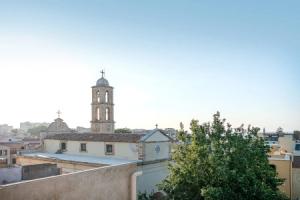
Chania (Greek: Χανιά, [xaˈɲa], Venetian: Canea, Ottoman Turkish: خانيه Hanya) is the second largest city of Crete and the capital of the Chania regional unit. It lies along the north coast of the island, about 70 km (43 mi) west of Rethymno and 145 km (90 mi) west of Heraklion.
The official population of the municipal unit (the former municipality) is 53,910, while the municipality has 108,642 (2011) inhabitants. This consists of the city of Chania and several other towns and villages, including Kounoupidiana (pop. 8,620), Mournies (pop. 7,614), Souda (pop. 6,418), Nerokouros (pop. 5,531), Daratsos (pop. 4,732), Perivolia (pop. 3,986), Galatas (pop. 3,166) and Aroni (pop. 3,003).
History
Early history
Chania is the site of the Minoan settlement the Greeks called Kydonia, Greek for quince. It appears on Linear B as ku-do-ni-ja. Some notable archaeological evidence for the existence of this Minoan city below some parts of today's Chania was found by excavations in the district of Kasteli in the Old Town. This area appears to have been inhabited since the Neolithic era. The city reemerged after the end of the Minoan period as an important city-state in Classical Greece, one whose domain extended from Chania Bay to the feet of the White Mountains. The first major wave of settlers from mainland Greece was by the Dorian Greeks who came around 1100 BC. Kydonia was constantly at war with other Cretan city-states such as Aptera, Phalasarna and Polyrrinia and was important enough for the Kydonians to be mentioned in Homer's Odyssey (xix.200). In 69 BC, the Roman consul Caecilius Metellus defeated the Cretans and conquered Kydonia to which he granted the privileges of an independent city-state. Kydonia reserved the right to mint its own coins until the third century AD.
Byzantine and Arab era
Further information: Byzantine CreteThe early Christian period under Byzantine rule (First Byzantine Period, 395–824 AD) and the rule of the Arabs, who called the settlement Al Hanim ("the Inn"), are not well documented. Under the Arabs, the Christian population was persecuted and moved to the mountains. The Byzantine Empire retook the city in 961 AD (Second Byzantine Period, until 1204 AD). In this period the Arabic name of the city was changed into Greek Chania. Byzantines began to strongly fortify the city in order to prevent another Arab invasion, using materials from the ancient buildings of the area. By this time Chania was the seat of a bishopric, which would be known under Venetian rule as Roman Catholic Diocese of La Canea and later become the Latin titular see of Cydonia.
The Venetian era
Further information: Kingdom of CandiaAfter the Fourth Crusade (1204) and the fall of Byzantium in the Hellenic area, Crete was given to Bonifacio, Marquess of Montferrat. He in turn chose to sell it to the Venetians for 100 silver marks. In 1252 the Venetians managed to subdue the Cretans but in 1263, their rivals of Genoa, with local support, seized the city under the leadership of Enrico Pescatore, count of Malta, and held it until 1285, when the Venetians returned. Chania was chosen as the seat of the Rector (Administrator General) of the region and flourished as a significant commercial centre of a fertile agricultural region.
The Venetian rule was initially strict and oppressive but slowly the relations between the two parts improved. Contact with Venice led to close intertwining of Cretan and Venetian cultures, without, however, the Cretans losing their Greek Orthodox nature. The city's name became La Canea and its fortifications were strengthened, giving Chania the form that it still has today. On the other hand, after the fall of Constantinople in 1453, many priests, monks and artists took refuge in Crete and reinforced the Byzantine religion and culture on the island. The city of Chania during the period that followed was a blend of Byzantine, Venetian, and Classical Greek cultural elements. Many of the important buildings of the town were built during this era and the intellectual activities (written word, music, education) were also promoted.
Ottoman era
Further information: Ottoman CreteHowever, the walls did not prevent the Ottoman army from overrunning the city in 1645 after just two months' siege. The Ottomans landed near the Monastery of Gonia in Kissamos, which they plundered and burnt. They seized Chania itself on 2 August 1645. Huge numbers died in the siege. Later, most churches were turned into mosques. The Muslims resided mainly in the eastern quarters, Kastelli and Splantzia, where they converted the Dominican church of St Nicholas into the central Sovereign's Mosque (Turkish: Hünkar Camısı). They also built new mosques such as the Küçük Hasan Pasha Mosque or Yali Mosque on the harbour. Public baths (hamam), and fountains were a feature of the Ottoman city. The pasha of Crete resided in Chania.
In 1821, as Greeks rose against the Ottoman Empire, there were conflicts between Greeks and Muslims in Chania, leading to casualties from both sides, most of whom were Muslims. The Bishop of Kissamos, Melhisedek Despotakis, was hanged from a tree in Splantzia for participation in the revolutionary events. In 1878, the Pact of Halepa was signed. This was when a large part of the local Muslim population was killed or moved to Anatolia. There was no Muslim population left after the population exchange between Greece and Turkey in 1922.
Modern era
Further information: Cretan State and Theriso revoltIn 1898, during the final moves towards independence and enosis—union with Greece—the Great Powers made Chania the capital of the semi-autonomous Cretan State ("Kritiki Politeia"), with Prince George of Greece, the High Commissioner of Crete living here. During these years Crete issued its own stamps and money. This was a very important transitional period when, no longer an isolated vilayet of the Ottoman Empire, the city became more cosmopolitan and flourishing, regaining its role as the crossroad of civilizations, influenced by Europe as well as by the East. Many important buildings were built during this era, intellectual and artistic societies were created and a new class of local aristocracy brought a different atmosphere to the everyday life of the town. The district of Halepa has many fine neoclassical embassies and consulates dating from this period.
However the main goal was enosis with Greece which came after Eleftherios Venizelos's constant opposition to Prince George's rule over Crete. The series of conflicts includes the Therisos revolt in 1905, which overthrew Prince George and brought Alexandros Zaimis to rule Crete. Finally in 1908 Venizelos managed to establish a revolutionary government, recognized by the Great Powers. His later election as the prime minister of Greece (1910) eventually led to Crete's union with Greece on 1 December 1913, following the Balkan Wars. The Greek flag was raised for the first time at Fort Firka in the Old Harbour in the presence of Venizelos and King Constantine.
Due to the popularity of Venizelos, Chania as with most of Crete remained staunchly pro-Venizelist, pro-Liberal and later pro Republican in the National Schism and the interwar period. The only attempt to overthrow the monarchist Metaxas Regime occurred in the city with the failed 28 July 1938 uprising.
Chania in World War II
Further information: Axis occupation of Greece during World War II and Battle of CreteAnother important period for the city of Chania was the invasion and occupation by German forces during World War II. The British force that faced the German paratroopers during the Battle Of Crete in 1941, had artillery elements over the hill of Dexameni in the south of the city. These elements bombed the German forces in the Maleme airfield undetected, until they ran out of ammunition. George II of Greece stayed in a villa near the village of Perivolia outside Chania before escaping to Egypt. Part of the city was bombed and a significant proportion of the area's population was either executed or imprisoned due to participation in the resistance against the German rule. The Jewish community of Chania was also eliminated during the German occupation. Most of them were transported off the island by the Nazi occupiers in 1944. Tragically a British torpedo sank the ship Tanais, which was carrying most of the Jewish prisoners.
Post-World War II era
The city of Chania was slowly regaining its normal pace of development during the 1950s, trying to overcome the difficulties that the war had left as an aftermath. During the 1970s Crete became a major tourist destination for Greek and international tourists, something that gave a significant boost to the city's economy and affected the everyday life and the overall culture of the locals. The capital of Crete was moved to Heraklion in 1971. Since the decade of 1990 the city of Chania entered a new era, because many constructions have been made, like a new airport, port, educational facilities and it is considered a prominent tourist resort in the Mediterranean Sea
Geography
The city of Chania lies around 40 km (25 mi) from the west end of Crete. By road, the distance is approximately 52 km (32 mi).
Topography
The climate in Hania is further complemented due to the terrain and can vary throughout its regions and elevations and according to its topography. At the south lies the mountain range of Lefka Ori. Furthermore, prevailing winds, such as those of the West side and South of Crete, in addition to the North side - all interact to form its climate.
Culture
The cultural background of Chania is very rich, first of all due to the town's long history and its interaction with many diverse civilizations in the past. Furthermore, the location of Crete (immediately connected to Athens, situated between Europe, Asia and Africa) as well as the cosmopolitan atmosphere that tourism creates, have generally kept the town up-to-date with modern advances in art and knowledge. Currently, there are several museums, art galleries, theatre and music groups, educational and research institutions within the city.
The most important museums in Chania are:
- Archeological Museum of Chania in Saint Francis Monastery. It houses findings from different parts of the county and from several historical and prehistorical periods of the local history (Neolithic to Roman)
- Folklore Museum (Old Town)
- Historical Archive (the second most important in Greece)
- Nautical Museum of Crete (Old Town)
- Municipal Art Gallery
- Byzantine/Post-Byzantine Collection (Old Town)
- House of E. Venizelos
- War Museum
- Museum of Chemistry
- School life museum
- Museum of Typography, Chania
Several theatre groups are active in Chania with the most important being the Municipal and Regional Theatre of Crete (DI.PE.THE.K). The repertoire includes old and contemporary plays from Greek and foreign writers. The Venizelian Conservatory of Music ("Odeion", established 1931) is also one of the most important cultural societies in Crete. A recent attempt from the municipality to create a chamber music group named "Sinfonietta" has been successful and its performances throughout the year have enriched the cultural event calendar of the city. There is also a significant community of people who focus on alternative/indie music as well as jazz and some interesting bands performing modern musical styles. A number of traditional [Cretan] musicians are also active in town.
The city is also quite cinephile. There are five cinemas (two of them open-air), concentrating both in commercial and independent movies and occasionally organizing small festivals.
During the summer period a variety of cultural events take place on a daily basis. Theatrical plays, concerts and several exhibitions from Greek and foreign artists are organized either by the municipality or by individuals. A venue which hosts many of these events is a theater located in the east bulwark of the Old Town ("Anatoliki Tafros"). Also, several festivals, conferences or sport events take place in Chania especially between May and September. The Venizeleia athletics competition is one of the most noteworthy events of the year.
Cultural life throughout the wintry period of the year (November–March) is not as rich as in the summer, but it is certainly maintained to a good standard. During the last years there has been a substantial effort by both the city councils and by the locals to create the background for the city to be in the centre of interest throughout the year. Towards this direction, the increasing number of students moving to Chania for their studies has proved to be helpful. There is also some effort to promote Crete as a tourist destination for all seasons—a role that the island could easily hold—which would also support both the local economy and culture.
A major role in the city's cultural life is played by the Municipal Cultural Corporation of Chania (DI.P.E.X.) which organizes a significant part of the events taking place throughout the year.
There is a French, a German, an Italian and a Swedish consulate in Chania.
Transport
The city is served by Chania International Airport (IATA code: CHQ) on the Akrotiri Peninsula. The airport is named after Daskalogiannis, a Sfakiot hero who was skinned by the Ottomans in the 18th century.
There are several flights a day from Athens to Chania, with Aegean Airlines and Olympic Airlines. From April-early November, there are many direct charter flights to Chania from the United Kingdom, Germany, Scandinavia, the Netherlands and other European countries.
Souda, some 7 km (4.3 mi) from Chania, is the city's port, with daily ferries to Piraeus and a hosting a major Greek and NATO naval base.