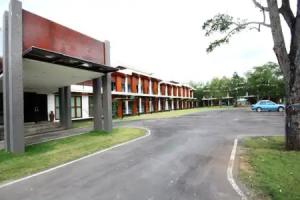
Udon Thani Province
Description
Udon Thani is a province in northeast Thailand. It is bordered by the provinces of Nong Khai to the north, Sakon Nakhon to the east, Kalasin Province to the southeast, Khon Kaen to the south, and Loei and Nong Bua Lam Phu Province to the west. It occupies an area of 11,730 km². The provincial capital is Udon Thani, the major city in the province.
Etymology
Udon Thani is said to mean "northern city". "Udon" is derived from "utara" in Sanskrit, meaning "northern direction", as Udon Thani is northeast of Bangkok. "Thani" means "city".
History
Udon Thani first came to historical notice in the Bangkok era, when Anuwong of Vientiane staged a rebellion against Thai rule and marched his army to Nakhon Ratchasima in 1826. He captured the city by a ruse, but the garrison he left to hold it unexpectedly met with fierce resistance from the disarmed local forces led by Lady Mo, the wife of Nakhon Ratchasima's governor. Anuwong advanced as far as Saraburi, but was forced to retreat. The Thai army pursued him, and the rival forces met in battle at Nong Bua Lamphu, a small city near today's Udon Thani. After two days of fierce fighting, Anuwong's army was defeated and fled back to Laos.
Once known as Ban Mak-kaeng, Udon Thani was originally settled as a military base established by Prince Prachak to suppress an uprising in the northeastern city of Lao Puan. Ban Mak-kaeng grew slowly from a small rural town to become what is now the modern city of Udon Thani.
The province is best known for the prehistoric archaeological site at Ban Chiang and its Bronze Age relics, located in a hamlet about 50 kilometres (31 mi) east of Udon. Udon is one of the more bustling markets for agricultural goods in the relatively dry northeast of Thailand, and received its biggest economic boost in the 1960s when the United States built the Udon Royal Thai Air Force Base as a joint-force military base during the Vietnam War. The Mel Gibson film Air America depicts Udon and includes scenes of the Udon air base. Udon Thani was also the largest base in the region for the CIA's anti-communism campaign in Thailand and Laos. The United States turned the base over to the Royal Thai Air Force in 1976, but its presence left three residual effects on Udon. First, a large number of locals had been paid comparatively well and had learned basic conversational English. This made them more marketable to the outside world, and a significant number went to work in Middle East oilfields. Second, the base created long-standing ties with the United States, including a US consulate in Udon (closed in 1995), and a US Veterans of Foreign Wars post. But most importantly, the base and the consulate made the city into a regional hub for the northeast, and this continues today.
In recent years Udon received international attention because of the discovery of large potash deposits. Some anticipate the region would become a major exporter of the mineral. However, granting the necessary approvals has been substantially delayed due to public opposition to mining. Many villagers living near the proposed mine site fear that the mining company's environmental impact assessment (EIA) did not adequately address the problems of salinization of the groundwater and soil, as well as probability of land subsidence. Either of these would seriously threaten the economic stability of local communities that depend on rice farming for income.
Population and demographics
Udon Thani's geographic position in the north of northeastern Thailand and its proximity to the Laotian capital, Vientiane, has contributed to the province's rapid development as a transport and industrial hub. This has created jobs and attracted migrants from other states as well as from overseas, particularly from Indonesia, the Philippines, Vietnam, Myanmar, Bangladesh, India, Pakistan, and China. In recent decades, the influx of illegal immigrants, particularly from Vietnam, has further swelled Udon Thani's population.
Rank Districts Population 2010 1 Mueang Udon Thani 397,049 2 Kumphawapi 125,193 3 Ban Dung 123,227 4 Nong Han 114,982 5 Phen 110,190 6 Ban Phue 107,965 7 Kut Chap 62,301 8 Nong Wua So 61,658 9 Wang Sam Mo 55,730 10 Nam Som 55,622 11 Non Sa-at 48,459 12 Si That 47,888 13 Chai Wan 38,209 14 Thung Fon 31,029 15 Sang Khom 28,441 16 Nong Saeng 25,802 17 Na Yung 25,701 18 Prachaksinlapakhom 24,693 19 Phibun Rak 24,185 20 Ku Kaeo 21,962Udon Thani had a population of 1,548,107 as of 2010. The province's ethnic composition consists of Lao, Chinese, and other ethnic groups. The most populated cities in Udon Thani as of 2010 are:
Rank City Population 2010 1 Udon Thani 315,329 2 Nong Samrong 27,051 3 Bandung 16,003 4 Non Sung - Nam Kham 10,008Transportation
Udon Thani is linked to the rest of Thailand by comprehensive air, road and rail connections. Most of the major highways that run through the northeastern Thailand, including Mittraphap Road, serve Udon Thani as well.
Udon Thani International Airport, the province's primary airport, is in the district of Mueang Udon Thani near the border with Nong Khai Province.
Healthcare
Notable hospitals in Udon Thani are listed below:
Public Hospitals
- Udon Thani Hospital
- Fort Prachaksilapakhom Hospital
- Royal Thai Air Force Wing 23 Hospital
- Udon Thani Cancer Center
Private Hospitals
- Aek Udon International Hospital
- North Eastern Wattana Hospital
- Bangkok Hospital (Udon Thani branch)
Image gallery
-
Huai Luang reservoir