San Francisco

Description

San Francisco , officially the City and County of San Francisco, is the cultural, commercial, and financial center of Northern California and the only consolidated city-county in California. San Francisco encompasses a land area of about 46.9 square miles (121 km2) on the northern end of the San Francisco Peninsula, which makes it the smallest county in the state. It has a density of about 18,451 people per square mile (7,124 people per km2), making it the most densely settled large city (population greater than 200,000) in the state of California and the second-most densely populated major city in the United States after New York City. San Francisco is the fourth-most populous city in California, after Los Angeles, San Diego, and San Jose, and the 13th-most populous city in the United States—with a Census-estimated 2015 population of 864,816. The city and its surrounding areas are known as the San Francisco Bay Area, and are a part of the larger OMB-designated San Jose-San Francisco-Oakland combined statistical area, the fifth most populous in the nation with an estimated population of 8.7 million.

San Francisco (Spanish for Saint Francis) was founded on June 29, 1776, when colonists from Spain established Presidio of San Francisco at the Golden Gate and Mission San Francisco de Asís named for St. Francis of Assisi a few miles away. The California Gold Rush of 1849 brought rapid growth, making it the largest city on the West Coast at the time. San Francisco became a consolidated city-county in 1856. After three-quarters of the city was destroyed by the 1906 earthquake and fire, San Francisco was quickly rebuilt, hosting the Panama-Pacific International Exposition nine years later. In World War II, San Francisco was the port of embarkation for service members shipping out to the Pacific Theater. After the war, the confluence of returning servicemen, massive immigration, liberalizing attitudes, along with the rise of the "hippie" counterculture, the Sexual Revolution, the Peace Movement growing from opposition to United States involvement in the Vietnam War, and other factors led to the Summer of Love and the gay rights movement, cementing San Francisco as a center of liberal activism in the United States. Politically, the city votes strongly along liberal Democratic Party lines.

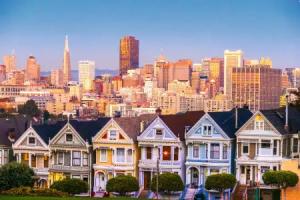
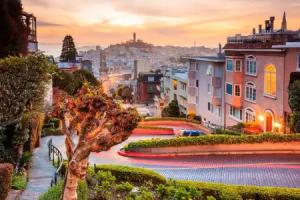
A popular tourist destination, San Francisco is known for its cool summers, fog, steep rolling hills, eclectic mix of architecture, and landmarks, including the Golden Gate Bridge, cable cars, the former Alcatraz Federal Penitentiary, Fisherman's Wharf, and its Chinatown district. San Francisco is also the headquarters of five major banking institutions and various other companies such as Levi Strauss & Co., Gap Inc., Salesforce.com, Dropbox, Reddit, Square, Inc., Dolby, Airbnb, Weebly, Pacific Gas and Electric Company, Yelp, Pinterest, Twitter, Uber, Lyft, Mozilla, Wikimedia Foundation, and Craigslist. It has several nicknames, including "The City by the Bay", "Fog City", "San Fran", and "Frisco", as well as older ones like "The City that Knows How", "Baghdad by the Bay", "The Paris of the West", or simply "The City". As of 2015, San Francisco was ranked high on world livability rankings.

History

Historical affiliations

Spanish Empire 1776–1821
First Mexican Empire 1821–1823
United Mexican States 1823–1848
United States 1848–present

The earliest archaeological evidence of human habitation of the territory of the city of San Francisco dates to 3000 BC. The Yelamu group of the Ohlone people resided in a few small villages when an overland Spanish exploration party, led by Don Gaspar de Portolà, arrived on November 2, 1769, the first documented European visit to San Francisco Bay. Seven years later, on March 28, 1776, the Spanish established the Presidio of San Francisco, followed by a mission, Mission San Francisco de Asís (Mission Dolores), established by the Spanish explorer Juan Bautista de Anza.

Upon independence from Spain in 1821, the area became part of Mexico. Under Mexican rule, the mission system gradually ended, and its lands became privatized. In 1835, Englishman William Richardson erected the first independent homestead, near a boat anchorage around what is today Portsmouth Square. Together with Alcalde Francisco de Haro, he laid out a street plan for the expanded settlement, and the town, named Yerba Buena, began to attract American settlers. Commodore John D. Sloat claimed California for the United States on July 7, 1846, during the Mexican–American War, and Captain John B. Montgomery arrived to claim Yerba Buena two days later. Yerba Buena was renamed San Francisco on January 30 of the next year, and Mexico officially ceded the territory to the United States at the end of the war. Despite its attractive location as a port and naval base, San Francisco was still a small settlement with inhospitable geography.

The California Gold Rush brought a flood of treasure seekers (known as "forty-niners", as in "1849"). With their sourdough bread in tow, prospectors accumulated in San Francisco over rival Benicia, raising the population from 1,000 in 1848 to 25,000 by December 1849. The promise of fabulous riches was so strong that crews on arriving vessels deserted and rushed off to the gold fields, leaving behind a forest of masts in San Francisco harbor. Some of these approximately 500 abandoned ships were used at times as storeships, saloons and hotels; many were left to rot and some were sunk to establish title to the underwater lot. By 1851 the harbor was extended out into the bay by wharves while buildings were erected on piles among the ships. By 1870 Yerba Buena Cove had been filled to create new land. Buried ships are occasionally exposed when foundations are dug for new buildings.

California was quickly granted statehood, and the U.S. military built Fort Point at the Golden Gate and a fort on Alcatraz Island to secure the San Francisco Bay. Silver discoveries, including the Comstock Lode in 1859, further drove rapid population growth. With hordes of fortune seekers streaming through the city, lawlessness was common, and the Barbary Coast section of town gained notoriety as a haven for criminals, prostitution, and gambling.

Entrepreneurs sought to capitalize on the wealth generated by the Gold Rush. Early winners were the banking industry, with the founding of Wells Fargo in 1852 and the Bank of California in 1864. Development of the Port of San Francisco and the establishment in 1869 of overland access to the Eastern U.S. rail system via the newly completed Pacific Railroad (the construction of which the city only reluctantly helped support) helped make the Bay Area a center for trade. Catering to the needs and tastes of the growing population, Levi Strauss opened a dry goods business and Domingo Ghirardelli began manufacturing chocolate. Immigrant laborers made the city a polyglot culture, with Chinese Railroad Workers, drawn to "Old Gold Mountain", creating the city's Chinatown quarter. In 1870, Asians made up 8% of the population. The first cable cars carried San Franciscans up Clay Street in 1873. The city's sea of Victorian houses began to take shape, and civic leaders campaigned for a spacious public park, resulting in plans for Golden Gate Park. San Franciscans built schools, churches, theaters, and all the hallmarks of civic life. The Presidio developed into the most important American military installation on the Pacific coast. By 1890, San Francisco's population approached 300,000, making it the eighth-largest city in the U.S. at the time. Around 1901, San Francisco was a major city known for its flamboyant style, stately hotels, ostentatious mansions on Nob Hill, and a thriving arts scene. The first North American plague epidemic was the San Francisco plague of 1900–1904.

At 5:12 am on April 18, 1906, a major earthquake struck San Francisco and northern California. As buildings collapsed from the shaking, ruptured gas lines ignited fires that spread across the city and burned out of control for several days. With water mains out of service, the Presidio Artillery Corps attempted to contain the inferno by dynamiting blocks of buildings to create firebreaks. More than three-quarters of the city lay in ruins, including almost all of the downtown core. Contemporary accounts reported that 498 people lost their lives, though modern estimates put the number in the several thousands. More than half of the city's population of 400,000 was left homeless. Refugees settled temporarily in makeshift tent villages in Golden Gate Park, the Presidio, on the beaches, and elsewhere. Many fled permanently to the East Bay.

"Not in history has a modern imperial city been so completely destroyed. San Francisco is gone." –Jack London after the 1906 earthquake and fire

Rebuilding was rapid and performed on a grand scale. Rejecting calls to completely remake the street grid, San Franciscans opted for speed. Amadeo Giannini's Bank of Italy, later to become Bank of America, provided loans for many of those whose livelihoods had been devastated. The influential San Francisco Planning and Urban Research Association or SPUR was founded in 1910 to address the quality of housing after the earthquake. The earthquake hastened development of western neighborhoods that survived the fire, including Pacific Heights, where many of the city's wealthy rebuilt their homes. In turn, the destroyed mansions of Nob Hill became grand hotels. City Hall rose again in splendid Beaux Arts style, and the city celebrated its rebirth at the Panama-Pacific International Exposition in 1915.

It was during this period San Francisco built some of its most important infrastructure. Civil Engineer Michael O'Shaughnessy was hired by San Francisco Mayor James Rolph as chief engineer for the city in September 1912 to supervise the construction of the Twin Peaks Reservoir, the Stockton Street Tunnel, the Twin Peaks Tunnel, the San Francisco Municipal Railway, the Auxiliary Water Supply System, and new sewers. San Francisco's streetcar system, of which the J, K, L, M, and N lines survive today, was pushed to completion by O'Shaughnessy between 1915 and 1927. It was the O'Shaughnessy Dam, Hetch Hetchy Reservoir, and Hetch Hetchy Aqueduct that would have the largest effect on San Francisco. An abundant water supply enabled San Francisco to develop into the city it has become today.

In ensuing years, the city solidified its standing as a financial capital; in the wake of the 1929 stock market crash, not a single San Francisco-based bank failed. Indeed, it was at the height of the Great Depression that San Francisco undertook two great civil engineering projects, simultaneously constructing the San Francisco–Oakland Bay Bridge and the Golden Gate Bridge, completing them in 1936 and 1937 respectively. It was in this period that the island of Alcatraz, a former military stockade, began its service as a federal maximum security prison, housing notorious inmates such as Al Capone, and Robert Franklin Stroud, The Birdman of Alcatraz. San Francisco later celebrated its regained grandeur with a World's fair, the Golden Gate International Exposition in 1939–40, creating Treasure Island in the middle of the bay to house it.

During World War II, the Hunters Point Naval Shipyard became a hub of activity, and Fort Mason became the primary port of embarkation for service members shipping out to the Pacific Theater of Operations. The explosion of jobs drew many people, especially African Americans from the South, to the area. After the end of the war, many military personnel returning from service abroad and civilians who had originally come to work decided to stay. The UN Charter creating the UN was drafted and signed in San Francisco in 1945 and, in 1951, the Treaty of San Francisco officially ended the war with Japan.

Urban planning projects in the 1950s and 1960s involved widespread destruction and redevelopment of west-side neighborhoods and the construction of new freeways, of which only a series of short segments were built before being halted by citizen-led opposition. The onset of containerization made San Francisco's small piers obsolete, and cargo activity moved to the larger Port of Oakland. The city began to lose industrial jobs and turned to tourism as the most important segment of its economy. The suburbs experienced rapid growth, and San Francisco underwent significant demographic change, as large segments of the white population left the city, supplanted by an increasing wave of immigration from Asia and Latin America. From 1950 to 1980, the city lost over 10 percent of its population.

Over this period, San Francisco became a magnet for America's counterculture. Beat Generation writers fueled the San Francisco Renaissance and centered on the North Beach neighborhood in the 1950s. Hippies flocked to Haight-Ashbury in the 1960s, reaching a peak with the 1967 Summer of Love. In 1974, the Zebra murders left at least 16 people dead. In the 1970s, the city became a center of the gay rights movement, with the emergence of The Castro as an urban gay village, the election of Harvey Milk to the Board of Supervisors, and his assassination, along with that of Mayor George Moscone, in 1978.

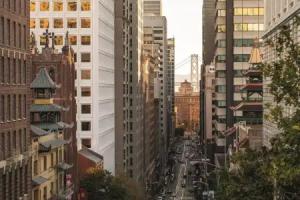
Bank of America completed 555 California Street in 1969 and the Transamerica Pyramid was completed in 1972, igniting a wave of "Manhattanization" that lasted until the late 1980s, a period of extensive high-rise development downtown. The 1980s also saw a dramatic increase in the number of homeless people in the city, an issue that remains today, despite many attempts to address it. The 1989 Loma Prieta earthquake caused destruction and loss of life throughout the Bay Area. In San Francisco, the quake severely damaged structures in the Marina and South of Market districts and precipitated the demolition of the damaged Embarcadero Freeway and much of the damaged Central Freeway, allowing the city to reclaim The Embarcadero as its historic downtown waterfront and revitalizing the Hayes Valley neighborhood.

The last 20 years have seen two booms driven by the internet industry. First was the dot-com boom of the late 1990s, startup companies invigorated the San Francisco economy. Large numbers of entrepreneurs and computer application developers moved into the city, followed by marketing, design, and sales professionals, changing the social landscape as once-poorer neighborhoods became increasingly gentrified. Demand for new housing and office space ignited a second wave of high-rise development, this time in the South of Market district. By 2000, the city's population reached new highs, surpassing the previous record set in 1950. When the bubble burst in 2001, many of these companies folded and their employees were laid off. Yet high technology and entrepreneurship remain mainstays of the San Francisco economy. By the mid 2000s (decade), the social media boom had begun, with San Francisco becoming a popular location for tech offices and a popular place to live for people employed in Silicon Valley companies such as Apple and Google.

Geography

San Francisco is located on the West Coast of the United States at the north end of the San Francisco Peninsula and includes significant stretches of the Pacific Ocean and San Francisco Bay within its boundaries. Several picturesque islands—Alcatraz, Treasure Island and the adjacent Yerba Buena Island, and small portions of Alameda Island, Red Rock Island, and Angel Island—are part of the city. Also included are the uninhabited Farallon Islands, 27 miles (43 km) offshore in the Pacific Ocean. The mainland within the city limits roughly forms a "seven-by-seven-mile square", a common local colloquialism referring to the city's shape, though its total area, including water, is nearly 232 square miles (600 km2).

There are more than 50 hills within city limits. Some neighborhoods are named after the hill on which they are situated, including Nob Hill, Potrero Hill, and Russian Hill. Near the geographic center of the city, southwest of the downtown area, are a series of less densely populated hills. Twin Peaks, a pair of hills forming one of the city's highest points, forms a popular overlook spot. San Francisco's tallest hill, Mount Davidson, is 928 feet (283 m) high and is capped with a 103-foot (31 m) tall cross built in 1934. Dominating this area is Sutro Tower, a large red and white radio and television transmission tower.

The nearby San Andreas and Hayward Faults are responsible for much earthquake activity, although neither physically passes through the city itself. The San Andreas Fault caused the earthquakes in 1906 and 1989. Minor earthquakes occur on a regular basis. The threat of major earthquakes plays a large role in the city's infrastructure development. The city constructed an auxiliary water supply system and has repeatedly upgraded its building codes, requiring retrofits for older buildings and higher engineering standards for new construction. However, there are still thousands of smaller buildings that remain vulnerable to quake damage. USGS has released the California earthquake forecast which models earthquake occurrence in California.

San Francisco's shoreline has grown beyond its natural limits. Entire neighborhoods such as the Marina, Mission Bay, and Hunters Point, as well as large sections of the Embarcadero, sit on areas of landfill. Treasure Island was constructed from material dredged from the bay as well as material resulting from tunneling through Yerba Buena Island during the construction of the Bay Bridge. Such land tends to be unstable during earthquakes. The resulting liquefaction causes extensive damage to property built upon it, as was evidenced in the Marina district during the 1989 Loma Prieta earthquake. Most of the city's natural watercourses, such as Islais Creek and Mission Creek, have been culverted and built over, although the Public Utilities Commission is studying proposals to daylight or restore some creeks.

Culture and contemporary life

Although the Financial District, Union Square, and Fisherman's Wharf are well-known around the world, San Francisco is also characterized by its numerous culturally rich streetscapes featuring mixed-use neighborhoods anchored around central commercial corridors to which residents and visitors alike can walk. Because of these characteristics, San Francisco is ranked the second "most walkable" city in the U.S. by Walkscore.com. Many neighborhoods feature a mix of businesses, restaurants and venues that cater to both the daily needs of local residents while also serving many visitors and tourists. Some neighborhoods are dotted with boutiques, cafes and nightlife such as Union Street in Cow Hollow, 24th Street in Noe Valley, Valencia Street in the Mission, Grant Avenue in North Beach, and Irving Street in the Inner Sunset. This approach especially has influenced the continuing South of Market neighborhood redevelopment with businesses and neighborhood services rising alongside high-rise residences.

Since the 1990s, the demand for skilled information technology workers from local startups and nearby Silicon Valley has attracted white-collar workers from all over the world and created a high standard of living in San Francisco. Many neighborhoods that were once blue-collar, middle, and lower class have been gentrifying, as many of the city's traditional business and industrial districts have experienced a renaissance driven by the redevelopment of the Embarcadero, including the neighborhoods South Beach and Mission Bay. The city's property values and household income have risen to among the highest in the nation, creating a large and upscale restaurant, retail, and entertainment scene. According to a 2014 quality of life survey of global cities, San Francisco has the highest quality of living of any U.S. city. However, due to the exceptionally high cost of living, many of the city's middle and lower-class families have been leaving the city for the outer suburbs of the Bay Area, or for California's Central Valley. By June 2, 2015, the median rent was reported to be as high as $4,225. The high cost of living is due in part to restrictive planning laws which limit new residential construction.

The international character that San Francisco has enjoyed since its founding is continued today by large numbers of immigrants from Asia and Latin America. With 39% of its residents born overseas, San Francisco has numerous neighborhoods filled with businesses and civic institutions catering to new arrivals. In particular, the arrival of many ethnic Chinese, which accelerated beginning in the 1970s, has complemented the long-established community historically based in Chinatown throughout the city and has transformed the annual Chinese New Year Parade into the largest event of its kind outside China.

With the arrival of the "beat" writers and artists of the 1950s and societal changes culminating in the Summer of Love in the Haight-Ashbury district during the 1960s, San Francisco became a center of liberal activism and of the counterculture that arose at that time. The Democrats and to a lesser extent the Green Party have dominated city politics since the late 1970s, after the last serious Republican challenger for city office lost the 1975 mayoral election by a narrow margin. San Francisco has not voted more than 20% for a Republican presidential or senatorial candidate since 1988. In 2007, the city expanded its Medicaid and other indigent medical programs into the "Healthy San Francisco" program, which subsidizes certain medical services for eligible residents.

San Francisco also has had a very active environmental community. Starting with the founding of the Sierra Club in 1892 to the establishment of the non-profit Friends of the Urban Forest in 1981, San Francisco has been at the forefront of many global discussions regarding our natural environment. The 1980 San Francisco Recycling Program was one of the earliest curbside recycling programs. The city's GoSolarSF incentive promotes solar installations and the San Francisco Public Utilities Commission is rolling out the CleanPowerSF program to sell electricity from local renewable sources. SF Greasecycle is a program to recycle used cooking oil for conversion to biodiesel.

The Sunset Reservoir Solar Project, completed in 2010, installed 24,000 solar panels on the roof of the reservoir. The 5-megawatt plant more than tripled the city's 2-megawatt solar generation capacity when it opened in December 2010.

LGBT

San Francisco has long had an LGBT-friendly history. It was home to the first lesbian-rights organization in the United States, Daughters of Bilitis; the first openly gay person to run for public office in the U.S., José Sarria; the first openly gay man to be elected to public office in the U.S., Harvey Milk; the first openly lesbian judge appointed in the U.S., Mary C. Morgan; and the first transgender police commissioner, Theresa Sparks. The city's large gay population has created and sustained a politically and culturally active community over many decades, developing a powerful presence in San Francisco's civic life. One of the most popular destinations for gay tourists internationally, the city hosts San Francisco Pride, one of the largest and oldest pride parades.

San Francisco Pride events have been held continuously since 1972. The events are themed and a new theme is created each year. In 2013, over 1.5 million people attended, around 500,000 more than the previous year.

Entertainment and performing arts

San Francisco's War Memorial and Performing Arts Center hosts some of the most enduring performing-arts companies in the U.S. The War Memorial Opera House houses the San Francisco Opera, the second-largest opera company in North America as well as the San Francisco Ballet, while the San Francisco Symphony plays in Davies Symphony Hall.

The Fillmore is a music venue located in the Western Addition. It is the second incarnation of the historic venue that gained fame in the 1960s, housing the stage where now-famous musicians such as the Grateful Dead, Janis Joplin, Led Zeppelin and Jefferson Airplane first performed, fostering the San Francisco Sound.

San Francisco has a large number of theaters and live performance venues. Local theater companies have been noted for risk taking and innovation. The Tony Award-winning non-profit American Conservatory Theater (A.C.T.) is a member of the national League of Resident Theatres. Other local winners of the Regional Theatre Tony Award include the San Francisco Mime Troupe. San Francisco theaters frequently host pre-Broadway engagements and tryout runs, and some original San Francisco productions have later moved to Broadway.

Museums

The San Francisco Museum of Modern Art (SFMOMA) houses 20th century and contemporary works of art. It moved to its current building in the South of Market neighborhood in 1995 and attracted more than 600,000 visitors annually. SFMOMA closed for renovation and expansion in 2013. The museum reopened on May 14, 2016 with an addition, designed by Snøhetta, that has doubled the museum's size.

The Palace of the Legion of Honor holds primarily European antiquities and works of art at its Lincoln Park building modeled after its Parisian namesake. The de Young Museum in Golden Gate Park features American decorative pieces and anthropological holdings from Africa, Oceania and the Americas, while Asian art is housed in the Asian Art Museum. Opposite the de Young stands the California Academy of Sciences, a natural history museum that also hosts the Morrison Planetarium and Steinhart Aquarium. Located on Pier 15 on the Embarcadero, the Exploratorium is an interactive science museum. The Contemporary Jewish Museum is a non-collecting institution that hosts a broad array of temporary exhibitions. On Nob Hill, the Cable Car Museum is a working museum featuring the cable car power house, which drives the cables.

Beaches and parks

Several of San Francisco's parks and nearly all of its beaches form part of the regional Golden Gate National Recreation Area, one of the most visited units of the National Park system in the United States with over 13 million visitors a year. Among the GGNRA's attractions within the city are Ocean Beach, which runs along the Pacific Ocean shoreline and is frequented by a vibrant surfing community, and Baker Beach, which is located in a cove west of the Golden Gate and part of the Presidio, a former military base. Also within the Presidio is Crissy Field, a former airfield that was restored to its natural salt marsh ecosystem. The GGNRA also administers Fort Funston, Lands End, Fort Mason, and Alcatraz. The National Park Service separately administers the San Francisco Maritime National Historical Park – a fleet of historic ships and waterfront property around Aquatic Park.

There are more than 220 parks maintained by the San Francisco Recreation & Parks Department. The largest and best-known city park is Golden Gate Park, which stretches from the center of the city west to the Pacific Ocean. Once covered in native grasses and sand dunes, the park was conceived in the 1860s and was created by the extensive planting of thousands of non-native trees and plants. The large park is rich with cultural and natural attractions such as the Conservatory of Flowers, Japanese Tea Garden and San Francisco Botanical Garden. Lake Merced is a fresh-water lake surrounded by parkland and near the San Francisco Zoo, a city-owned park that houses more than 250 animal species, many of which are endangered. The only park managed by the California State Park system located principally in San Francisco, Candlestick Point was the state's first urban recreation area.

Transportation

Freeways and roads

Due to its unique geography, and the freeway revolts of the late 1950s, San Francisco is one of the few American cities with arterial thoroughfares instead of having numerous highways within the city.

Interstate 80 begins at the approach to the Bay Bridge and is the only direct automobile link to the East Bay. U.S. Route 101 connects to the western terminus of Interstate 80 and provides access to the south of the city along San Francisco Bay toward Silicon Valley. Northward, the routing for U.S. 101 uses arterial streets to connect to the Golden Gate Bridge, the only direct automobile link to Marin County and the North Bay.

State Route 1 also enters San Francisco from the north via the Golden Gate Bridge and bisects the city as the 19th Avenue arterial thoroughfare, joining with Interstate 280 at the city's southern border. Interstate 280 continues south from San Francisco, and also turns to the east along the southern edge of the city, terminating just south of the Bay Bridge in the South of Market neighborhood. After the 1989 Loma Prieta earthquake, city leaders demolished the Embarcadero Freeway and a portion of the Central Freeway, converting them into street-level boulevards.

State Route 35 enters the city from the south as Skyline Boulevard and terminates at its intersection with Highway 1. State Route 82 enters San Francisco from the south as Mission Street, and terminates shortly thereafter at its junction with 280.

The Western Terminus of the historic transcontinental Lincoln Highway, the first road across America, is in San Francisco's Lincoln Park.

Public transportation

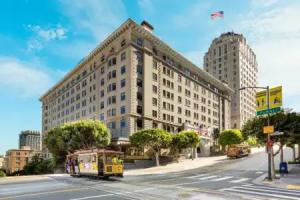
32% of San Francisco residents use public transportation in daily commuting to work, ranking it first on the West Coast and third overall in the United States. The San Francisco Municipal Railway, known as Muni, is the primary public transit system of San Francisco. Muni is the seventh-largest transit system in the United States, with 210,848,310 rides in 2006. The system operates both a combined light rail and subway system, the Muni Metro, and a large bus network. Additionally, it runs a historic streetcar line, which runs on Market Street from Castro Street to Fisherman's Wharf. It also operates the famous cable cars, which have been designated as a National Historic Landmark and are a major tourist attraction.

BART, a regional Rapid Transit system, connects San Francisco with the East Bay through the underwater Transbay Tube. The line runs under Market Street to Civic Center where it turns south to the Mission District, the southern part of the city, and through northern San Mateo County, to the San Francisco International Airport, and Millbrae. Another Commuter Rail system, Caltrain, runs from San Francisco along the San Francisco Peninsula to San Jose. Historically, trains operated by Southern Pacific Lines ran from San Francisco to Los Angeles, via Palo Alto and San Jose.

Amtrak California Thruway Motorcoach runs a shuttle bus from San Francisco to its rail station across the Bay in Emeryville. Lines from Emeryville Station include the Capitol Corridor, San Joaquin, California Zephyr, and Coast Starlight. Thruway service also runs south to San Luis Obispo, California with connection to the Pacific Surfliner.

San Francisco Bay Ferry operates from the Ferry Building and Pier 39 to points in Oakland, Alameda, Bay Farm Island, South San Francisco, and north to Vallejo in Solano County. The Golden Gate Ferry is the other ferry operator with service between San Francisco and Marin County. Soltrans runs supplemental bus service between the Ferry Building and Vallejo.

San Francisco was an early adopter of carsharing in America. The non profit City Carshare opened in 2001. Zipcar closely followed.

Airports

Though located 13 miles (21 km) south of downtown in unincorporated San Mateo County, San Francisco International Airport (SFO) is under the jurisdiction of the City and County of San Francisco. SFO is a hub for United Airlines and Virgin America. SFO is a major international gateway to Asia and Europe, with the largest international terminal in North America. In 2011, SFO was the 8th busiest airport in the U.S. and 22nd busiest in the world, handling over 40.9 million passengers.

Located across the bay, Oakland International Airport is a popular, low-cost alternative to SFO. Geographically, Oakland Airport is approximately the same distance from downtown San Francisco as SFO, but due to its location across San Francisco Bay, it is greater driving distance from San Francisco.

Cycling and walking

Cycling is a popular mode of transportation in San Francisco. 75,000 residents commute by bicycle per day. Bay Area Bike Share launched in August 2013 with 700 bikes in downtown San Francisco and selected cities south to San Jose. The San Francisco Municipal Transportation Agency and Bay Area Air Quality Management District are responsible for the operation with management provided by Alta Bicycle Share. The system will be expanded in the future. Pedestrian traffic is a major mode of transport. In 2015, Walk Score ranked San Francisco the second-most walkable city in the United States.

San Francisco has significantly higher rates of pedestrian and bicyclist traffic deaths than the USA on average. In 2013, 21 pedestrians were killed in vehicle collisions, the highest since 2001, which is 2.5 deaths per 100,000 population – 70% higher than the national average of 1.5 deaths per 100,000 population.

Cycling is growing in San Francisco. Annual bicycle counts conducted by the Municipal Transportation Agency (MTA) in 2010 showed the number of cyclists at 33 locations had increased 58% from the 2006 baseline counts. In 2008, the MTA estimated that about 128,000 trips were made by bicycle each day in the city, or 6% of total trips. Since 2002, improvements in cycling infrastructure in recent years, including additional bike lanes and parking racks, have made cycling in San Francisco safer and more convenient. Since 2006, San Francisco has received a Bicycle Friendly Community status of "Gold" from the League of American Bicyclists.

Consulates and sister cities

San Francisco participates in the Sister Cities program. A total of 41 consulates general and 23 honorary consulates have offices in the San Francisco Bay Area.

Sister cities

  • Amman, Jordan
  • Assisi, Italy
  • Barcelona, Spain
  • Burgas, Bulgaria
  • Caracas, Venezuela
  • Cork, Ireland
  • Haifa, Israel
  • Ho Chi Minh City, Vietnam
  • Tyumen, Russia
  • Bengaluru, India
  • Manila, Philippines
  • Osaka, Japan
  • Paris, France
  • Shanghai, China
  • Sydney, Australia
  • Taipei, Taiwan
  • Thessaloniki, Greece
  • Zürich, Switzerland

Street view

Hotels

2 guests
Adults2+
Children under 170+
Age7+
Age7+
Age7+
Age7+
Age7+
Age7+
Age7+
Age7+
Age7+
Age7+
Search hotel

Reviews

Share your experiences, help others make the right choice!
Think about what you would like to know if you were looking for a review about a place to relax. Please describe in detail what you liked and what you didn't. What would you advise to other guests and to the hotel owner. The more fully you tell about the hotel, the easier it will be for other people to make a choice and they will be very grateful to you!

Map

X