Tartu County
Description
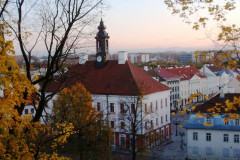
Tartu County is one of 15 counties of Estonia.
It is located in eastern Estonia bordering Põlva County, Valga County, Viljandi County and Jõgeva County.
The area of Tartu County is 2,992.74 km², which covers 6.9% of the territory of Estonia. In January 2013 Tartu County had a population of 150,139 – constituting 11.6% of the total population in Estonia. The city of Tartu is the centre of the county located at a distance of 186 km from Tallinn. Tartu County is divided into 22 local governments – 3 urban and 19 rural municipalities.
Geography
Tartu County lies in South Estonia, between Lake Võrtsjärv and Lake Peipsi. Estonia's only navigable river, River Emajõgi (100 km long), flows through the county, connecting Lake Peipsi and Lake Võrtsjärv. Wavy plains are typical landscapes of Tartu County. One third of the county is covered with forests, a third is cultivated. A quarter is made up of wetlands at the headwaters and lower course of the Emajõgi. In the northern part of the county, there are drumlin fields with lakes between them. Nature preserves take up about 10% of the county's territory, the biggest of them being Emajõe Suursoo and Alam-Pedja.
History
Archaeological findings suggest that people first inhabited the territory of the current Tartu County about 5000 years ago. City of Tartu was first mentioned in historical records in 1030, then a site of a wooden stronghold. In 1224, after the conquest of the stronghold by the German invaders, Tartu became the capital of a diocese, stretching from Northern Estonia to Latvia. Since the 13th century, Tartu belonged to the Hanseatic League, and the town became a well-known trade centre in the Baltic Sea region. In 1569, together with Duchy of Livonia, Tartu became part of the Polish-Lithuanian Commonwealth. In 1598 Tartu became capital of the Dorpat Voivodeship, which remained part of the PLC until the 1620s, when the city was conquered by the Swedes.
King Gustavus Adolphus of Sweden established the University of Tartu in 1632. Estonia's first teachers' training school was established in Tartu County in 1684, as well as the first Estonian schools for the children of peasants. Closed during and after the Great Northern War, Tartu University was re-opened in 1802 as the only university operating in German language in the Russian Empire. Economic development of the region was further encouraged by the construction of the railway connecting Tartu with Tallinn, Riga and St. Petersburg. In the second half of the 19th century, the national awakening of Estonians began from Tartu region. After Estonia gained independence in 1918, Tartu, along with Tallinn, became one of the two main cultural centres of Estonia, where most of the Estonian intelligentsia of the time lived and worked. In 1987–1989, the students' environmental and cultural heritage movement in Tartu initiated Estonia's Singing Revolution and restoration of the country's independence.
Education and culture
Tartu County has 69 schools with approximately 23,000 pupils. 11 vocational schools provide practical training in 50 specialities. 40% of Estonia's students live and study in Tartu. In addition to the University of Tartu and the Estonian University of Life Sciences there are 9 other institutions of higher education, the most recent of them the Baltic Defence College.
In the City of Tartu, Estonia's oldest professional theatre, Vanemuine, stages drama, opera and ballet. In 1869 the first Estonian Song Festival was held in Tartu, starting a tradition of choral song festivals which are now held in Tallinn every 4 years with 15,000–30,000 participants. Today Tartu Song Festival arena hosts various open-air concerts in summer. There are over 30 museums and art galleries in Tartu County, including Tartu City Museum, Tartu Art Museum, Toy Museum, Estonian Sports Museum, Estonian Postal Museum, Estonian Aviation Museum, Estonian Museum of Agriculture, Old-Believers' Museum of Living History, and others. Student festivals and Hanseatic festivals take place in Tartu regularly. The best known sports event hosted by Tartu County is the Tartu Ski Marathon, which is a member of the Worldloppet series.