Chanthaburi Province
Description
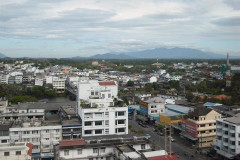
Chanthaburi is a province (changwat) of Thailand. It is in the east of Thailand, on the border with Battambang and Pailin of Cambodia and on the shore of the Gulf of Thailand. Neighbouring provinces are Trat in the east and Rayong, Chonburi, Chachoengsao, and Sa Kaeo to the west and north.
Etymology
The word "chantha" originates from the Sanskrit word "chandra" meaning "moon", and the word "buri" from Sanskrit "puri", meaning "town" or "city". Therefore, the provincial name literally means "moon city". The Chong name for the province is Chankabui.
History
After the Paknam crisis in 1893, French colonial troops occupied Chanthaburi, returning it in 1905 when Thailand gave up ownership of the western part of Cambodia. A significant minority of Chanthaburi citizens are native Vietnamese, who came there in three waves: first in the 19th century during anti-Catholic persecutions in Cochin China; a second wave in the 1920s to 1940s fleeing from French Indochina; and a third wave after the communist victory in Vietnam in 1975. The town of Chanthaburi has been the seat of a Bishop of Chanthaburi since 1944.
Geography
While the southern part of the province is on the shore of the Gulf of Thailand and thus is mostly coastal alluvial plains, the hinterlands of the province are quite mountainous. The Chanthaburi mountain range in the north has the highest elevation of the province, the 1,556 m high Soi Dao Nua Peak. The main river of the province is the Chanthaburi River.
Together with the neighboring province, Trat, Chanthaburi is a center of gemstone mining, especially rubies and sapphires. Tropical fruits are also among the main products of the province. In 2000, it produced nearly 380,000 tonnes of durian, which was 45.57% of Thailand's durian production, approximately 27% of the entire world's production.
Within provincial boundaries lie three national parks: Namtok Phlio National Park; Khao Khitchakut National Park; and Khao Sip Ha Chan National Park.