Chicago
Description
Chicago is the third largest (after new York and Los Angeles) city in the USA, the second largest financial center (after New York), and the largest transportation hub in North America. It is located on the southwest coast of lake Michigan in Illinois.
Chicago is considered the economic, industrial, transport and cultural capital of the Midwest. Unofficially it is sometimes called the "Second City" and "Windy City". First Chicago was named the "Windy City" in an article in the Chicago Tribune in 1858.
History
XVII—XIX century
In 1674 on the site of modern Chicago French Jesuit Jacques Marquette, was founded the missionary post.
Chicago appeared on the map in 1833 as a village with a population of 350 people. Name of Chicago — a change from the French word from the indigenous language of Miami-Illinois shikaakwa which means wild onion or garlic.
In 1837, Chicago was granted town status, and in 1840 the population of the population reaches more than 4 thousand people. Occupying a favorable geographical position between the West and East of the USA, Chicago is quickly becoming one of the key transportation hubs in the country, which in turn will cause a huge rise in production in the city and the influx of immigrants. In 1856, the city municipality has approved the project of building the first U.S. city sewer. In the framework of this project during the 1850s and 1860s, the years have raised the level of the soil of the city. In accordance with the plan, all wastes were dumped into lake Michigan.
In 1871 most of the city burned in the Great Chicago fire. This gave the opportunity to rebuild the city and gave impetus to the greatest building boom in the United States, which has led to the fact that the city became the center of U.S. architecture.
In 1885 in Chicago constructed the world's first skyscraper. In 1892 based the University of Chicago, has become one of the leading universities in the world, and in 1893, the city hosts the world exhibition, called "Founded", and attracted over 27 million visitors. In General, this epoch in Chicago's history can be characterized as the era of economic, especially industrial, the rise in the city. In 1890, Chicago is the second largest city in the U.S. (after New York) with a population of 1.1 million people.
With the growth of the city began to feel the lack of clean water and problems with sewage because the city sewage poured into lake Michigan. In 1900, the problem was solved by reversal of the Chicago river, so it flowed out of lake Michigan and the construction of a clean channel leading to the Illinois river.
The twentieth century
In 1920, the town had gained international "fame" in connection with the growth of organized crime, headed by the famous gangsters such as al Capone. In the 1920-ies in Chicago, there were more than a thousand gangs. In the city there is a rapid growth industry, which causes the influx of migrants to the city, primarily African Americans. The influx of African Americans caused the flowering of African American culture, including jazz. The most prominent representative of the movement was the famous king Oliver. In 1925, in Chicago African American from North Carolina, Timothy drew (1886-1929), who took the name noble drew Ali, founded a religious organization based on the ideas of Islam "Moorish Holy temple of science", which in 1928 was renamed the "Moorish science temple of America." Later, its offices were established in several cities of the Northern United States.
It is in the University of Chicago in 1942 under the Manhattan project, was held the world's first controlled nuclear reaction.
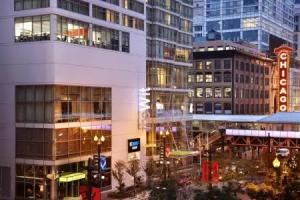
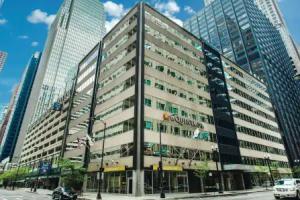
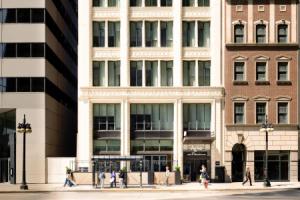
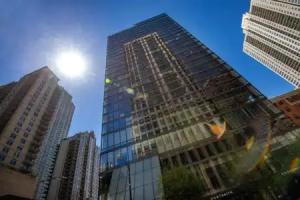
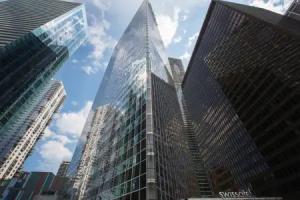
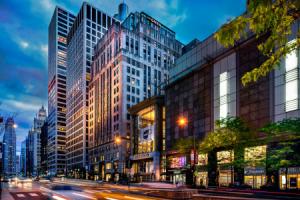
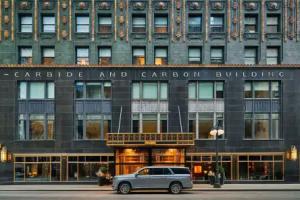
Chicago — one of the centers of the architecture of the United States. Five of the 10 tallest buildings in the United States and 10 of the 50 tallest buildings in the world are in Chicago, including the former tallest building "Willis tower" (until 2009 known as the "Sears tower").
The second half of the twentieth century for Chicago, is associated with suburbanization — many Chicagoans move to the suburbs. The city becomes more comfortable for living, new buildings, became the face of the city, including the "Sears tower". The city acquired a modern look.