Emirate of Abu Dhabi
Description
The Emirate of Abu Dhabi , is one of seven emirates that constitute the United Arab Emirates (UAE). It is the largest emirate by area (67,340 km²), accounting for approximately 87 per cent of the total land area of the federation. Abu Dhabi also has the largest population of the seven emirates. In June 2011, it was estimated to be 2,120,700 people, of which, 439,100 people (less than 21%) were Emirati citizens, which has risen to 2.3 million in 2012.
Abu Dhabi is the capital city of the emirate, after which it is named, as well as the capital of the federation.
Abu Dhabi’s Gross Domestic Product (GDP) estimates, in 2011, amounted to AED 806,031 million at current prices. Mining and quarrying (includes crude oil and natural gas) accounts for the largest contribution to GDP (58.5 per cent in 2011). Construction related industries are the next largest contributor (10.1 per cent in 2011). GDP grew to AED 911.6 billion in 2012, or over 100,000 USD per capita.
In recent times, the Emirate of Abu Dhabi has continuously contributed around 60 per cent of the GDP of the United Arab Emirates, while its population constitutes only 34 per cent of the total UAE population according to the 2005 census.
In the early 1970s, two important developments helped the emirate achieve leaps on the path of development. The first was the establishment of the United Arab Emirates in December 1971 with Abu Dhabi as its political and administrative capital. The second was the sharp increase in oil prices following the October 1973 War, which accompanied a change in the relationship between the oil countries and foreign oil companies, leading to a dramatic rise in oil revenues.
Etymology
"Dhabi" is the Arabic name of a particular species of native Arabian gazelle that was once common in the region. Abu Dhabi means father of the "Dhabi" (gazelle). It is thought that this name came about because of the abundance of Gazelles in the area and a folk tale involving Shakhbut bin Dhiyab al Nahyan.
History
Qasr al-Hosn fort in Abu Dhabi, dating to the 18th century CEParts of Abu Dhabi were settled as far back as the 3rd millennium BC and its early history fits the nomadic herding and fishing pattern typical of the broader region. Modern Abu Dhabi traces its origins to the rise of an important tribal confederation, the Bani Yas, in the late 18th century, which also assumed control of Dubai. In the 19th century the Dubai and Abu Dhabi branches parted ways.
Into the mid-20th century, the economy of Abu Dhabi continued to be sustained mainly by camel herding, production of dates and vegetables at the inland oases of Al-`Ain and Liwa, and fishing and pearl diving off the coast of Abu Dhabi city, which was occupied mainly during the summer months. Most dwellings in Abu Dhabi city were, at this time, constructed of palm fronds (barasti), with the wealthier families occupying mud huts. The growth of the cultured pearl industry in the first half of the twentieth century created hardship for residents of Abu Dhabi as pearls represented the largest export and main source of cash earnings.
In 1939, Sheikh Shakhbut Bin-Sultan Al Nahyan granted petroleum concessions, and oil was first found in 1958. At first, oil money had a marginal impact. A few low-rise concrete buildings were erected, and the first paved road was completed in 1961, but Sheikh Shakbut, uncertain whether the new oil royalties would last, took a cautious approach, preferring to save the revenue rather than investing it in development.
His brother, Sheikh Zayed bin Sultan Al Nahyan, saw that oil wealth had the potential to transform Abu Dhabi. The ruling Al Nahyan family decided that Sheikh Zayed should replace his brother as ruler and carry out his vision of developing the country. On August 6, 1966, with the assistance of the British, Sheikh Zayed became the new ruler.
With the announcement by the UK in 1968 that it would withdraw from the Persian Gulf area by 1971, Sheikh Zayed became the main driving force behind the formation of the United Arab Emirates.
After the Emirates gained independence in 1971, oil wealth continued to flow to the area and traditional mud-brick huts were rapidly replaced with banks, boutiques and modern highrises.
At present, Abu Dhabi boasts what is estimated to be the world's highest absolute and per-capita level of sovereign wealth funds, calculated at USD 1,000,000 per a local national inhabitant.
Geography
The United Arab Emirates is located in the oil-rich and strategic Persian Gulf region. It adjoins the Kingdom of Saudi Arabia and the Sultanate of Oman.
Abu Dhabi is located in the far west and southwest part of the United Arab Emirates along the southern coast of the Persian Gulf between latitudes 22°40’ and around 25° north and longitudes 51° and around 56° east. It borders the emirate of Dubai and emirate of Sharjah to its north.
The total area of the Emirate is 67,340 square kilometres, occupying about 87% of the total area of the UAE, excluding islands. The territorial waters of the Emirate embrace about 200 islands off its 700 kilometres coastline. The topography of the Emirate is dominated by low-lying sandy terrain dotted with sand dunes exceeding 300 metres in height in some areas southwards. The eastern part of the Emirate borders the western fringes of Al-Hajar Mountains. Hafeet Mountain, Abu Dhabi’s highest elevation, rising about 1,300 metres, is located south of Al Ain city.
Land cultivation and irrigation for agriculture and forestation over the past decade has increased the size of "green" areas in the emirate to about 5% of the total land area, including parks and roadside plantations. About 1.2% of the total land area is used for agriculture. A small part of the land area is covered by mountains, containing several caves. The coastal area contains pockets of wetland and mangrove colonies. Abu Dhabi also has dozens of islands, mostly small and uninhabited, some of which have been designated as sanctuaries for wildlife.
Postage stamps
The emirate issued its own stamps from 1964 to 1972. They have become philatelic collectors' items.
Sub-Divisions
Abu Dhabi is divided into 3 Municipal Regions:
- Abu Dhabi Central Capital District
- Al Ain (Eastern Region)
- Al Gharbia (Western Region)
Towns and cities
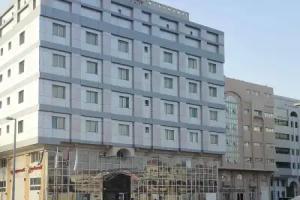
The capital city Abu Dhabi has seen new construction of modern high rises, tall office and apartment buildings, and busy shops.
Other urban centres in the emirate are Al 'Ain oasis, Baniyas and Ruwais. Al-`Ain is an agglomeration of several villages scattered around a desert oasis; today it is the site of the national university, UAEU. Al-`Ain is billed as the Garden City of the UAE.
Main cities and towns
- Abu Dhabi
- Abu al Abyad
- Al Ain
- Al-Aryam Island
- Al Mushrif
- Al Shamkha
- Bani Yas city
- Dalma
- Ghayathi
- Ghantoot
- Habshan
- AL Wathba
- AL mu'azaz
- AL ad'la
- Halat al Bahrani
- Khalifa City
- Khalifa Port
- Liwa Oasis
- Madinat Zayed
- Marawah
- Mussafah
- Port Zayed
- Ruwais
- Sila
- Sir Bani Yas
- Tarif
- Yas Island
Transport
Abu Dhabi International Airport (AUH) and Al Ain International Airport (AAN) serve the emirate. The local time is GMT + 4 hours. Private vehicles and taxis are the primary means of transportation in the city, although public buses, run by the Abu Dhabi Municipality, are available, but mostly used by the lower-income population. There are bus routes to nearby towns such as Baniyas, Habashan and the garden city of the UAE, Al-`Ain, among others. There is a newer service started in 2005 between Abu Dhabi and the commercial city of Dubai (about 160 km away).
Schools and universities
All private and public schools in the emirate come under the authority of the Abu Dhabi Education Council, while other emirates continue to work under the federal Ministry of Education.
Schools and universities in Abu Dhabi:
- Zayed University
- Paris-Sorbonne University Abu Dhabi
- Sherwood Academy CBSE
- Sherwood Academy IGCSC
- Merryland International, Musaffah
- Bright Kids Nursery, Muroor Street
- Masdar Institute of Science and Technology (research oriented graduate-level university)
- The Petroleum Institute
- Abu Dhabi Men's College (a campus of The Higher Colleges of Technology)
- Abu Dhabi Women's College (a campus of The Higher Colleges of Technology)
- Abu Dhabi University
- Jarn yafoor Middle School
- INSEAD Centre in Abu Dhabi
- Strathclyde Business School (MSc/MBA)
- AAESS
- Abu Dhabi Indian School
- St.Joseph's School
- Emirates Future International Academy
- Indian Islahi Islamic School
- Al-Noor Indian Islamic School
- The American International School in Abu Dhabi
- Emirates College for Advanced Education (ECAE)
- New York Institute of Technology
- International School of Choueifat, Abu Dhabi
- Sheikh Khalifa Bin Zayed Bangladesh Islamia School and College , Abu Dhabi
- Sheikh Khalifa Bin Zayed Arab Pakistani School (Kindergarten through 12th grade FSC)
- Islamia English School (Kindergarten through 12th grade FSC, IGCSE : O Levels and A Levels also offered)
- Al Nahda National Schools (Boys' and Girls' school O Levels, A Levels, American High school system)
- The Cambridge High School
- The British School – Al Khubairat
- Abu Dhabi Grammar School (Canada)
- Abu Dhabi International School
- First Steps School Nursery
- International Community School
- Our Own English High School
- The American Community School of Abu Dhabi
- The British School
- Raha International School
- New York University Abu Dhabi
- The Glenelg School of Abu Dhabi
- The Elite Private School
- Khalifa University of Science, Technology and Research(KUSTAR)
- Al Bateen Secondary School(British Curriculum)
- Al Yasmina School
- Al Mushrif
- GEMS American Academy
- Emirates National School