
Tampa

Description

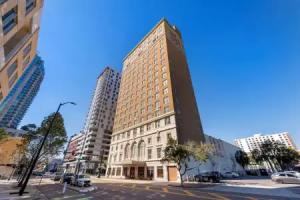
Tampa /ˈtæmpə/ is a city in and the county seat of Hillsborough County, Florida, United States. It is located on the west coast of Florida on Tampa Bay, near the Gulf of Mexico, and is part of the Tampa Bay Metropolitan Area. The city had a population of 346,037 in 2011.

The current location of Tampa was once inhabited by indigenous peoples of the Safety Harbor culture (most notably the Tocobaga and the Pohoy, who lived along the shores of Tampa Bay). The area was explored by Spanish explorers in the 16th century, resulting in violent conflicts and the introduction of European diseases, which wiped out the original native cultures. Although Spain claimed Florida as part of New Spain, it did not found a colony in the Tampa area, and there were no permanent American or European settlements within today's city limits until after the United States acquired Florida from Spain in 1819.

In 1824, the United States Army established a frontier outpost called Fort Brooke at the mouth of the Hillsborough River, near the site of today's Tampa Convention Center. The first civilian residents were pioneers who settled near the fort for protection from the nearby Seminole population, and the small village was first incorporated as "Tampa" in 1849. The town grew slowly until the 1880s, when railroad links, the discovery of phosphate, and the arrival of the cigar industry jump-started its development, helping it to grow from a quiet village of less than 800 residents in 1880 to a bustling city of over 30,000 by the early 1900s.

Today, Tampa is part of the metropolitan area most commonly referred to as the "Tampa Bay Area". For U.S. Census purposes, Tampa is part of the Tampa-St. Petersburg-Clearwater, Florida Metropolitan Statistical Area. The four-county area is composed of roughly 2.9 million residents, making it the second largest metropolitan statistical area (MSA) in the state, and the fourth largest in the Southeastern United States, behind Miami, Washington, D.C. and Atlanta. The Greater Tampa Bay area has over 4 million residents and generally includes the Tampa and Sarasota metro areas. The Tampa Bay Partnership and U.S. Census data showed an average annual growth of 2.47 percent, or a gain of approximately 97,000 residents per year. Between 2000 and 2006, the Greater Tampa Bay Market experienced a combined growth rate of 14.8 percent, growing from 3.4 million to 3.9 million and hitting the 4 million population mark on April 1, 2007. A 2012 estimate shows the Tampa Bay area population to have 4,310,524 people and a 2017 projection of 4,536,854 people.

Tampa was ranked as the 5th best outdoor city by Forbes in 2008. Tampa also ranks as the fifth most popular American city, based on where people want to live, according to a 2009 Pew Research Center study. A 2004 survey by the NYU newspaper Washington Square News ranked Tampa as a top city for "twenty-somethings." Tampa is ranked as a "Gamma+" world city by Loughborough University, ranked alongside other world cities such as Phoenix, Charlotte, Rotterdam, and Santo Domingo.

History

Etymology

The word "Tampa" may mean "sticks of fire" in the language of the Calusa, a Native American tribe that once lived south of today's Tampa Bay. This might be a reference to the many lightning strikes that the area receives during the summer months. Other historians claim the name means "the place to gather sticks". Toponymist George R. Stewart writes that the name was the result of a miscommunication between the Spanish and the Indians, the Indian word being "itimpi", meaning simply "near it". The name first appears in the "Memoir" of Hernando de Escalante Fontaneda (1575), who had spent 17 years as a Calusa captive. He calls it "Tanpa" and describes it as an important Calusa town. While "Tanpa" may be the basis for the modern name "Tampa", archaeologist Jerald Milanich places the Calusa village of Tanpa at the mouth of Charlotte Harbor, the original "Bay of Tanpa". A later Spanish expedition did not notice Charlotte Harbor while sailing north along the west coast of Florida and assumed that the current Tampa Bay was the bay they sought. The name was accidentally transferred north. Map makers were using the term Bay or Bahia Tampa as early as 1695.

People from Tampa are known as "Tampans" or "Tampanians". Local authorities consulted by Michael Kruse of the Tampa Bay Times suggest that "Tampan" was historically more common, while "Tampanian" became popular when the former term came to be seen as a potential insult. Latin Americans from Tampa are known as "tampeños", or "tampeñas" for females. These terms of Spanish origin emerged after 1900 for the immigrant communities in West Tampa and Ybor City. The tampeño, or "Tampa Latin", community is a mix of Cuban, Italian, Spanish, and American influences, with Cuban influence being dominant.

European exploration

Not much is known about the cultures who called the Tampa Bay area home before European contact. When Spanish explorers arrived in the 1520s, they found Tocobaga villages around the northern half of Tampa Bay and Calusa villages along the southern portion of the bay.

Expeditions led by Pánfilo de Narváez and Hernando de Soto landed near Tampa, but neither conquistador stayed long. The native inhabitants repulsed any Spanish attempt to establish a permanent settlement or convert them to Catholicism. The newcomers brought with them infectious disease, resulting in a total collapse of the native cultures of Florida. The Tampa area was depopulated and ignored for more than 200 years.

In the mid-18th century, events in American colonies drove the Seminole Indians into northern Florida. During this period, the Tampa area had only a handful of residents: Cuban and Native American fishermen. They lived in a small village at the mouth of Spanishtown Creek on Tampa Bay, in today's Hyde Park neighborhood along Bayshore Boulevard.

U.S. control

After purchasing Florida from Spain in 1821, the United States built forts and trading posts in the new territory. Fort Brooke was established in January 1824 at the mouth of the Hillsborough River on Tampa Bay, in Downtown Tampa. Tampa was initially an isolated frontier outpost. The sparse civilian population practically abandoned the area during the Second Seminole War from 1835 to 1842, after which the Seminoles were forced out and many settlers returned.

Florida became the 27th state in 1845. On January 18, 1849, Tampa was officially incorporated as the "Village of Tampa". Tampa was home to 185 civilians, or 974 total residents including military personnel, in 1850. Tampa was reincorporated as a town on December 15, 1855.

Civil War and Reconstruction

During the Civil War, Florida seceded along with most of the southern states to form the Confederate States of America, and Fort Brooke was manned by Confederate troops. Martial law was declared in Tampa in January 1862, and Tampa's city government ceased to operate for the duration of the war.

In 1861, the Union Navy set up a blockade around many southern ports to cut off the Confederacy, and several ships were stationed near the mouth of Tampa Bay. The Battle of Fort Brooke on October 16 and the Battle of Ballast Point on October 18, 1863 damaged the Confederates, with Union troops destroying Confederate blockade runners. The Civil War ended in April 1865 with a Confederate defeat.

In May 1865, federal troops arrived in Tampa to occupy the fort and the town as part of Reconstruction. They remained until August 1869.

Tampa was a fishing village with very few people and little industry, and limited prospects for development. Tampa's chronic yellow fever epidemics, borne by mosquitoes from the swampland, were widespread during the late 1860s and 1870s, and many residents left.

In 1869, residents voted to abolish the city of Tampa government. The population of "Tampa Town" was below 800 by 1870, and had fallen further by 1880. Fort Brooke was decommissioned in 1883, and except for two cannons displayed on the University of Tampa campus, all traces of the fort are gone.

1880s economic prosperity

In the mid-1880s, Tampa's fortunes took several sudden turns for the better. First, phosphate was discovered in the Bone Valley region southeast of Tampa in 1883. The mineral, vital for the production of fertilizers and other products, was soon being shipped out from the Port of Tampa in great volume. Tampa is still a major phosphate exporter.

The discovery of phosphate, the arrival of Plant's railroad, and the founding of Ybor City and West Tampa—all in the mid-1880s—were crucial to Tampa's development. The once-struggling village of Tampa became a bustling boomtown almost overnight, and had grown into one of the largest cities in Florida by 1900.

Plant's railroad

Henry B. Plant's narrow-gauge South Florida Railroad reached Tampa and its port in late 1883, finally connecting the small town to the nation's railroad system after years of efforts by local leaders. Previously, Tampa's overland transportation links had consisted of sandy roads stretching across the Florida countryside. Plant's railroad made it much easier to get goods in and out of the Tampa Bay area. Phosphate and commercial fishing exports could be sent north by rail and many new products were brought into the Tampa market, along with the first tourists.

Ybor's cigars

The new railroad link enabled another important industry to come to Tampa. In 1885, the Tampa Board of Trade enticed Vicente Martinez Ybor to move his cigar manufacturing operations to Tampa from Key West. Proximity to Cuba made importation of "clear Havana tobacco" easy by sea, and Plant's railroad made shipment of finished cigars to the rest of the US market easy by land.

Since Tampa was still a small town at the time (population less than 5000), Ybor built hundreds of small houses around his factory to accommodate the immediate influx of mainly Cuban and Spanish cigar workers. Ybor City's factories rolled their first cigars in 1886, and many different cigar manufacturers moved their operations to town in ensuing years. Many Italian and a few eastern European Jewish immigrants arrived starting in the late 1880s, opening businesses and shops that catered to cigar workers. By 1900, over 10,000 immigrants had moved to the neighborhood. Several thousand more Cuban immigrants built West Tampa, another cigar-centric suburb founded a few years later by Hugh MacFarlane. Between them, two "Latin" communities combined to exponentially expand Tampa's population, economic base, and tax revenues, as Tampa became the "Cigar Capital of the World".

Early 20th century

During the first few decades of the 20th century, the cigar-making industry was the backbone of Tampa's economy. The factories in Ybor City and West Tampa made an enormous number of cigars—in the peak year of 1929, over 500,000,000 cigars were hand rolled in the city.

In 1904, a local civic association of local businessmen dubbed themselves Ye Mystic Krewe of Gasparilla (named after local mythical pirate Jose Gaspar), and staged an "invasion" of the city followed by a parade. With a few exceptions, the Gasparilla Pirate Festival has been held every year since.

Bolita and organized crime

Beginning in the late 19th century, illegal bolita lotteries were very popular among the Tampa working classes, especially in Ybor City. In the early 1920s, this small-time operation was taken over by Charlie Wall, the rebellious son of a prominent Tampa family, and went big-time. Bolita was able to openly thrive only because of kick-backs and bribes to key local politicians and law enforcement officials, and many were on the take.

Profits from the bolita lotteries and Prohibition-era bootlegging led to the development of several organized crime factions in the city. Charlie Wall was the first major boss, but various power struggles culminated in consolidation of control by Sicilian mafioso Santo Trafficante, Sr., and his faction in the 1950s. After his death in 1954 from cancer, control passed to his son Santo Trafficante, Jr., who established alliances with families in New York City and extended his power throughout Florida and into Batista-era Cuba.

The era of rampant and open corruption ended in the 1950s, when the Estes Kefauver's traveling organized crime hearings came to town and were followed by the sensational misconduct trials of several local officials. Although many of the worst offenders in government and the mob were not charged, the trials helped to end the sense of lawlessness which had prevailed in Tampa for decades.

Mid to late 20th century

Tampa grew considerably as a result of World War II. Prior to the United States' involvement in the conflict, construction began on MacDill Field, the predecessor of present-day MacDill Air Force Base. MacDill Field served as a main base for Army Air Corps and later Army Air Forces operations just before and during World War II, with multiple auxiliary airfields around the Tampa Bay area and surrounding counties. At the end of the war, MacDill remained as an active military installation while the auxiliary fields reverted to civilian control. Two of these auxiliary fields would later become the present day Tampa International Airport and St. Petersburg-Clearwater International Airport. With the establishment of an independent U.S. Air Force in 1947, MacDill Field became MacDill AFB.

During the 1950s and 1960s Tampa saw record-setting population growth that has not been seen since. This amazing growth spurred major expansion of the city's highways and bridges bringing thousands into the city and creating endless possibilities for Tampa business owners who welcomed tourists and new citizens alike into their neighborhoods. It was during this time period in the city's history that two of the most popular tourist attractions in the area were developed – Busch Gardens and Lowry Park. Many of the well-known institutions that play an important role in the economic development of the city were established during this time period.

The University of South Florida was established in North Tampa in 1956 and opened for students in September 1960. The school spurred the construction of several residential and commercial development in the previously agriculture-dominated area around the new campus. Overall, Tampa continued to expand away from the city center during the 1960s as new hospitals, schools, churches and subdivisions all began appearing to accommodate the growth. Many business offices began moving away from the traditional downtown office building into more convenient neighborhood office plazas.

In 1970, the Census Bureau reported city's population as 80.0% white and 19.7% black.

Four attempts have been made to consolidate the municipal government of the city of Tampa with the county government of Hillsborough County (1967, 1970, 1971, and 1972), all of which failed at the ballot box; the greatest loss was also the most recent attempt in 1972, with the final tally being 33,160 (31%) in favor and 73,568 (69%) against the proposed charter.

The biggest recent growth in the city was the development of New Tampa, which started in 1988 when the city annexed a mostly rural area of 24 square miles (62 km2) between I-275 and I-75.

East Tampa, historically a mostly black community, was the scene of several race riots during and for some time after the period of racial segregation, mainly due to problems between residents and the Tampa Police Department.

Geography

Topography

According to the United States Census Bureau, the city has a total area of 170.6 square miles (442 km2) including 112.1 square miles (290 km2) of land and 58.5 square miles (151.5 km2) (34.31%) of water. The highest point in the city is only 48 feet (15 m). Tampa is bordered by two bodies of water, Old Tampa Bay and Hillsborough Bay, both of which flow together to form Tampa Bay, which in turn flows into the Gulf of Mexico. The Hillsborough River flows out into Hillsborough Bay, passing directly in front of Downtown Tampa and supplying Tampa's main source of fresh water. Palm River is a smaller river flowing from just east of the city into McKay Bay, which is a smaller inlet, sited at the northeast end of Hillsborough Bay Tampa's geography is marked by the Interbay Peninsula which divides Hillsborough Bay (the eastern) from Old Tampa Bay (the western).

Winter

In the winter, average temperatures range from the low to mid 70s °F (21–24 °C) during the day to the low to mid 50s °F (10–13 °C) at night. However, sustained colder air pushes into the area on several occasions every winter, dropping the highs and lows to 15 °F (8 °C) or more below the seasonal averages for several days at a time. The temperature can fall below freezing an average of 2 to 3 times per year, though this does not occur every season.

Since the Tampa area is home to a diverse range of freeze-sensitive agriculture and aquaculture, hard freezes, although very infrequent, are a major concern. Since Tampa has some characteristics of a tropical climate, hard freezes (defined as below 28 °F (−2.2 °C)) happen rarely (every 5 to 20 years depending on location). The last officially recorded freeze at Tampa International Airport took place on the morning of January 13, 2011, when the temperature dropped to 31 °F (−1 °C).

The lowest temperature ever recorded in Tampa was 18 °F (−8 °C) on December 13, 1962. The last measurable snow in Tampa fell on January 19, 1977, with a total accumulation of 0.2 inches (0.5 cm). Three major freezes occurred in the 1980s: in January 1982, January 1985, and December 1989. The losses suffered by farmers forced many to sell off their citrus groves, which helped fuel a boom in subdivision development in the 1990s and 2000s.

In January 2010, a prolonged cold snap was the longest stretch of cold weather in the history of Tampa. Temperatures did not get above 49 °F (9.4 °C) for 5 days and there were freezes every night in northern Tampa for a week straight, causing significant damage to tropical foliage.

Arts and culture

Arts and entertainment

Tampa is home to a variety of stage and performing arts venues and theaters, including The David A. Straz Jr. Center for the Performing Arts, Tampa Theatre, Gorilla Theatre, and the MidFlorida Credit Union Amphitheatre next to the Florida State Fairgrounds.

Performing arts companies and organizations which call Tampa home include The Florida Orchestra, Opera Tampa, Jobsite Theater, The Master Chorale of Tampa Bay, Stageworks Theatre, Spanish Lyric Theater, Tampa Bay Opera, and the Tampa Bay Symphony.

Current popular nightlife districts include Channelside, Ybor City, SoHo, International Plaza and Bay Street, and Seminole Hard Rock. Downtown Tampa also contains some nightlife, and there are more clubs/bars to be found in other areas of the city. Tampa is rated sixth on Maxim magazine's list of top party cities.

The area has become a "de facto" headquarters of professional wrestling, with many pros living in the area. WWE's developmental territory, Florida Championship Wrestling, is also based in Tampa.

Tampa is home to several death metal bands, an extreme form of heavy metal music that evolved from thrash metal. Many of the genre's pioneers and foremost figures are based in and around the city. Chief among these are Deicide, Six Feet Under, Obituary, Cannibal Corpse, and Morbid Angel. The Tampa scene grew with the birth of Morrisound Recording, which established itself as an international recording destination for metal bands.

The underground rock band, the Baskervils, got their start in Tampa. They played the Tampa Bay area between 1994 and 1997 and then moved to New York City. Underground hip-hop group Equilibrium is based out of Tampa, as well as the Christian metalcore band, Underoath.

In 2009, the new Frank Wildhorn musical Wonderland: Alice's New Musical Adventure hosted its world premiere at the Straz Center.

Museums

The Tampa area is home to a number of museums that cover a wide array of subjects and studies. These include the Museum of Science & Industry (MOSI), which has several floors of science-related exhibits plus the only domed IMAX theater in Florida and a planetarium; the Tampa Museum of Art; the USF Contemporary Art Museum; the Tampa Bay History Center; the Tampa Firefighters Museum; the Henry B. Plant Museum; and Ybor City Museum State Park. Permanently docked in downtown's Channel District is the SS American Victory, a former World War II Victory Ship which is now used as a museum ship.

Cuisine

Tampa has a diverse culinary scene from small cafes and bakeries to bistros and farm-to-table restaurants. The food of Tampa has a history of Cuban, Spanish, Floribbean and Italian cuisines. There are also many Colombian cuisine, Puerto Rican cuisine, Vietnamese cuisine and Barbecue restaurants. Seafood is also very popular in Tampa, and Greek cuisine is prominent in the area, including around Tarpon Springs. Food trucks in Tampa, Florida are popular and the area holds the record for the world's largest food truck rally. In addition to Ybor, the areas of Seminole Heights and South Tampa are known for their restaurants.

Tampa is most famous though for the Cuban sandwich and Deviled crab. Tampa is considered to be where the Cuban sandwich started, though it is disputed by Miami. Historian Andrew Huse states that "the old 'mixtos' coalesced into something more distinct – the Cuban sandwiches we know and love – an original Tampa creation." In April 2012, the "Historic Tampa Cuban Sandwich" was designated as the "signature sandwich of the city of Tampa" by Tampa's city council. Tampa's Cuban sandwiches are different from other regional versions because Genoa salami is usually added to Cubans in the Tampa area, which derived from Italian immigrants living next to Cubans and Spaniards in Ybor City.

Tampa is also where many restaurant chains have either started out or are headquartered, such as Outback Steakhouse, Melting Pot, Front Burner Brands, Carrabba's, Fleming's Prime Steakhouse & Wine Bar, Bonefish Grill, Columbia Restaurant, Checkers and Rally's, Taco Bus, and PDQ.

Tourism and recreation

The city of Tampa operates over 165 parks and beaches covering 2,286 acres (9.25 km2) within city limits; 42 more in surrounding suburbs covering 70,000 acres (280 km2), are maintained by Hillsborough County. These areas include the Hillsborough River State Park, just northeast of the city. Tampa is also home to a number of attractions and theme parks, including Busch Gardens Tampa Bay, Adventure Island, Lowry Park Zoo, and Florida Aquarium.

Lowry Park Zoo features over 2,000 animals, interactive exhibits, rides, educational shows and more. The zoo serves as an economic, cultural, environmental and educational anchor in Tampa.

Big Cat Rescue is one of the largest accredited sanctuaries in the world dedicated entirely to abused and abandoned big cats. It is home to about 80 lions, tigers, bobcats, cougars and other species, most of whom have been abandoned, abused, orphaned, saved from being turned into fur coats, or retired from performing acts. They have a variety of different tours available.

Busch Gardens Tampa Bay is a 335-acre (1.36 km2) Africa-themed park located near the University of South Florida. It features many thrilling roller coasters, for which it is known, including Sheikra, Montu, Gwazi and Kumba. Visitors can also view and interact with a number of African wildlife. Adventure Island is a 30-acre (12 ha) water park adjacent to Busch Gardens.

The Florida Aquarium is a 250,000 sq ft (23,000 m2) aquarium located in the Channel District. It hosts over 20,000 species of aquatic plants and animals. It is known for its unique glass architecture. Adjacent to the Aquarium is the SS American Victory, a World War II Victory ship preserved as a museum ship.

The Tampa Bay History Center is a museum located in the Channel District. It boasts over 60,000 sq ft (5,600 m2) of exhibits through 12,000 years. Theaters, map gallery, research center and museum store.

Well-known shopping areas include International Plaza and Bay Street, WestShore Plaza, SoHo district, and Hyde Park Village. Palma Ceia is also home to a shopping district, called Palma Ceia Design District. Previously, Tampa had also been home to the Floriland Mall (now an office park), Tampa Bay Center (demolished and replaced with the new Tampa Bay Buccaneers training facility, known as "One Buc Place"), and East Lake Square Mall (now an office park).

The Tampa Port Authority currently operates three cruise ship terminals in Tampa's Channel District. The Port of Tampa is the year-round home port for Carnival Cruise Lines' MS Carnival Inspiration and MS Carnival Legend. In 2010 Tampa will also be a seasonal port for Holland America Line's MS Ryndam, as well as Royal Caribbean International's MS Grandeur of the Seas and MS Radiance of the Seas. A fourth company, Norwegian Cruise Line, has announced plans to sail out of Tampa for the first time. The 2,240 passenger MS Norwegian Star will be Tampa's largest cruise ship when it debuts a seasonal schedule in 2011. Cruise itineraries from Tampa include stops in the Eastern and Western Caribbean islands, Honduras, Belize, and Mexico.

Events

Perhaps the most well known and anticipated events are those from Tampa's annual celebration of "Gasparilla", particularly the Gasparilla Pirate Festival, a mock pirate invasion held since 1904 in late January or early February. Often referred to as Tampa's "Mardi Gras", the invasion flotilla led by the pirate ship, Jose Gasparilla, and subsequent parade draw over 400,000 attendees, contributing tens of millions of dollars to the city's economy. Beyond the initial invasion, numerous Gasparilla festivities take place each year between January and March, including the Gasparilla Children's Parade, the more adult-oriented Sant'Yago Knight Parade, the Gasparilla Distance Classic, Gasparilla Festival of the Arts, and the Gasparilla International Film Festival, among other pirate themed events.

Other notable events include the Outback Bowl, which is held New Year's Day at Raymond James Stadium. Each February, The Florida State Fair brings crowds from across the state, while "Fiesta Day" celebrates Tampa's Cuban, Spanish, German, Italian, English, Irish, Jewish, and African-Cuban immigrant heritage. The India International Film Festival (IIFF) of Tampa Bay also takes place in February. In April the MacDill Air Fest entertains as one of the largest military air shows in the U.S. Guavaween, a nighttime street celebration infuses Halloween with the Latin flavor of Ybor City. Downtown Tampa hosts the largest anime convention in Florida, Metrocon, a three-day event held in either June or July at the Tampa Convention Center. Ybor also hosts "GaYbor Days", an annual street party in the GLBT-friendly GaYbor district. The Tampa International Gay and Lesbian Film Festival, held annually since 1989, is the city's largest film festival event, and one of the largest independent gay film festivals in the country.

Tampa hosted the 2012 Republican National Convention and the 15th International Indian Film Academy Awards in April 2014.

Street view

Hotels

2 guests
Adults2+
Children under 170+
Age7+
Age7+
Age7+
Age7+
Age7+
Age7+
Age7+
Age7+
Age7+
Age7+
Search hotel

Reviews

Share your experiences, help others make the right choice!
Think about what you would like to know if you were looking for a review about a place to relax. Please describe in detail what you liked and what you didn't. What would you advise to other guests and to the hotel owner. The more fully you tell about the hotel, the easier it will be for other people to make a choice and they will be very grateful to you!

Map

X