Valletta
Description
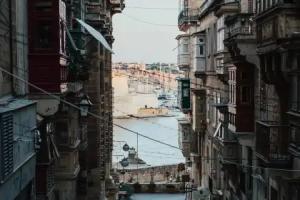
Valletta is the capital city of Malta, colloquially known as Il-Belt (IPA: [ˈil.bɛlt]; English: The City) in Maltese. Geographically, it is located in the South Eastern Region, in the central-eastern portion of the main island of Malta having its western coast with access to the Marsamxett Harbour and its eastern coast in the Grand Harbour. The historical city has a population of 6,444 as of March 2014, while the metropolitan area around it has a population of 393,938. Valletta is the southernmost capital of Europe.
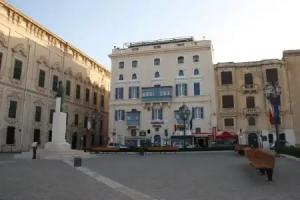
Valletta contains buildings from the 16th century onwards, built during the rule of the Order of St. John of Jerusalem, also known as Knights Hospitaller. The city is essentially Baroque in character, with elements of Mannerist, Neo-Classical and Modern architecture in selected areas, though World War II left major scars on the city, particularly the destruction of The Royal Opera House. The City of Valletta was officially recognised as a World Heritage Site by UNESCO in 1980.
The official name given by the Order of Saint John was Humilissima Civitas Valletta—The Most Humble City of Valletta, or Città Umilissima in Italian. The city's fortifications, consisting of bastions, curtains and cavaliers, along with the beauty of its Baroque palaces, gardens and churches, led the ruling houses of Europe to give the city its nickname Superbissima—Most Proud.
History
Historical affiliations Order of Saint John 1566-1798
French Republic 1798-1800
Protectorate of Malta 1800-1813
Crown Colony of Malta 1813-1964
State of Malta 1964-1974
Republic of Malta 1974-present
Order of Saint John
The building of a city on the Sciberras Peninsula had been proposed by the Order of Saint John as early as 1524. Back then, the only building on the peninsula was a small watchtower dedicated to Erasmus of Formia (Saint Elmo), which had been built in 1488. In 1552, the watchtower was demolished and the larger Fort Saint Elmo was built in its place.
In the Great Siege of 1565, Fort Saint Elmo fell to the Ottomans, but the Order eventually won the siege with the help of Spanish reinforcements. The victorious Grand Master, Jean de Valette, immediately set out to build a new fortified city on the Sciberras Peninsula to fortify the Order's position in Malta and bind the Knights to the island. The city took his name and was called La Valletta.
The Grand Master asked the European kings and princes for help, and he received a lot of assistance, due to the increased fame of the Order after their victory in the Great Siege. Pope Pius V sent his military architect, Francesco Laparelli, to design the new city, while Philip II of Spain sent substantial monetary aid. The foundation stone of the city was laid by Grand Master de Valette on 28 March 1566. He placed the first stone in what later became Our Lady of Victories Church.
In his book Dell’Istoria della Sacra Religione et Illustrissima Militia di San Giovanni Gierosolimitano (English: The History of the Sacred Religion and Illustrious Militia of St John of Jerusalem), written between 1594 and 1602, Giacomo Bosio writes that when the cornerstone of Valletta was placed, a group of Maltese elders said: "Iegi zimen en fel wardia col sceber raba iesue uquie" (Which in modern Maltese reads, "Jiġi żmien li fil-Wardija [l-Għolja Sciberras] kull xiber raba’ jiswa uqija", and in English, "There will come a time when every piece of land on Sciberras Hill will be worth its weight in gold").
De Valette died from a stroke on 21 August 1568 at age 74 and never saw the completion of his city. Originally interred in the church of Our Lady of the Victories, his remains now rest in St. John's Co-Cathedral among the tombs of other Grand Masters of the Knights of Malta.
Francesco Laparelli was the city's principal designer and his plan departed from medieval Maltese architecture, which exhibited irregular winding streets and alleys. He designed the new city on a rectangular grid plan, and without any collacchio (an area restricted for important buildings). The streets were designed to be wide and straight, beginning centrally from the City Gate and ending at Fort Saint Elmo (which was rebuilt) overlooking the Mediterranean; certain bastions were built 47 metres (154 ft) tall. His assistant was the Maltese architect Girolamo Cassar, later oversaw the construction of the city himself after Laparelli's death in 1570.
The city of Valletta was mostly complete by the early 1570s, and it became the capital on 18 March 1571 when Grand Master Pierre de Monte moved from his seat at Fort St Angelo in Birgu to the Grandmaster's Palace in Valletta. Seven Auberges were built for the Order's Langues, and these were complete by the 1580s. An eighth Auberge, Auberge de Bavière, was later added in the 18th century.
In Antoine de Paule's reign, it was decided to build more fortifications to protect Valletta, and these were named the Floriana Lines after the architect who designed them, Pietro Paolo Floriani of Macerata. During António Manoel de Vilhena's reign, a town began to form between the walls of Valletta and the Floriana Lines, and this evolved from a suburb of Valletta to Floriana, a town in its own right.
In 1749, Muslim slaves plotted to kill Grandmaster Pinto and take over Valletta, but the revolt was suppressed before it even started due to their plans leaking out to the Order. Later on in his reign, Pinto embellished the city with Baroque architecture, and many important buildings such as Auberge de Castille were remodeled or completely rebuilt in the new architectural style.
In 1775, during the reign of Ximenes, an unsuccessful revolt known as the Rising of the Priests occurred in which Fort Saint Elmo and Saint James Cavalier were taken by rebels, but the revolt was eventually suppressed.
French occupation and British rule
In 1798, the Order left the islands and the French occupation of Malta began. After the Maltese rebelled, French troops continued to occupy Valletta and the surrounding harbour area, until they capitulated to the British in September 1800. In the early 19th century, the British Civil Commissioner, Henry Pigot, agreed to demolish the majority of the city's fortifications. The demolition was again proposed in the 1870s and 1880s, but it was never carried out and the fortifications have survived largely intact.
Eventually building projects in Valletta resumed under British rule. These projects included widening gates, demolishing and rebuilding structures, widening newer houses over the years, and installing civic projects. The Malta Railway, which linked Valletta to Mdina, was officially opened in 1883. It was closed down in 1931 after buses became a popular means of transport.
Nazi and Fascist air raids throughout the Second World War caused much destruction in Valletta and the rest of the harbour area. The Royal Opera House, constructed at the city entrance in the 19th century, was one of the buildings lost to the raids.
Contemporary
In 1980, the 24th Chess Olympiad took place in Valletta.
The entire city of Valletta has been a UNESCO World Heritage Site since 1980, along with Megalithic Temples of Malta and the Ħal Saflieni Hypogeum.
Valletta has been selected as the European Capital of Culture for 2018. As a result, various projects are under way, including the restoration of historic buildings, the installation of new monuments and the rebuilding of the city entrance.
Geography
Satellite view of VallettaThe Valletta peninsula has two natural harbours, Marsamxett and the Grand Harbour. The Grand Harbour is Malta's major port, with unloading quays at nearby Marsa. A cruise-liner terminal is located along the old seawall of the Valletta Waterfront that Grandmaster Manuel Pinto de Fonseca built.
Culture
Valletta has been designated European Capital of Culture for 2018.
Saint James Cavalier
Saint James Cavalier, originally a raised gun platform, was converted into a Centre of Creativity in the year 2000 as part of Malta's Millenium Project. It now houses a small theatre, a cinema, music rooms and art galleries. Various exhibitions are regularly held there. Since it was opened it has welcomed over a million visitors.
Music
Jazz music in Malta was introduced in the Strait Street area, frequented by Allied sailors during both world wars. Malta's Jazz Festival took place here. Strait Street is also known as The Gut. This area is undergoing a programme of regeneration. The city's dual band clubs are the "King's Own Band Club" (Maltese: L-Għaqda Mużikali King's Own) and "La Valette National Philarmonic Society" (Maltese: Is-Soċjetà Filarmonika Nazzjonali La Valette).
Carnival
Valletta is the scene of the Maltese Carnival, held in February leading up to Lent. Carnival in Gozo is celebrated in Victoria and parishes in both islands hold their own festivities.
Feasts
- The feast of Our Lady of Mount Carmel is celebrated on 16 July
- Saint Paul's feast is celebrated on 10 February
- Saint Dominic's feast is celebrated in Valletta on 4 August or before
- The feast of Saint Augustine is celebrated on the third Sunday after Easter
- The city's residents also conduct an annual procession in honour of St. Rita
Transport
Malta International Airport serves Valletta, with the airport located 8 kilometres (5.0 mi) from the city in the town of Luqa. Malta's public transport system, which uses buses, operates mostly on routes to or from Valletta, with their central terminus just outside the city's entrance. Traffic within the city itself is restricted, with some principal roads being completely pedestrian areas. In 2006, a park and ride system was implemented in order to increase the availability of parking spaces in the vicinity of the city. People can leave their personal vehicles in a nearby Floriana parking lot and transfer to a van for the rest of the trip, which takes a mere few minutes.
In 2007 a congestion pricing scheme was implemented, the Controlled Vehicular Access system, in order to reduce long-term parking stays and traffic while promoting business in the city. An ANPR-based automated system takes photos of vehicles as they enter and exit the charging zone and vehicle owners are billed according to the duration of their stay. Various exemptions and flexible billing rules make the system the next evolutionary step of systems like the London congestion charge programme. Main differences from the London system include ex post invoicing (with financial incentives/penalties for early/late payment), prepayments not day-specific, hourly instead of daily rates, a maximum daily charge (8 hours), free dashes (free if duration under 30 minutes), defined free access periods for delivery and service vehicles.
Valletta is served by a fleet of electric taxis which transport riders from 10 points in Valletta to any destination within the city.
Cultural references
- Several chapters of Thomas Pynchon's Postmodern novel V. take place in the city of Valletta.
- Much of Nicholas Rinaldi's novel The Jukebox Queen of Malta is set in Valletta.
- Several chapters of Patrick O'Brian's novel "Treason's Harbour", the 9th in his Aubrey-Maturin series, are set in Valletta.
- Parts of the Steven Spielberg's Academy Award nominee film Munich were shot in Valletta.
- In the popular computer strategy game, Age Of Empires III, Valletta and its surrounding areas are featured as the base of the main protagonist, Morgan Black, and is the setting for the first two levels of the game.
- Valletta is the birthplace of popular comic book character Corto Maltese, created by Italian artist Hugo Pratt.
- Valletta is featured in the video game Tom Clancy's Splinter Cell: Conviction.