Las Vegas
Description
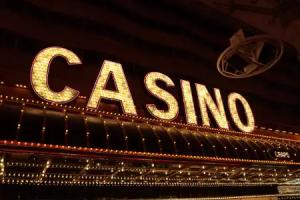
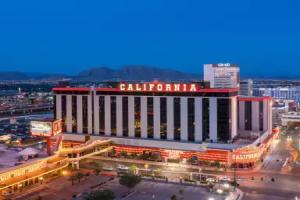
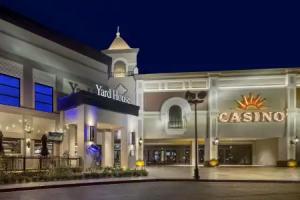
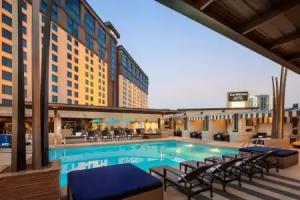
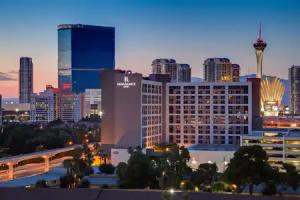
Las Vegas , officially the City of Las Vegas and often known as simply Vegas, is a city in the United States, the most populous city in the state of Nevada, the county seat of Clark County, and the city proper of the Las Vegas Valley. Las Vegas is an internationally renowned major resort city known primarily for gambling, shopping, fine dining, and nightlife and is the leading financial, commercial, and cultural center for Southern Nevada.
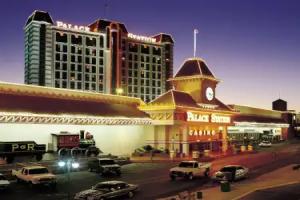
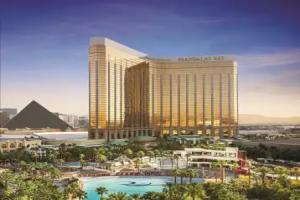
The city bills itself as The Entertainment Capital of the World, and is famous for its mega casino–hotels and associated entertainment. A growing retirement and family city, Las Vegas is the 29th-most populous city in the United States, with a population of 603,488 at the 2013 United States Census Estimates. The 2013 population of the Las Vegas metropolitan area was 2,027,828. The city is one of the top three leading destinations in the United States for conventions, business, and meetings. In addition, the city's metropolitan area has more AAA Five Diamond hotels than any other city in the world, and is a global leader in the hospitality industry. Today, Las Vegas is one of the top tourist destinations in the world.
Established in 1905, Las Vegas was incorporated as a city in 1911. At the close of the 20th century, Las Vegas was the most populous American city founded in that century (a similar distinction earned by Chicago in the 19th century). The city's tolerance for numerous forms of adult entertainment earned it the title of Sin City, and has made Las Vegas a popular setting for films, television programs, and music videos.
"Las Vegas" is generally used to describe not just the city itself, but areas beyond the city limits—especially the resort areas on and near the Las Vegas Strip—and the Las Vegas Valley. The 4.2 mi (6.8 km) stretch of South Las Vegas Boulevard known as the Las Vegas Strip is in the unincorporated communities of Paradise, Winchester, and Enterprise, located in Clark County.
History
Southern Paiutes at Moapa wearing traditional Paiute basket hats with Paiute cradleboard and rabbit robe Golden Nugget and Pioneer Club along Fremont Street in 1952 Fremont Street in the late 1960s This view of downtown Las Vegas shows a mushroom cloud in the background. Scenes such as this were typical during the 1950s. From 1951 to 1962 the government conducted 100 atmospheric tests at the nearby Nevada Test Site.Perhaps the earliest visitors to the Las Vegas area were nomadic Paleo-Indians, who traveled here 10,000 years ago, leaving behind petroglyphs. Anasazi and Paiute tribes followed at least 2,000 years ago.
A young Mexican scout named Rafael Rivera is credited as the first non-Native American to encounter the valley, in 1829. Trader Antonio Armijo led a 60-man party along the Spanish Trail to Los Angeles, California in 1829. The area was named Las Vegas, which is Spanish for "the meadows," as it featured abundant wild grasses, as well as desert spring waters for westward travelers. The year 1844 marked the arrival of John C. Fremont, whose writings helped lure pioneers to the area. Downtown Las Vegas' Fremont Street is named after him.
Eleven years later members of the LDS Church chose Las Vegas as the site to build a fort halfway between Salt Lake City and Los Angeles, where they would travel to gather supplies. The fort was abandoned several years afterward. The remainder of this Old Mormon Fort can still be seen at the intersection of Las Vegas Boulevard and Washington Avenue.
Las Vegas was founded as a city in 1905, when 110 acres (45 ha) of land adjacent to the Union Pacific Railroad tracks were auctioned in what would become the downtown area. In 1911, Las Vegas was incorporated as a city.
1931 was a pivotal year for Las Vegas. At that time, Nevada legalized casino gambling and reduced residency requirements for divorce to six weeks. This year also witnessed the beginning of construction on nearby Hoover Dam. The influx of construction workers and their families helped Las Vegas avoid economic calamity during the Great Depression. The construction work was completed in 1935.
In 1941, the Las Vegas Army Air Corps Gunnery School was established. Currently known as Nellis Air Force Base, it is home to the aerobatic team called the Thunderbirds.
Following World War II, lavishly decorated hotels, gambling casinos and big-name entertainment became synonymous with Las Vegas.
The 1950s saw the opening of the Moulin Rouge, the first racially integrated casino-hotel in Las Vegas.
In 1951, nuclear weapons testing began at the Nevada Test Site, 65 miles (105 km) northwest of Las Vegas. City residents and visitors were able to witness the mushroom clouds and be exposed to the fallout until 1963 when the limited Test Ban Treaty required that nuclear tests be moved underground.
The iconic "Welcome to Las Vegas" sign, which was never located in the city, was created in 1959 by Betty Willis, who never copyrighted it.
During the 1960s, corporations and business powerhouses such as Howard Hughes were building and buying hotel-casino properties. Gambling was referred to as "gaming," which transitioned into legitimate business.
In 1989, entrepreneur Steve Wynn changed the face of the Las Vegas gaming industry by opening up The Mirage, the Las Vegas Strip's first mega-casino resort.
The year 1995 marked the opening of the Fremont Street Experience in Las Vegas' downtown area. This canopied, five-block area features 12.5 million LED lights and 550,000 watts of sound from dusk until midnight during shows held on the top of each hour.
Due to the realization of many revitalization efforts, 2012 was dubbed "The Year of Downtown." Hundreds of millions of dollars' worth of projects made their debut at this time. They included The Smith Center for the Performing Arts and DISCOVERY Children's Museum, Mob Museum, Neon Museum, a new City Hall complex and renovations for a new Zappos.com corporate headquarters in the old City Hall building.
Geography
Las Vegas is situated within Clark County in a basin on the floor of the Mojave Desert and is surrounded by mountain ranges on all sides. Much of the landscape is rocky and arid with desert vegetation and wildlife. It can be subjected to torrential flash floods, although much has been done to mitigate the effects of flash floods through improved drainage systems.
The peaks surrounding Las Vegas reach elevations of over 10,000 feet (3,000 m), and act as barriers to the strong flow of moisture from the surrounding area. The elevation is approximately 2,030 ft (620 m) above sea level. According to the United States Census Bureau, the city has a total area of 135.86 sq mi (351.9 km2), of which 135.81 sq mi (351.7 km2) is land and 0.05 sq mi (0.13 km2) (0.03%) is water.
Nevada is the third most seismically active state in the U.S. (after Alaska and California); it has been estimated by the United States Geological Survey (USGS) that over the next 50 years there is a 10-20% chance of a M6.0 or greater earthquake occurring within 50 km of Las Vegas.
Within the city there are many lawns, trees and other greenery. Due to water resource issues, there has been a movement to encourage xeriscapes. Another part of conservation efforts is scheduled watering days for residential landscaping. A U.S. Environmental Protection Agency grant in 2008 funded a program that analyzed and forecast growth and environmental impacts through the year 2019.
Nearby communities
- Henderson, Nevada, incorporated
- North Las Vegas, Nevada, incorporated
- Summerlin, Nevada, unincorporated
- Paradise, Nevada, unincorporated
- Enterprise, unincorporated
- Sunrise Manor, Nevada, unincorporated
- Spring Valley, Nevada, unincorporated
- Boulder City, Nevada, incorporated
Culture
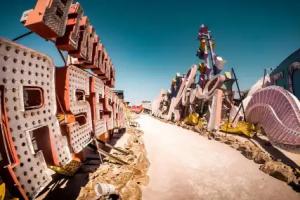
The city is home to several museums, including the Neon Museum (the location for many of the historical signs from Las Vegas' mid-20th century heyday), The Mob Museum, the Las Vegas Natural History Museum, the DISCOVERY Children's Museum, the Nevada State Museum and the Old Las Vegas Mormon State Historic Park.
The city is home to an extensive Downtown Arts District, which hosts numerous galleries and events including the annual Las Vegas Film Festival. "First Friday" is a monthly celebration that includes arts, music, special presentations and food in a section of the city's downtown region called 18b, The Las Vegas Arts District. The festival extends into the Fremont East Entertainment District as well.
The Thursday prior to First Friday is known in the arts district as "Preview Thursday." This evening event highlights new gallery exhibitions throughout the district.
The Las Vegas Academy of International Studies, Performing and Visual Arts is a Grammy award-winning magnet school located in downtown Las Vegas.
The Smith Center for the Performing Arts is situated downtown in Symphony Park. The world-class performing arts center hosts Broadway shows and other major touring attractions, as well as orchestral, opera, ballet, choir, jazz, and dance performances.
Parks and recreation
Las Vegas has 68 parks. The city owns the land for, but does not operate, four golf courses: Angel Park Golf Club, Desert Pines Golf Club, Durango Hills Golf Club and the Las Vegas Municipal Golf Course. It is also responsible for 123 playgrounds, 23 softball fields, 10 football fields, 44 soccer fields, 10 dog parks, six community centers, four senior centers, 109 skates parks, six swimming pools and more.
Transportation
RTC Transit is a public transportation system providing bus service throughout Las Vegas, Henderson, North Las Vegas and other areas of the valley. Inter-city bus service to and from Las Vegas is provided by Greyhound, BoltBus, Orange Belt Stages, Tufesa, and several smaller carriers. Amtrak trains have not served Las Vegas since the service via the Desert Wind was discontinued in 1997. Though no Amtrak trains have served Las Vegas since the Desert Wind was cancelled in 1997, Amtrak California operates Thruway Motorcoach dedicated service between the city and its passenger rail stations in Bakersfield, California, as well as Los Angeles Union Station via Barstow.
A bus rapid-transit link in Las Vegas called the Strip & Downtown Express (previously ACE Gold Line) with limited stops and frequent service was launched in March 2010, and connects downtown Las Vegas, the Strip and the Las Vegas Convention Center.
With some exceptions, including Las Vegas Boulevard, Boulder Highway (SR 582) and Rancho Drive (SR 599), the majority of surface streets in Las Vegas are laid out in a grid along Public Land Survey System section lines. Many are maintained by the Nevada Department of Transportation as state highways. The street numbering system is divided by the following streets:
- Westcliff Drive, US 95 Expressway, Fremont Street and Charleston Boulevard divide the north–south block numbers from west to east.
- Las Vegas Boulevard divides the east–west streets from the Las Vegas Strip to near the Stratosphere, then Main Street becomes the dividing line from the Stratosphere to the North Las Vegas border, after which the Goldfield Street alignment divides east and west.
- On the east side of Las Vegas, block numbers between Charleston Boulevard and Washington Avenue are different along Nellis Boulevard, which is the eastern border of the city limits.
Interstates 15, 515, and US 95 lead out of the city in four directions. Two major freeways – Interstate 15 and Interstate 515/U.S. Route 95 – cross in downtown Las Vegas. I-15 connects Las Vegas to Los Angeles, and heads northeast to and beyond Salt Lake City. I-515 goes southeast to Henderson, beyond which US 93 continues over the Mike O'Callaghan–Pat Tillman Memorial Bridge towards Phoenix, Arizona. US 95 connects the city to northwestern Nevada, including Carson City and Reno. US 93 splits from I-15 northeast of Las Vegas and goes north through the eastern part of the state, serving Ely and Wells. US 95 heads south from US 93 near Henderson through far eastern California. A partial beltway has been built, consisting of Interstate 215 on the south and Clark County 215 on the west and north. Other radial routes include Blue Diamond Road (SR 160) to Pahrump and Lake Mead Boulevard (SR 147) to Lake Mead.
East–west roads, north to south- Ann Road
- Craig Road (SR 573)
- Cheyenne Avenue (SR 574)
- Smoke Ranch Road
- Washington Avenue (SR 578)
- Summerlin Parkway
- Bonanza Road (SR 579)
- Charleston Boulevard (SR 159)
- Sahara Avenue (SR 589)
- Fort Apache Road
- Durango Drive
- Buffalo Drive
- Rainbow Boulevard (SR 595)
- Jones Boulevard (SR 596)
- Decatur Boulevard
- Valley View Boulevard
- Rancho Drive
- Maryland Parkway
- Eastern Avenue (SR 607)
- Pecos Road
- Lamb Boulevard (SR 610)
- Nellis Boulevard (SR 612)
McCarran International Airport handles international and domestic flights into the Las Vegas Valley. The airport also serves private aircraft and freight/cargo flights. Most general aviation traffic uses the smaller North Las Vegas Airport and Henderson Executive Airport.
The Union Pacific Railroad is the only Class I railroad providing rail freight service to the city. Until 1997, the Amtrak Desert Wind train service ran through Las Vegas using the Union Pacific Railroad tracks.