Tenerife
Description
Tenerife is the largest and most populated island of the seven Canary Islands; it is also the most populated island of Spain, with a land area of 2,034.38 square kilometres (785 sq mi) and 898,680 inhabitants, 43 percent of the total population of the Canary Islands. Tenerife is also the largest and most populous island of Macaronesia.
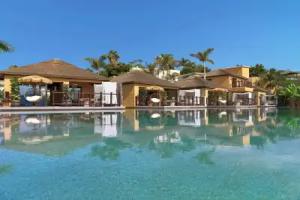
About five million tourists visit Tenerife each year, the most of any of the Canary Islands. It is also one of the most important tourist destinations in Spain and the world. Tenerife hosts one of the world's largest carnivals and the Carnival of Santa Cruz de Tenerife is attempting to become a World Heritage Site. Tenerife is served by two airports, Tenerife North Airport and Tenerife South Airport, and is the tourism and economic centre of the archipelago.
Santa Cruz de Tenerife is the capital of the island and the seat of the island council (cabildo insular). The city is capital of the autonomous community of Canary Islands (shared with Las Palmas), sharing governmental institutions such as Presidency and ministries. Between the 1833 territorial division of Spain and 1927 Santa Cruz de Tenerife was the sole capital of the Canary Islands, until a decree ordered that the capital of the Canary Islands be shared, as it remains at present.
The island is home to the University of La Laguna, which was founded in 1792 and is the oldest university in the Canaries. San Cristóbal de La Laguna (a World Heritage Site) is the second city of the island and the third one of the archipelago. The city of La Laguna was also capital of the Canary Islands until Santa Cruz replaced it in 1833.
In the Teide National Park (World Heritage Site), in the center of the island, is the highest elevation of Spain as well as the highest of the islands of the Atlantic Ocean, and the third largest volcano in the world from its base, Teide. Also located on the island Macizo de Anaga since 2015 is Biosphere Reserve and is the place that has the largest number of endemic species in Europe. The island's capital contains the architectural symbol of the Canary Islands, the modern Auditorio de Tenerife.
Toponymy
The island's former inhabitants, the Guanches, referred to the island as Achinet or Chenet (variant spellings are found in the literature). According to Pliny the Younger, Berber king Juba II sent an expedition to the Canary Islands and Madeira and gave the Canary Islands its name because he found particularly ferocious dogs (canaria) on the island. Juba II and Ancient Romans referred to Tenerife as Nivaria, derived from the Latin word nix (nsg.; gsg. nivis, npl. nives), meaning snow, in clear reference to the snow-covered peak of the Teide volcano. On the other hand, maps dating to the 14th and 15th century, from authors like Bontier and Le Verrier refer to the island as Isla del Infierno, literally meaning "Island of Hell", a reference to the volcanic activity and eruptions of Mount Teide.
Supposedly the Benahoaritas (natives of La Palma) gave the island its name, deriving it from the words tene ("mountain") and ife ("white"). Later, after colonisation, the Hispanisation of the name resulted in the adding of a letter "r" uniting both words to obtain the name Tenerife as a result.
The 18th-century historians Juan Núñez de la Peña and Tomás Arias Marín de Cubas, however, among others, state that the name of the island could have come from the legendary Guanche king, Tinerfe, nicknamed "the Great", who ruled the whole island in the days before the conquest of the Canary Islands by Castilla.
Demonym
The formal demonym used to refer to the people of Tenerife is Tinerfeño/a, also used colloquially is the term chicharrero/a. However, in modern society, this is generally only given to inhabitants of the capital, Santa Cruz. The term "chicharrero" was once a derogatory term used by the people of the former capital of La Laguna, in reference to the poor inhabitants and fishermen of Santa Cruz. It was used in reference to the fishermen who would survive by catching poor quality mackerel and citizens who ate potatoes of a low quality. However, as Santa Cruz grew in commerce and status, replacing La Laguna as capital of Tenerife in the 19th century during the reign of Fernando VII, the inhabitants of Santa Cruz ironically began using the insult to honour the new status of the city at La Laguna's expense.
History
The earliest known human settlement in the islands date to around 200 BC, by people known as the Guanches.
Territorial organisation before the conquest (The Guanches)
About one hundred years before the conquest, the title of mencey was given to the monarch or king of the Guanches of Tenerife, who governed a menceyato or kingdom. This role was later referred to as a "captainship" by the conquerors. Tinerfe el Grande, son of the mencey Sunta governed the island from Adeje in the south. However, upon his death, his nine children rebelled and argued bitterly about how to divide the island. Two independent achimenceyatos were created on the island, and the island was divided into nine menceyatos, with the menceyes within them forming what would be similar to municipalities today. The menceyatos and their menceyes (ordered by the descendants of Tinerfe who ruled them) were the following:
- Taoro. Menceyes: Bentinerfe, Inmobach, Bencomo and Bentor. Today it includes Puerto de la Cruz, La Orotava, La Victoria de Acentejo, La Matanza de Acentejo, Los Realejos and Santa Úrsula.
- Güímar. Menceyes: Acaymo, Añaterve y Guetón. Today this territory is made up of El Rosario, Candelaria, Arafo and Güímar
- Abona. Menceyes: Atguaxoña and Adxoña (Adjona). Today it includes Fasnia, Arico, Granadilla de Abona, San Miguel de Abona and Arona.
- Anaga. Menceyes: Beneharo and Beneharo II. Today this territory spans the municipalities of Santa Cruz de Tenerife and San Cristóbal de La Laguna.
- Tegueste. Menceyes: Tegueste, Tegueste II y Teguaco. Today this territory is made up of Tegueste, part of the coastal zone of La Laguna.
- Tacoronte: Menceyes: Rumén and Acaymo. Today this territory is made up of Tacoronte and El Sauzal
- Icode. Menceyes: Chincanayro and Pelicar. Today this territory is made up of San Juan de la Rambla, La Guancha, Garachico and Icod de los Vinos.
- Daute. Menceyes: Cocanaymo and Romén. Today this territory is occupied by El Tanque, Los Silos, Buenavista del Norte and Santiago del Teide.
- Adeje. Menceyes. Atbitocazpe, Pelinor, and Ichasagua. It included what today are the municipalities of Guía de Isora, Adeje and Vilaflor
There was also the achimenceyato of Punta del Hidalgo, governed by Aguahuco, a "poor noble" who was an illegitimate son of Tinerfe and Zebenzui.
Spanish conquest
In December 1493, the Catholic Monarchs (Queen Isabella I of Castile and King Ferdinand II of Aragon) granted Alonso Fernández de Lugo the right to conquer the island of Tenerife. In April 1494, coming from Gran Canaria, the conqueror landed on the coast of present-day Santa Cruz de Tenerife and disembarked with about 2,000 men on foot and 200 on horseback. After taking the fort, the army prepared to move inland, later capturing the native kings of Tenerife and presenting them to Isabella and Ferdinand.
The menceyes of Tenerife adopted differing responses to the conquest. They divided themselves into the side of peace (Spanish: bando de paz) and the side of war (Spanish: bando de guerra), with the first including the menceyatos of Anaga, Güímar, Abona and Adeje, and the second group with the Tegueste, Tacoronte, Taoro, Icoden and Daute. The opposing group fought the conquerors tenaciously, delaying the conquest of the island for two years. Castillian forces under the Adelantado ("military governor") de Lugo suffered a crushing defeat at the hands of the Guanches in the First Battle of Acentejo in 1494, but the Guanches were eventually overcome by superior technology and surrendered to the Crown of Castile on 25 December 1494.
As in the rest of the islands, many of the natives were enslaved, especially those belonging to the side of war, while a good part of the native population succumbed to diseases such as influenza and probably smallpox, to which they lacked resistance. After the conquest, and especially in the following century, there was a mass movement of colonization and repopulation with the arrival of immigrants from the diverse territories of the growing Spanish Empire (Flanders, Italy, Germany).
Tenerife's forests were gradually reduced by population growth and the need to clear land for agriculture for local consumption and for export. This was the case with the introduction of sugar cane at the beginning of the 16th century while in the following centuries, the island's economy centred on the use of other crops such as wine grapes and plantains.
Slavery and plantations
As on the other islands of the same group, much of the native population of Tenerife was enslaved or succumbed to diseases at the same time as immigrants from various places in Europe associated with the Spanish Empire (Flanders, Italy, Germany) settled on the island. Native pine forests on the island were cleared to make way for the cultivation of sugarcane in the 1520s; in succeeding centuries, the island's economy was centered on the cultivation of other commodities such as wine and cochineal for making dyes, as well as bananas.
Emigration to the Americas
Tenerife, like the other islands, has maintained a close relationship with Latin America. From the start of the colonization of the New World, many expeditions stopped at the island on their way to the Americas, and added to their crews with many tinerfeños who formed an integral part of the conquest expeditions or simply left in search of better prospects. It is also important to note the exchange in plant and animal species that made those voyages.
After a century and a half of relative growth, based on the grape growing sector, there was an extended emigration of families especially to Venezuela and Cuba. Also by these times there was a new interest on the part of the Crown of populating those empty zones in the Americas to pre-empt the occupation by foreign forces as had happened with the English in Jamaica or the French in the Guianas or western Hispaniola, so Canary Islanders, including many tinerfeños, left for the New World. The cultivation of new crops of the Americas, such as cocoa in Venezuela and tobacco in Cuba, contributed to the population exodus from towns such as Buenavista del Norte, Vilaflor or El Sauzal in the late 17th century. Witness to the emigration history of the island is the foundation in the outskirts of Santo Domingo of the village of San Carlos de Tenerife in 1684. This village founded by tinerfeños was created with the strategic purpose of protecting the town from the French established in the western side of Hispaniola. Between 1720 and 1730 the Crown moved 176 families, including many tinerfeños to the Caribbean island of Puerto Rico. In 1726, about 25 island families migrated to the Americas to collaborate on the foundation of Montevideo. Four years later, in 1730, another group left which would found the following year the city of San Antonio in Texas. Later, between 1777 and 1783, the port of Santa Cruz de Tenerife sent a new group to ultimately help in the foundation of St. Bernard Parish, Louisiana, and also some groups went to Florida.
Emigration to the Americas (mainly Cuba and Venezuela) continued during the 19th and early 20th century due to economic problems and isolation. In the last few decades, with newer island protectionist economic laws and the resurgence of the tourism industry, the migration flows have reversed, and today Tenerife receives an influx of people, including the return of many descendants of the islanders, some of whom had left five centuries earlier.
Military history
The most notable conflict was the British invasion of Tenerife in 1797. On 25 July 1797, Admiral Horatio Nelson launched an attack at Santa Cruz de Tenerife, now the capital of the island. After a ferocious fight which led to many casualties, a defence was organised by General Antonio Gutiérrez de Otero y Santayana to repel the invaders. Nelson lost his right arm from cannon fire, widely believed in legend to have been the cannon Tiger (Spanish: Tigre) as he was trying to disembark on the Paso Alto coast.
On 5 September 1797, another attempt was made in the Puerto Santiago region and was repelled by the inhabitants of Santiago del Teide, who threw rocks at the British from the heights of the cliffs of Los Gigantes.
The island was also attacked by Robert Blake, Walter Raleigh, John Hawkins, Woodes Rogers.
Modern history
Between 1833 and 1927 Santa Cruz de Tenerife was the sole capital of the Canary Islands, until in 1927 a decree ordered that capital status be shared with Las Palmas, as it remains at present.
Tourists began visiting Tenerife in large numbers in the 1890s, especially the northern towns of Puerto de la Cruz and Santa Cruz de Tenerife. Independent shipping business, such as the Yeoward Brothers Shipping Line, really aided to boast the tourist industry during this time. The naturalist Alexander von Humboldt ascended the peak of Mount Teide and remarked on the beauty of the island.
Before his rise to power, Francisco Franco was posted to Tenerife in March 1936 by a Republican government wary of his influence and political leanings. However, Franco received information and in Gran Canaria agreed to collaborate in the military coup that would result in the Spanish Civil War; the Canaries fell to the Nationalists in July 1936. In the 1950s, the misery of the post-war years caused thousands of the island's inhabitants to emigrate to Cuba and other parts of Latin America.
Tenerife was the site of the worst accident ever in commercial aviation. Known as the "Tenerife airport disaster", in which 583 people were killed, the airliner collision took place on 27 March 1977, at Los Rodeos airport in the north of the island when two Boeing 747 airplanes collided.
Geography
The oldest mountain ranges in Tenerife rose from the Atlantic Ocean by volcanic eruption which gave birth to the island around twelve million years ago. The island as it is today was formed three million years ago by the fusion of three islands made up of the mountain ranges of Anaga, Teno and Valle de San Lorenzo, due to volcanic activity from Teide. The volcano is visible from most parts of the island today, and the crater is 17 kilometres (11 miles) long at some points. Tenerife is the largest island of the Canary Islands and the Macaronesia region.
Geology
Tenerife is a rugged and volcanic island sculpted by successive eruptions throughout its history. There are four historically recorded volcanic eruptions, none of which has led to casualties. The first occurred in 1704, when the Arafo, Fasnia and Siete Fuentes volcanoes erupted simultaneously. Two years later, in 1706, the greatest eruption occurred at Trevejo. This volcano produced great quantities of lava which buried the city and port of Garachico. The last eruption of the 18th century happened in 1798 at Cañadas de Teide, in Chahorra. Finally, and most recently, in 1909 that formed the Chinyero cinder cone, in the municipality of Santiago del Teide, erupted.
The island is located between 28° and 29° N and the 16° and 17° meridian. It is situated north of the Tropic of Cancer, occupying a central position between the other Canary Islands of Gran Canaria, La Gomera and La Palma. The island is about 300 km (186 mi) from the African coast, and approximately 1,000 km (621 mi) from the Iberian Peninsula. Tenerife is the largest island of the Canary Islands archipelago, with a surface area of 2,034.38 km2 (785 sq mi) and the longest coastline amounting to 342 km (213 mi).
In addition, the highest point, Mount Teide, with an elevation of 3,718 m (12,198 ft) above sea level is the highest point in all of Spain, is also the third largest volcano in the world from its base in the bottom of the sea. For this reason, Tenerife is the tenth highest island worldwide. It comprises about 200 small barren islets or large rocks including Roques de Anaga, Roque de Garachico, and Fasnia adding a further 213,835 m2 (2,301,701 sq ft) to the total area.
Origins and geological formation
Tenerife is an island created volcanically, building up from the ocean floor 20–50 million years ago.
According to the theory of plate tectonics, the ascent of magma originating from the Earth's mantle is produced by the effects of tectonic activity from faults or fractures that exist at the oceanic plate. These fractures lie along the structural axes of the island itself, forming themselves from the Alpine orogeny during the Tertiary Period due to the movements of the African plate.
Underwater fissural eruptions originated from the pillow lava, which are produced by the rapid cooling of the magma when it comes in contact with water, obtaining their peculiar shape. This pillow-lava accumulated, constructing the base of the island underneath the sea. As this accumulation approached the surface of the water, gases erupted from the magma due to the reduction of the surrounding pressure. The volcanic eruptions became more violent and had a more explosive character, and resulted in the forming of peculiar geological fragments.
After long-term accumulation of these fragments, the birth of the island occurred at the end of the Miocene Epoch. The zones on Tenerife known as Macizo de Teno, Macizo de Anaga and Macizo de Adeje were formed seven million years ago; these formations are called the Ancient Basaltic Series or Series I. These zones were actually three separate islands lying in what is now the extreme west, east, and south of Tenerife.
A second volcanic cycle called the Post-Miocene Formations or Latest Series II, III, IV began three million years ago. This was a much more intense volcanic cycle, which united the Macizo de Teno, Macizo de Anaga and Macizo de Adeje into one island. This new structure, called the Pre-Cañadas Structure (Edificio pre-Cañadas), would be the foundation for what is called the Cañadas Structure I. The Cañadas Structure I experienced various collapses and emitted explosive material that produced the area known as Bandas del sur (in the present-day south-southeast of Tenerife).
Subsequently, upon the ruins of Cañadas Structure I emerged Cañadas Structure II, which was 2,500 metres (8,202 feet) above sea level and emerged with intense explosive activity. About one million years ago, the Dorsal Range (Cordillera Dorsal) emerged by means of fissural volcanic activity occurring amidst the remains of the older Ancient Basaltic Series (Series I). This Dorsal Range emerged as the highest and the longest volcanic structure in the Canary Islands; it was 1,600 metres (5,249 feet) high and 25 kilometres (16 miles) long.
About 800,000 years ago, two gravitational landslides occurred, giving rise to the present-day valleys of La Orotava and Güímar. Finally, around 200,000 years ago, eruptions started that raised the Pico Viejo-Teide area in the centre of the island, over the Las Cañadas caldera.
Orography and landscape
The uneven and steep orography of the island and its variety of climates has resulted in a diversity of landscapes and geographical and geological formations, from the Teide National Park with its extensive pine forests, juxtaposed against the volcanic landscape at the summit of Teide and Malpaís de Güímar, to the Acantilados de Los Gigantes (Cliffs of the Giants) with its vertical precipices. Semidesert areas exist in the south with drought-resistant plants. Other areas range from those protected and enclosed in mountains such as Montaña Roja and Montaña Pelada, the valleys and forests with subtropical vegetation and climate, to those with deep gorges and precipices such as at Anaga and Teno.
Central heightsThe principal structures in Tenerife, make the central highlands, with the Teide–Pico Viejo complex and the Las Cañadas areas as most prominent. It comprises a semi-caldera of about 130 km2 (50 sq mi) in area, originated by several geological processes explained under the Origin and formation section. The area is partially occupied by the Teide-Pico Viejo strato-volcano and completed by the materials emitted in the different eruptions that took place. A known formation called Los Azulejos, composed by green-tinted rocks were created by hydrothermal processes.
South of La Caldera is Guajara Mountain, which has an elevation of 2,718 metres (8,917 feet), rising above Teide National Park. At the bottom, is an endorheic basin flanked with very fine sedimentary material which has been deposited from its volcanic processes, and is known as Llano de Ucanca.
The peak of Teide, at 3,718 metres (12,198 feet) above sea level and more than 7,500 metres (24,606 feet) above the ocean floor, is the highest point of the island, Spanish territory and in the Atlantic Ocean. The volcano is the third largest on the planet, and its central location, substantial size, looming silhouette in the distance and its snowy landscape give it a unique personality. The original settlers considered Teide a god and Teide was a place of worship.
In 1954, the whole area around it was declared a national park, with further expansion later on. In addition, in June 2007 it was recognised by UNESCO as a World Heritage site. To the west lies the volcano Pico Viejo (Old Peak). On one side of it, is the volcano Chahorra o Narices del Teide, where the last eruption occurred in the vicinity of Mount Teide in 1798.
The Teide is one of the 16 Decade Volcanoes identified by the International Association of Volcanology and Chemistry of the Earth's Interior (IAVCEI) as being worthy of particular study in light of their history of large, destructive eruptions and proximity to populated areas.
MassifsThe Anaga massif (Macizo de Anaga), at the northeastern end of the island, has an irregular and rugged topographical profile where, despite its generally modest elevations, the Cruz de Taborno reaches a height of 1,024 metres (3,360 feet). Due to the age of its material (5.7 million years), its deep erosive processes, and the dense network of dikes piercing the massif, its surface exposes numerous outcroppings of both phonolitic and trachytic origin. A large number of steep-walled gorges are present, penetrating deeply into the terrain. Vertical cuts dominate the Anagan coast, with infrequent beaches of rocks or black sand between them; the few that exist generally coincide with the mouths of gorges.
The Teno massif (Macizo de Teno) is located on the northwestern edge of the island. Like Anaga, it includes an area of outcroppings and deep gorges formed by erosion. However, the materials here are older (about 7.4 million years old). Mount Gala represents its highest elevation at 1,342 metres (4,403 feet). The most unusual landscape of this massif is found on its southern coast, where the Acantilados de Los Gigantes ("Cliffs of the Giants") present vertical walls reaching heights of 500 metres (1,600 feet) in some places.
The Adeje massif (Macizo de Adeje) is situated on the southern tip of the island. Its main landmark is the Roque del Conde ("Count's Rock"), with an elevation of 1,001 metres (3,284 feet). This massif is not as impressive as the others due to its diminished initial structure, since in addition to with the site's greater geologic age it has experienced severe erosion of its material, thereby losing its original appearance and extent.
DorsalesThe Dorsal mountain range or Dorsal of Pedro Gil covers the area from the start at Mount La Esperanza, at a height of about 750 m (2,461 ft), to the center of the island, near the Caldera de Las Cañadas, with Izaña, as its highest point at 2,390 m (7,841 ft) (MSLP). These mountains have been created due to basaltic fissural volcanism through one of the axis that gave birth to the vulcanism of this area.
The Abeque Dorsal was formed by a chain of volcanoes that join the Teno with the central insular peak of Teide-Pico Viejo starting from another of the three axis of Tenerife's geological structures. On this dorsal we find the historic volcano of Chinyero whose last eruption happened in 1909.
The South Dorsal or Dorsal of Adeje is part of the last of the structural axis. The remains of this massive rock show the primordial land, also showing the alignment of small volcanic cones and rocks around this are in Tenerife's South.
Valleys and ravinesValleys are another of the island's features. The most important are Valle de La Orotava and Valle de Güímar, both formed by the mass sliding of great quantities of material towards the sea, creating a depression of the land. Other valleys tend to be between hills formed by deposits of sediments from nearby slopes, or simply wide ravines which in their evolution have become typical valleys.
Tenerife has a large number of ravines, which are a characteristic element of the landscape, caused by erosion from surface runoff over a long period. Notable ravines include Ruiz, Fasnia and Güímar, Infierno, and Erques, all of which have been designated protected natural areas by Canarian institutions.
CoastlineThe coasts of Tenerife are typically rugged and steep, particularly on the north of the island. However, the island has 67.14 kilometres (41.72 miles) of beaches, such as the one at El Médano, surpassed only in this respect by the island of Fuerteventura. There are many black sand pebble beaches on the northern coast, while on the south and south-west coast of the island, the beaches have typically much finer and clearer sand with lighter tones.
Volcanic tubesLava tubes, or volcanic pipes are volcanic caves, usually in the form of tunnels formed within lava flows more or less fluid reogenética duration of the activity. Among the many existing volcanic tubes on the island stands out the Cueva del Viento, located in the northern town of Icod de los Vinos, which is the largest volcanic tunnel in the European Union and one of the largest in the world, although for a long time was even considered the largest in the world.
Flora and fauna
The island of Tenerife has a remarkable ecological diversity in spite of its small surface area, which is a consequence of the special environmental conditions on the island, where its distinct orography modifies the general climatic conditions at a local level, producing a significant variety of microclimates. This diversity of natural microclimates and, therefore, habitats, means that a rich and diverse flora (1400 species of plants) exists on the island, with well over a hundred entirely endemic to Tenerife. Endemic species include Viper's bugloss, Teide white broom, Teide violet etc. The fauna of the island has many endemic invertebrates and unique reptile, bird and mammal species. The fauna of Tenerife includes some 400 species of fish, 56 birds, five reptiles, two amphibians, 13 land mammals and several thousand invertebrates, along with several species of sea turtles, whales and dolphins.
The vegetation of Tenerife can be divided into six major zones that are directly related to altitude and the direction in which they face.
- Lower xerophytic zone: 0–700 m. Xerophytic shrubs that are well adapted to long dry spells, intense sunshine and strong winds. Many endemic species: spurges, cactus spurge (Euphorbia canariensis), wax plants (Ceropegia spp.), etc.
- Thermophile forest: 200–600 m. Transition zone with moderate temperatures and rainfall, but the area has been deteriorated by human activity. Many endemic species: juniper (Juniperus cedrus), dragon trees (Dracaena draco), palm trees (Phoenix canariensis), etc.
- Laurel forest: 500–1000 m. Dense forest of large trees, descendants of tertiary age flora, situated in a zone of frequent rainfall and mists. A wide variety of species with abundant undergrowth of bushes, herbaceous plants, and ferns. Laurels, holly (Ilex canariensis), ebony (Persea indica), mahogany (Apollonias barbujana), etc.
- Wax myrtle: 1000–1500 m. A dryer vegetation, poorer in species. It replaces the degraded laurel forest. Of great forestry importance. Wax myrtles (Myrica faya), tree heath (Erica arborea), holly, etc.
- Pine forest: 800–2000 m. Open pine forest, with thin and unvaried undergrowth. Canary Island pine (Pinus canariensis), broom (Genista canariensis), rock rose (Cistus spp.), etc.
- High mountain: over 2000 m. Dry climate, intense solar radiation and extreme temperatures. Flora well adapted to the conditions.
-
Gallotia galloti, a wall lizard species endemic to Tenerife
-
Canary Islands dragon tree
-
Tenerife bugloss
Prehistoric fauna
Before the arrival of the aborigines, the Canary Islands and especially the island of Tenerife, were inhabited by endemic animals now mostly extinct. These specimens reached larger than usual sizes, because of a phenomenon called Island gigantism.
Among these species, the best known in Tenerife were:
- The giant lizard (Gallotia goliath) inhabited the island of Tenerife from the Holocene until the fifteenth century AD. It was a specimen reaching a length of 120 to 125 centimeters.
- The giant rat (Canariomys bravoi): Fossils mostly dating from the Pliocene and Pleistocene. Its skull reached up to 7 centimeters long, so it could have reached the size of a rabbit, which would make it quite large compared to European species of rats. Tenerife Giant Rat fossils usually occur in caves and volcanic tubes associated with Gallotia goliath.
- The giant tortoise (Geochelone burchardi): A large tortoise, similar to those currently found in some oceanic islands like the Galapagos Islands in the Pacific Ocean and the Seychelles in the Indian Ocean. Remains found date from the Miocene; this tortoise may have inhabited the island until the Upper Pleistocene, apparently becoming extinct because of volcanic events long before the arrival of humans. Its shell measured approximately 65 to 94 cm.
-
Skull of Canariomys bravoi.
-
Mummified specimen of Gallotia goliath.
-
Fossilized femur of Geochelone burchardi.
Protected natural areas
Nearly half of the island territory (48.6 percent), is under protection from the Red Canaria de Espacios Naturales Protegidos (Canary Islands Network for Protected Natural Areas). Of the 146 protected sites under control of network in the Canary Islands archipelago, a total of 43 are located in Tenerife, the most protected island in the group. The network has criteria which places areas under its observation under eight different categories of protection, all of them are represented in Tenerife. Aside from Parque Nacional del Teide, it counts the Parque Natural de Canarias (Crown Forest), two rural parks (Anaga and Teno), four integral natural reserves, six special natural reserves, a total of fourteen natural monuments, nine protected landscapes and up to six sites of scientific interest. Also located on the island Macizo de Anaga since 2015 is Biosphere Reserve and is the place that has the largest number of endemic species in Europe.
Natural symbols
The official symbols from nature associated with Tenerife are the bird blue chaffinch (Fringilla teydea) and the Canary Islands dragon tree (Dracaena draco) tree.
Culture and arts
Painting
During the course of the 16th century, several painters flourished in La Laguna, as well as in other places on the island, including Garachico, Santa Cruz de Tenerife, La Orotava and Puerto de la Cruz. Cristóbal Hernández de Quintana and Gaspar de Quevedo, considered the best Canarian painters of the 17th century, were natives of La Orotava, and their art can be found in churches on Tenerife.
The work of Luis de la Cruz y Ríos can be found in the church of Nuestra Señora de la Peña de Francia, in Puerto de la Cruz. Born in 1775, he became court painter to Ferdinand VII of Spain and was also a miniaturist, and achieved a favorable position in the royal court. He was known there by the nickname of "El Canario."
The landscape painter Valentín Sanz (born 1849) was a native of Santa Cruz de Tenerife, and the Museo Municipal de Bellas Artes de Santa Cruz displays many of his works. This museum also contains the works of Juan Rodríguez Botas (1880–1917), considered the first Canarian impressionist.
Frescoes by the expressionist Mariano de Cossío can be found in the church of Santo Domingo, in La Laguna. The watercolorist Francisco Bonnín Guerín (born 1874) was a native of Santa Cruz, and founded a school to encourage the arts. Óscar Domínguez was born in La Laguna in 1906 and is famed for his versatility. He belonged to the surrealist school, and invented the technique known as decalcomania.
Sculpture
The arrival from Seville of Martín de Andújar Cantos, an architect and sculptor brought new sculpting techniques of the Seville school, which were passed down to his students, including Blas García Ravelo, a native of Garachico. He had been trained by the master sculptor Juan Martínez Montañés.
Other notable sculptors from the 17th and 18th centuries include Sebastián Fernández Méndez, Lázaro González de Ocampo, José Rodríguez de la Oliva, and most importantly, Fernando Estévez, a native of La Orotava and a student of Luján Pérez. Estévez contributed an extensive collection of religious images and woodcarvings, found in numerous churches of Tenerife, such as the Principal Parish of Saint James the Great (Parroquia Matriz del Apóstol Santiago), in Los Realejos; in the Cathedral of La Laguna; the Iglesia de la Concepción in La Laguna; the basilica of Candelaria, and various churches in La Orotava.
Music
An important musician from Tenerife is Teobaldo Power y Lugo Viña, a native of Santa Cruz and a pianist and composer, and author of the Cantos Canarios. The Hymn of the Canary Islands takes its melody from the Arrorró, or Lullaby, from Power y Lugo Viña's Cantos Canarios.
Folkloric music has also flourished on the island, and, as in the rest of the islands, is characterized by the use of the Canarian Timple, the guitar, bandurria, laúd, and various percussion instruments. Local folkloric groups such as Los Sabandeños work to save Tenerife's musical forms in the face of increasing cultural pressure from the mainland.
Tenerife is the home to the types of songs called the isa, folía, tajaraste, and malagueña, which are a cross of ancient Guanche songs and those of Andalusia and Latin America.
Architecture
Tenerife is characterized by an architecture whose best representatives are the local manor houses and also the most humble and common dwellings. This style, while influenced by those of Andalusia and Portugal, nevertheless had a very particular and native character.
Of the manor houses, the best examples can be found in La Orotava and in La Laguna, characterized by their balconies and by the existence of interior patios and the widespread use of the wood known as pino tea ("pitch pine"). These houses are characterized by simple façades and wooden lattices with little ornamentation. There are sash windows and it is customary for the chairs inside the house to rest back-to-back to the windows. The interior patios function like real gardens that serve to give extra light to the rooms, which are connected via the patio by galleries frequently crowned by wood and stone.
Gadgets like stills, water pumps, benches and counters, are elements that frequently form part of these patios.
Traditional houses generally have two storeys, with rough walls of variegated colours. Sometimes the continuity of these walls is interrupted by the presence of stone blocks that are used for ornamental purposes.
The government buildings and religious structures were built according to the changing styles of each century. The urban nuclei of La Orotava and La Laguna have been declared national historical-artistic monuments.
In recent years, various governments have spearheaded the concept of developing architectural projects, sometimes ostentatious ones, designed by renowned architects–for example, the remodeling of the Plaza de España in Santa Cruz de Tenerife by the Swiss architects Herzog & de Meuron. Other examples include the Playa de Las Teresitas project by the Frenchman Dominique Perrault; the center known as Magma Arte & Congresos; the Torres de Santa Cruz; and the Auditorio de Tenerife ("Auditorium of Tenerife"). The latter, by the Spaniard Santiago Calatrava, lies to the east of the Parque Marítimo ("Maritime Park"), in Santa Cruz de Tenerife, and is characterized by its sail-like structure, which evokes a boat, and has become a symbol for the city and island, which makes Santa Cruz de Tenerife one of the Spanish cities with the most futuristic buildings.
Crafts
Distinctive representatives of craftsmanship on the island are Tenerife Lace (calado canario), which is drawn work embroidery, and the intricate doilies known as rosetas, or rosette embroidery, particularly from Vilaflor. The lace, often made for table linen, is produced by the intricate and slow embroidering of a stretched piece of cloth, which is rigidly attached to a wooden frame and is finished with illustrations or patterns using threads that are crossed over and wound around the fijadores, or pins stuck in a small support made of cloth. These decorated, small pieces are afterwards joined, to produce distinct designs and pieces of cloth.
Another Tenerife-based industry is cabinetwork. The north of the island produced various master craftsman who created distinctive balconies, celosias, doors, and windows, as well as furniture consisting of pieces made in fine wood. Basketmaking using palm-leaves was also an important industry. Other materials are chestnut tree branches stripped of their leaves and banana tree fibre (known locally as la badana).
Pottery has a long history harking back to the production of ceramics by the Guanches. The Guanches were unfamiliar with the potter's wheel, and used hand-worked clay, which gave their pottery a distinctive look. Pottery was used to produce domestic objects such as pots and grills, or ornamental pieces such as bead collars or the objects known as pintaderas, which were pieces of pottery used to decorate other vessels.
Traditional celebrations
Carnival of Santa CruzPerhaps the most important festival of Tenerife, popular both on a national and international level, is the Carnival of Santa Cruz de Tenerife, which has been declared a Festival of International Tourist Interest (Fiesta de Interés Turístico Internacional). The carnival is celebrated in many locations in the north and south of the island, but is largest in scope in the city of Santa Cruz. Contests are celebrated, and the carnival includes bands of street musicians (murgas), groups of minstrels (rondallas de Tenerife), masquerades (comparsas), and various associations (agrupaciones). Once the Queen of the festival is elected, the first part of the carnival ends, and thereafter begins the actual street carnival, in which large numbers of people gather in the centre of Santa Cruz, with the carnival lasting ten days.
Pilgrimages (Romerías)The most traditional and widespread religious festivals on the islands are the pilgrimages or romerías. These events, which incorporate Christian and non-Christian elements, are celebrated by various means: with wagons and floats, plowing teams and livestock, in honor of the patron saint of a particular place. The processions are accompanied by local dances, local dishes, folkloric activities, local arts and crafts, local sports, and the wearing of traditional dress of Tenerife (trajes de mago).
The origins of these events can be attributed to the parties and celebrations held by the richest classes of the island, who would gather to venerate their patron saints, to which they attributed good harvests, fertile lands, plentiful rainfall, the curing of sicknesses and ending of epidemics, etc. They would thus give homage to these saints by consuming and sharing the fruits of their harvest, which included the locally cultivated wines. These have developed into processions to mark festivals dedicated to Saint Mark in Tegueste, where the wagons are decorated with the fruits of the earth (seeds, cereals, flowers, etc.); to Saint Isidore the Laborer in Los Realejos; to Saint Isidore the Laborer and Maria Torribia (Saint Mary of the Head) in La Orotava; the Romería Regional de San Benito Abad in La Laguna; Virgin of Candelaria in Candelaria; Saint Roch in Garachico; Saint Augustine in Arafo; and the Romería del Socorro in Güímar.
Holiday of the Virgin of CandelariaThe Virgin of Candelaria is the patron of the Canary Islands; a feast is held in her honor two times a year, in February and August. The Pilgrimage-Offering to the Virgin of Candelaria is celebrated every 14 August in this event is a tradition that representations of all municipalities of the island and also of all the Canary archipelago come to make offerings to their patron. Another significant act of the feast of the Virgin of Candelaria is called "Walk to Candelaria" held on the night of 14 to 15 August in which the faithful make pilgrimage on foot from various parts of the island, even coming from other islands to arrive at Villa Mariana de Candelaria.
On 2 February we celebrate the feast of the Candelaria. Also on this day come to town many members of the Virgin.
Holiday of the Cristo de La LagunaIt is celebrated every 14 September in honor of a much venerated image of Christ in the Archipelago, the Cristo de La Laguna, is held in the city of San Cristóbal de La Laguna.
Corpus ChristiThe religious festival of Corpus Christi is particularly important, and is traditionally celebrated with floral carpets laid in the streets. Particularly noteworthy are the celebrations in La Orotava where a very large carpet, or tapestry, of different coloured volcanic soils, covers the Plaza del Ayuntamiento (town square). These soils are taken from the Parque Nacional del Teide, and after the celebration, are returned, to preserve the National Park. The celebration of Corpus Christi in Orotava has been declared of Important Cultural Interest among the official Traditional Activities of the Island.
EasterAmong the numerous other celebrations that define Tenerifian culture, Easter remains the most important. This is celebrated across the island, but is particularly notable in the municipalities of La Laguna, La Orotava and Los Realejos, where elaborate processions take place on Maundy Thursday, Good Friday and Easter Day, or "Resurrection Sunday". Holy Week in the city of San Cristobal de la Laguna is the largest of the Canary Islands.
Religion
As with the rest of Spain, Tenerife is largely Roman Catholic. However, the practice of other religions and denominations has increasingly expanded on the island due to tourism and immigration, as Islam, Hinduism, Buddhism, Evangelicalism, Judaism and Afro-American religion. Minority religions are stationed in the island: Chinese Religions, Bahá'í and the neopaganism native form, the Church of the Guanche People, among others.
An important Roman Catholic festival is the celebration of the feast day associated with the Virgin of Candelaria, patron saint of the Canary Islands, who represents the union of the Guanche and Spanish cultures. The Guanches became devoted to a Black Madonna that Christian missionaries from Lanzarote and Fuerteventura left on a beach near the present-day Villa Mariana de Candelaria, which gave rise to the legends and stories associated with the Virgin. These legends fueled the cult of the Virgin and the pilgrimages to Candelaria that have existed to this day on the island. Another cult to the Virgin Mary exists in the form of Our Lady of Los Remedios (la Virgen de Los Remedios), who is patron of the Roman Catholic diocese of Tenerife (Diócesis Nivariense).
In Tenerife were born two Catholic saints who were of the greatest missionaries in the American continent: Peter of Saint Joseph Betancur and José de Anchieta. The first was a missionary in Guatemala and founder of Order of Our Lady of Bethlehem (the first American-born religious order), the second was a missionary in Brazil, and was one of the founders of São Paulo and of Rio de Janeiro. It also highlights the figure of the mystic Mary of Jesus de León y Delgado. This nun died with a reputation for holiness and is highly revered throughout the Canary Islands. Her body is intact in the Convent of Santa Catalina de Siena in San Cristóbal de La Laguna.
Principal Roman Catholic places of worship on the island include:
- The Basilica of Candelaria (in Candelaria): The place where the image of the Virgin of Candelaria can be found, this sanctuary is built in neoclassical style, and is visited daily by the parishioners, who visit the Villa Mariana out of devotion to the Virgin.
- The Cathedral of La Laguna (in San Cristóbal de La Laguna): The seat of the Diocese of Tenerife (known as the Diócesis Nivariense, or Nivarian Diocese), the cathedral is dedicated to Our Lady of Remedies (la Virgen de Los Remedios). A combination of neo-Gothic and neoclassical architectural elements.
- Real Santuario del Cristo de La Laguna (in San Cristóbal de La Laguna): One of the most important churches in the Canary Islands, it contains the venerated image of the Cristo de La Laguna, and is a symbol of the city of San Cristóbal de La Laguna.
- Principal Parish of Saint James the Great (Parroquia Matriz del Apóstol Santiago): Situated in Villa de Los Realejos, this parish church was the first Christian church built on the island after its conquest by Castilian forces. It is dedicated to Saint James the Great, as the conquista was completed on the saint's feast day on 25 July in 1496. It was, along with the Parish of the Conception of La Laguna, one of the first parishes of the island.
- The Church of the Conception of La Laguna (Iglesia de la Concepción de La Laguna): One of the most ancient buildings on Tenerife, its construction was ordered by Alonso Fernández de Lugo. It has been declared a National Historic Monument. Around this church were built the dwellings and infrastructure that formed the nucleus of the city of San Cristóbal de La Laguna.
Other important churches include the Church of the Conception in La Orotava (Iglesia de la Concepción); the churches of San Agustín and Santo Domingo in La Orotava; the church of Nuestra Señora de la Peña de Francia in Puerto de la Cruz; the church of San Marcos in Icod de los Vinos; the church of Santa Ana in Garachico; and the Church of the Conception (Iglesia de la Concepción) in Santa Cruz de Tenerife.
The first saint of Tenerife and Canary Islands was Santo Hermano Pedro de San José Betancurt, born in the town of Vilaflor, Tenerife. His shrine is a cave in Granadilla de Abona, near the coast, where he lived in his youth.
Another notable building on the island is the Masonic Temple of Santa Cruz de Tenerife, generally considered the finest example of Masonic temple architecture in Spain; it was the Masonic center of the country until the military occupation of the island by the Franco regime.
The headquarters of the Islamic Federation of the Canary Islands is in Tenerife; the organization was founded to unite the Muslim communities of the Canary Islands in a common association.
Transport and communications
The island of Tenerife is served by Tenerife North – Los Rodeos Airport (GCXO) and Reina Sofía Airport (GCTS).
Los Rodeos Airport, the smaller of the two, is located near the metropolitan area Santa Cruz-La Laguna (423,000 inhabitants). It serves inter-insular flights as well as national and European flights, and for the last two years, a weekly service to Venezuela. Reina Sofía Airport (south) is the busiest Airport in Tenerife, ranking 7th in Spain. It typically serves the mass of regular and vacation charter flights constantly arriving from most of Europe. Los Rodeos Airport was also the site of the Tenerife Airport Disaster, which killed 583 people and is the deadliest air accident in history.
The other way to arrive on Tenerife is by ferry, either to Santa Cruz de Tenerife or Los Cristianos, near Playa de Las Américas.
A network consisting of two fast, toll-free motorways (TF1 and TF5) encircles nearly the entire island, linking all the main towns and resorts with the metropolitan area. The exception is in the West, from Adeje to Icod de los Vinos, which is traversed by a smaller winding mountain road. However, plans are in progress to complete the motorway, which caused a heavy debate between the environmentalists and the local businessmen.
Away from the major motorways, there is a network of secondary and communal roads, varying from wide to steep, winding narrow roads, mainly unlit and often with drops on either side of the main carriageway surface.
Public transport on the island is provided by an extensive network of buses and run by TITSA, who operate a fleet of modern, air-conditioned buses. TITSA buses cover most of the island and they are fairly frequent. For more than one journey, customers can purchase BonoBus cards at €12 or €30 which work out much cheaper than single cash fares; on boarding stick the BonoBus card in the green bonobus box, and tell the driver where you want to go. The BonoBus can be purchased at many newsagents, most bus stations, and at Tenerife South (Reina Sofia) Airport in the Alpizpa souvenir shop, opposite gate 47 (Departures). The Bonobus is also valid on the tram in the capital, Santa Cruz (See Below).
A rental car is sometimes a good option for discovering the remote wilderness regions, although TITSA do operate reliable bus services in the remotest spots, such as the Teno Massif via Masca (355), and up the Anaga mountains (247). TITSA even run two daily services up Mount Teide – from Puerto de la Cruz (348) and from Los Christianos/Las Americas (342) up to the Teide Parador, Teleferico cable car, Montana Blanca and El Portillo. The only car rental companies that actually have offices in the airports are: Autoreisen, Avis, Cicar, Europcar, Goldcar (only south airport) and Hertz.
The metropolitan Area formed by Santa Cruz and La Laguna is served by the Tranvía de Tenerife (Tenerife Tram) which opened in early 2007, after 3 years of intensive works. The fairly lengthy line from Santa Cruz up the hill to La Laguna serves almost 20 stops. A second line within La Laguna was added in 2009.
Roads
The main means of transportation in Tenerife is by highways. The most important of these are the Autopista del Sur and the Autopista del Norte (the North and South Motorways), which run from the metropolitan zone to the south and north, respectively. These two motorways are connected by means of the Autovía de Interconexión Norte-Sur in the outskirts of the metropolitan zone. Within the network of roads on the island of Tenerife there are other minor roads that used to include the highway from San Andres and Santa Cruz (Holy Cross in English).
Also planned is the construction of a bypass road north of the metropolitan area of Santa Cruz de Tenerife, La Laguna. This aims to provide dual cores to Guamasa and Acorán, by way of Los Baldíos, Centenero, Llano del Moro, El Sobradillo, El Tablero, and El Chorrillo, among other neighbourhoods. The route will be approximately 20 kilometres (12 mi) long and will cost an estimated 190 million euros (270 million in American dollars).
Airports
Tenerife is most easily reached by air. There are two airports: Reina Sofia (or Tenerife South Airport), in the south, and Tenerife North Airport, also called Los Rodeos, near Santa Cruz. Each has flights to the capitals of the other islands and to cities throughout Europe, as well as to Caracas, Dakar, and Miami. Overall, Tenerife has the highest annual passenger count and the greatest number of arrivals, made more popular by the frequency of cheap flights from many European destinations. Tenerife North Airport was the site of the deadliest accident in aviation history: in 1977 two Boeing 747s collided on a runway, killing 583 people. Tenerife North Airport and Tenerife South Airport together account for the highest passenger numbers in the Islands with some 14 million passengers annually (AENA report). Of the two airports on the island, Tenerife South is the most popular tourist destination.
Ports
Besides air transport, Tenerife has two principal maritime ports: the Port of Santa Cruz de Tenerife (Puerto de Santa Cruz), which serves the various capitals of the Canary Islands, especially those in the west; and the Port of Los Cristianos (Puerto de Los Cristianos), which serves the various island capitals of the province of Santa Cruz de Tenerife. The first port also has passenger services, which connect with the mainland port of Cádiz (and vice versa). There are plans to build a new port in the south of the island, in Granadilla de Abona, and in another in the west, at Fonsalía. The Port of Santa Cruz de Tenerife is the first fishing port in the Canary Islands with approximately 7,500 tons of fish caught, according to the Statistical Yearbook of the State Ports 2006 (the latest of which is changing). Following this report is the largest port number of passengers recorded. Similarly, the second port of Spain moving ship and loaded into cars, only surpassed by the Port of Algeciras Bay. In the port's facilities include a border inspection post (BIP) approved by the European Union, which is responsible for inspecting all types of imports from third countries or exports to countries outside the European Economic Area.
Buses (guaguas)
Tenerife has an extensive system of buses, which are called guaguas in the Canary Islands. The bus system is used both within the cities and also connects most of the towns and cities of the island. There are bus stations in all of the major towns, such as the Intercambiador de Transportes de Santa Cruz de Tenerife.
Taxis
Travelling by Taxi is a low cost and convenient way to get from the airport to your resort, especially if you have a family or a lot of luggage. You will find a taxi rank outside any airport terminal (Tenerife North and Tenerife South). Look for the sign pointing to the nearest taxi rank. The taxis operate all night and there are several hundred of them so you don't have to worry about not being able to catch a cab.
Tramway
From 2007, the Tenerife Tram connects Santa Cruz de Tenerife and La Laguna through the suburb of Taco. There are 20 stops and it covers a distance of 12.5 km (7.8 mi) in 37 minutes. It calls at some points of interest including Tenerife's two major hospitals, the university complex of Guajara, and a number of museums and theatres. Concerning its power supply, it will support development of further wind farms to provide it with 100 percent clean energy.
Railway plansBy 2005, plans for a light-rail network linking the capital with the South had been approved by both the Tenerife Council and the Canary Islands Government, though the discussion with the central Spanish Government stalled on budget issues. The original intent was to establish two railway systems that would serve the northern and southern sides of the island connecting these with the capital. By March 2011, these intentions had been replaced by advanced plans for a single 80 km (50 mi) high-speed rail line, the "South Train" which would connect Santa Cruz de Tenerife with Adeje via Santa Maria de Añaza, Candelaria, San Isidro, Tenerife South Airport, and a main stopover station at Adeje which would be designed to service up to 25,000 passengers per day. Trains would run every 15 minutes during rush hours, and would achieve speeds up to 220 km/h (137 mph). The project, which involves 9 tunnels, 12 false tunnels (together 22.1 km) and 33 viaducts (8.3 km) has been budgeted at EUR 1.7 bn. It has met staunch opposition from local environmentalists. An alternate plan for a high speed Transrapid maglev has also been put forward.
Healthcare
The main hospitals on the island are the Hospital Universitario de Canarias and the Hospital Universitario Nuestra Señora de Candelaria. Both are third-level hospitals, with specialist facilities that serve all of the Canary Islands. They are both affiliated with the education and research network of the Universidad de La Laguna. However, they belong to different bodies, since first one is under the directives of the Servicio Canario de la Salud (Canarian Health Service). The Hospital Universitario Nuestra Señora de Candelaria it is the largest hospital complex in the Canary Islands.
In addition, two new peripheral hospitals in the North and South areas of the island are being constructed, located in the municipalities of Icod de los Vinos and Arona respectively. The Hospital del Sur de Tenerife (Tenerife South Hospital) opened in 2015. These centers will function, according to their classification, as second level hospitals, with services of hospitalization, advanced diagnosis, ambulances and emergencies, and rehabilitation, etc. There are also a total of 39 centers of primary care and specialized clinics which complete the sanitary infrastructure of Tenerife.
Gastronomy
Fish
Due to the geographic situation of Tenerife, the island enjoys an abundance of fish of various kinds. The species that are consumed the most are the Combtooth blennies (viejas), as well as sea bream (sama), red porgy (bocinegro), gold lined bream (salema), grouper (mero), and various and abundant types of Thunnus. The Atlantic mackerel (caballa), sardine (sardine), and Jack mackerels (chicharros) are also consumed frequently. Moray eels (morenas) are also eaten, usually fried. Most seafood is cooked simply, usually boiled, or prepared "a la espalda" (cut into two equally shaped pieces along the spine) or "a la sal" (baked in salt). These dishes are usually accompanied by mojo (a local sauce) and wrinkly potatoes.
Meat
The typical festive meat dish of marinated porc tacos is a very popular dish prepared for town festivities in ventorrillos, bars and private homes. Rabbit in salmorejo, goat, and of course beef, pork and poultry are also regularly consumed.
Canarian wrinkly potatoes
The fish dishes along with the meats are often accompanied by wrinkly potatoes (papas arrugadas). This is a typical Canarian dish which simply refers to the way the cooked potatoes look. They are boiled in their skins, in water with lots of salt, and the water is allowed to evaporate, leaving a salty crust.
Mojos
Mojo, a word probably of Portuguese origin, describes a typical Canarian sauce, served as an accompaniment to food. The sauces come in a variety of colours, flavours and textures, and are usually served cold, often in separate dishes, for the diner to choose how much to apply. Green mojo usually includes coriander, parsley, and garlic; whilst red mojo is piquant, and made from a mix of hot and sweet peppers. A wide variety of other ingredients are also used, including; almonds, cheese, saffron and fried bread. Mojos are served with most meat, and some fish, dishes, and are often used on potatoes, or bread is dipped into them.
Cheeses
Tenerife exports about 3,400 tons of cheese per year, representing about 50 percent of the output of the island, and about 25 percent of the entire Canary Islands.
After the conquest of the Canary Islands, one of the first commercial activities to be started was cheese production. The sale of cheese provided the inhabitants with an income and cheese was even used as a form of currency for exchange and sale, becoming a crucial product in agricultural areas of the island.
Cheese grew to become one of the most commonly produced and consumed products on the island and is regularly served as part of a starter course or as a snack. Farms at Arico, La Orotava and Teno produced a variety of cheeses, including soft cheeses, cured, smoked and were mostly handmade. Today the main product is goat cheese, although certain amounts are made from sheep's or cow's milk, and according to the Registro General Sanitario de Alimentos, the general health registry, around 75 different cottage cheeses are produced. The cheeses of the Canaries have generally received good international reviews, noted for their sweetness which differentiates them from certain other European cheeses. In particular, Tenerifan cured goats cheese was awarded best cheese in the world final of the 2008 World Cheese Awards held in Dublin, Ireland.
Cheeses from Tenerife now have a quality mark promoted by the Fundación Tenerife Rural, to standardize their quality in an attempt to publicize the qualities of the cheese and improve its marketing.
Gofio
Gofio is one of the more traditional elements of cooking on the island, It is made with cereal grains that are roasted and then ground. Increasingly used to make a gofio on the island is wheat although there are other types, and they are often made with chick peas. Relatively common is a mixed-type with wheat. It was served as main food to the guanches even before the Spanish conquest. In later times of scarcity or famine it was a staple of the popular Canarian diet. Today it is eaten as a main dish (gofio escaldado) or an accompaniment to different dishes, meats, fishes, soups, desserts. Some famous cooks have even made gofio ice cream, receiving good comments from the critics.
Confectionery
Confectionery in Tenerife is represented and strongly influenced by La Palma, with confections like bienmesabe, leche asada, Príncipe Alberto, frangollo, huevos moles, quesillo, etc.
Wines
Viniculture in the archipelago, and especially in Tenerife dates back to the conquest, when the settlers brought a variety of vines to plant. In the 16th and 17th centuries, wine production played an important role in the economy, and many families were dedicated to the culture and business. Of special mention is malvasía canary, considered the best wine of Tenerife and at the time one of the most desired wines in the world, being shipped across to the major warehouses of Europe and America. Writers such as William Shakespeare and Walter Scott make reference to the wine in some of their works. Tenerife has 5 main wine growing regions. These include Abona, Valle de Güímar, Valle de La Orotava, Tacoronte-Acentejo and Ycoden-Daute-Isora.
Image gallery
-
Panorama of the La Orotava Valley with Teide in the background
-
Teide and Roque Cinchado.
-
Playa de Las Teresitas in San Andrés (Santa Cruz de Tenerife).
-
Masca.
-
Auditorio de Tenerife in Santa Cruz de Tenerife.
-
Valle de La Orotava
-
Playa Torviscas—grey sand beach, Tenerife
-
Complejo Lago Martiánez
-
Casa de la Aduana
-
Fishermen's Museum by (Bernard Romain)
-
The sun setting over Los Gigantes.