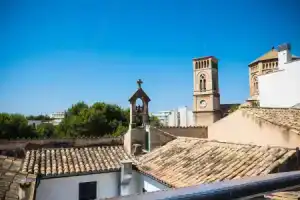
Majorca island
Description
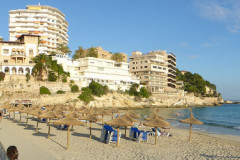
Majorca or Mallorca is the largest island in the Balearic Islands archipelago, which are part of Spain and located in the Mediterranean Sea.
The capital of the island, Palma, is also the capital of the autonomous community of the Balearic Islands. The Balearic Islands have been an autonomous region of Spain since 1983. The Cabrera Archipelago is administratively grouped with Majorca (in the municipality of Palma). The anthem of Majorca is La Balanguera.
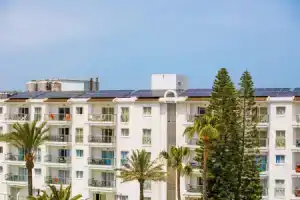
Like the other Balearic Islands of Minorca, Ibiza and Formentera, the island is an extremely popular holiday destination, particularly for tourists from Germany and the United Kingdom. The international airport, Palma de Mallorca Airport, is one of the busiest in Spain; it was used by 23.1 million passengers in 2014.
The name derives from Latin insula maior, "larger island"; later Maiorica, "the larger one" in comparison to Minorca, "the smaller one".
History
Prehistoric settlements
Little is recorded of the earliest inhabitants of the island. Burial chambers and traces of habitation from the Neolithic period (6000–4000 BC) have been discovered, particularly the prehistoric settlements called talaiots, or talayots. They raised Bronze Age megaliths as part of their Talaiotic Culture. A non-exhaustive list is the following:
- Capocorb Vell (Llucmajor municipality)
- Necròpoli de Son Real (east of Can Picafort, Santa Margalida municipality)
- Novetiforme Alemany (Magaluf, Calvià)
- Poblat Talaiòtic de S'Illot (S'Illot, Sant Llorenç des Cardassar municipality)
- Poblat Talaiòtic de Son Fornés (Montuïri municipality)
- Sa Canova de Morell (road to Colònia de Sant Pere, Artà municipality)
- Ses Païsses (Artà municipality)
- Ses Talaies de Can Jordi (Santanyí municipality)
- S'Hospitalet Vell (road to Cales de Mallorca, Manacor municipality)
Phoenicians, Romans and Late Antiquity
The first to colonize the island were the Phoenicians, a seafaring people from the Levant, who arrived around the 8th century BC and established numerous colonies. The island eventually came under the control of Carthage in North Africa, which had become the principal Phoenician city. After the Second Punic War, Carthage lost all of its overseas possessions and the Romans took over.
The island was occupied by the Romans in 123 BC under Quintus Caecilius Metellus Balearicus. It flourished under Roman rule, during which time the towns of Pollentia (Alcúdia), and Palmaria (Palma) were founded. In addition, the northern town of Bocchoris, dating back to pre-Roman times, was a federated city to Rome. The local economy was largely driven by olive cultivation, viticulture, and salt mining. Majorcan soldiers were valued within the Roman legions for their skill with the sling.[page needed]
In 427, Gunderic and the Vandals captured the island. Geiseric, son of Gunderic, governed Majorca and used it as his base to loot and plunder settlements around the Mediterranean,[better source needed] until Roman rule was restored in 465.
Middle Age and Modern history
Dark AgesIn 534, Majorca was conquered by the Byzantine Empire, led by Apollinarius. Under Byzantine rule, Christianity thrived and numerous churches were built.
From 707, the island was increasingly attacked by Muslim raiders from North Africa. Recurrent invasions led the islanders to ask Charlemagne for help.[better source needed]
Moorish Majorca Arab Baths in PalmaIn 902, Issam al-Khawlaní (Arabic: عصام الخولاني) conquered the Balearic Islands, ushering in a new period of prosperity under the Emirate of Córdoba. The town of Palma was reshaped and expanded, and became known as Medina Mayurqa. Later on, with the Caliphate of Córdoba at its height, the Moors improved agriculture with irrigation and developed local industries.
The Caliphate was dismembered in 1015. Majorca came under rule by the Taifa of Dénia, and from 1087 to 1114 was an independent Taifa. During that period the island was visited by Ibn Hazm (Arabic: أبو محمد علي بن احمد بن سعيد بن حزم). However, an expedition of Pisans and Catalans in 1114-15, led by Ramon Berenguer III, Count of Barcelona, overran the island, laying siege to Palma for eight months. After the city fell, the invaders retreated due to problems in their own lands. They were replaced by the Almoravides from North Africa, who ruled until 1176. The Almoravides were replaced by the Almohad dynasty until 1229. Abú Yahya was the last Moorish leader of Majorca.[better source needed]
Medieval MajorcaIn the ensuing confusion and unrest, King James I of Aragon, also known as James The Conqueror, launched an invasion which landed at Santa Ponça, Majorca, on September 8–9, 1229 with 15,000 men and 1,500 horses. His forces entered the city of Medina Mayurqa on December 31, 1229. In 1230 he annexed the island to his Crown of Aragon under the name Regnum Maioricae.
Modern eraFrom 1479, the Crown of Aragon was in dynastic union with that of Castile. The Barbary corsairs of North Africa often attacked the Balearic Islands, and in response the people built coastal watchtowers and fortified churches. In 1570, King Philip II of Spain and his advisors were considering complete evacuation of the Balearic islands.
In the early 18th century, the War of the Spanish Succession resulted in the replacement of that dynastic union with a unified Spanish monarchy under the rule of the new Bourbon Dynasty. The last episode of the War of Spanish Succession was the conquest of the island of Mallorca. It took place on July 2, 1715 when the island capitulated to the arrival of a Bourbon fleet. In 1716 the Nueva Planta decrees made Majorca part of the Spanish province of Baleares, roughly the same to present-day Illes Balears province and autonomous community.
20th century and today
A Nationalist stronghold at the start of the Spanish Civil War, Majorca was subjected to an amphibious landing, on August 16, 1936, aimed at driving the Nationalists from Majorca and reclaiming the island for the Republic. Although the Republicans heavily outnumbered their opponents and managed to push 12 kilometres (7.5 mi) inland, superior Nationalist air power, provided mainly by Fascist Italy as part of the Italian occupation of Majorca, forced the Republicans to retreat and to leave the island completely by September 12. Those events became known as the Battle of Majorca.
Since the 1950s, the advent of mass tourism has transformed the island into a destination for foreign visitors and attracted many service workers from mainland Spain. The boom in tourism caused Palma to grow significantly.
In the 21st century, urban redevelopment, under the so‑called Pla Mirall (English "Mirror Plan"), attracted groups of immigrant workers from outside the European Union, especially from Africa and South America.
Palma
The capital of Majorca, Palma, was founded as a Roman camp called Palmaria upon the remains of a Talaiotic settlement. The turbulent history of the city saw it subject to several Vandal sackings during the fall of the Western Roman Empire. It was later reconquered by the Byzantines, colonised by the Moors (who called it Medina Mayurqa), and finally established by James I of Aragon. In 1983, Palma became the capital of the autonomous region of the Balearic Islands.
Geography
Regions
Majorca is the largest island of Spain by area and second most populated (after Tenerife in the Canary Islands). Majorca has two mountainous regions, the Serra de Tramuntana and Serres de Llevant. Each are about 70 km (43 mi) in length and occupy the north-western (Serra de Tramuntana or Tramuntana range) and eastern thirds of the island.
The highest peak on Majorca is Puig Major at 1,445 m (4,741 ft) in the Serra de Tramuntana. As this is a military zone, the neighbouring peak at Puig de Massanella is the highest accessible peak at 1,364 m (4,475 ft). The northeast coast comprises two bays: the Badia de Pollença and the larger Badia d'Alcúdia.
The northern coast is rugged and has many cliffs. The central zone extending from Palma is generally flat, fertile plain known as Es Pla. The island has a variety of caves both above and below sea-Two of the caves above sea-level also contain underground lakes and are open to tours. Both are near the eastern coastal town of Porto Cristo, the Coves dels Hams and the Coves del Drach.There are two small islands off the coast of Majorca: Cabrera (southeast of Palma) and Dragonera (west of Palma). Other regions include Alfabia Mountains, Es Cornadors and Cap de Formentor.
World Heritage Site
The Cultural Landscape of the Serra de Tramuntana was registered as a UNESCO World Heritage Site in 2011.
Environmental problems
Drinking water has become a rare commodity, because of the increasing number of hotels and golf courses, that are irrigated daily. The groundwater level has sunken with effects on vegetation and climate as well as salt water intruding. During the summer months drinking water has to be shipped in by tankers from continental Spain. Desalination plants are rare due to their expense and high electricity consumption. Many sites lack sufficient sewage treatment and wastewater pollutes the Mediterranean Sea. Abnormal green algae populations are indicators of nutrient pollution. The dying bay of Santa Ponsa is an example of this pollution.
Illegal building — for example, in nature preserves — has resulted in ruins of unfinished buildings. An ongoing investigation since 2006 is a scandal in Port Andratx that El Pais has named 'caso Andratx'. A main reason for illegal building permits, corruption and black market construction is that communities have few ways to finance themselves other than through permits. The former mayor has been incarcerated since 2009
Culture
Archduke Ludwig Salvator of Austria
A sculpture of Ludwig Salvator, in MajorcaThe Archduke Ludwig Salvator of Austria (Catalan: Arxiduc Lluís Salvador) was the precursor of tourism in the Balearic Islands. He first arrived in 1867, travelling under his title of Count of Neuendorf. He later settled on Majorca, buying up wild areas of land in order to preserve and enjoy them. Nowadays, some trekking routes are named after him.
Ludwig Salvator loved the island of Majorca. He learned Catalan, and carried out research into its flora and fauna, history, and culture to produce his main work, Die Balearen, an extremely comprehensive collection of books about the Balearic Islands, consisting of 7 volumes. It took him 22 years to complete.
Chopin in Majorca
Together with French writer George Sand, the Polish composer and pianist Frédéric Chopin resided in Valldemossa in winter of 1838-39. Apparently, Chopin's health had already deteriorated and his doctor recommended he go to the Balearic Islands, where he still spent a rather miserable winter.
Nonetheless, the winter in Majorca was a productive period for Chopin. He had time enough to finish the Preludes, Op. 28, that he started writing in 1835. He was also able to undertake work on his Ballade No. 2, Op. 38; two Polonaises, Op. 40; and the Scherzo No. 3, Op. 39.
Majorcan cartographic school
Majorca has a long history of seafaring. The Majorcan cartographic school or the "Catalan school" refers to a collection of cartographers, cosmographers, and navigational instrument-makers that flourished in Majorca and partly in mainland Catalonia in the 13th, 14th, and 15th centuries. Majorcan cosmographers and cartographers developed breakthroughs in cartographic techniques, namely the "normal portolan chart", which was fine-tuned for navigational use and the plotting by compass of navigational routes, prerequisites for the discovery of the New World.
Cuisine
In 2005, there were over 2,400 restaurants on the island of Majorca according to the Majorcan Tourist Board, ranging from small bars to full restaurants. Olives and almonds are typical of the Majorcan diet. Among the food items that are Majorcan are sobrassada, arròs brut (saffron rice cooked with chicken, pork and vegetables), and the sweet pastry ensaïmada.
Herbs de Majorca is an herbal liqueur.
Language
Majorca's own language is Catalan. The two official languages of Majorca are Catalan and Spanish. The local dialect of Catalan spoken in the island is mallorquí, with slightly different variants in most villages. Majorcan students are obliged to become bilingual in Catalan and Spanish, with some knowledge of English.
In 2012, the governing party announced its intention to end preferential treatment for Catalan in the schools to bring parity to the two languages of the island. It is said that this could lead Majorcan Catalan to become extinct in the fairly near future, as it is being used currently in a situation of diglossia in favor of the Spanish language.
Majorcans
Some of the earliest famous Majorcans lived on the island before its reconquest from the Moors, such as
- Al-Humaydī, Moorish historian, born on the island in 1029.
- Abraham Cresques, a 14th-century Jewish cartographer of the Majorcan cartographic school from Palma,believed to be the author of the Catalan Atlas;
- Robert Graves, English writer, lived for many years in Majorca, buried in a small churchyard on a hill at Deià.
- Cynthia Lennon (1939 – 2015), former wife of John Lennon, lived and died in Majorca.
- Ramon Llull, a friar, writer and philosopher, who wrote the first major work of Catalan Literature;
- Junípero Serra, the Franciscan friar who founded the mission chain in Alta California in 1769.
- Jean Emile Oosterlynck, the Flemish painter, lived in Majorca from 1979 until his death in 1996.
- Joaquín Jovellar y Soler, 19th-century military commander and two-time Spanish Prime Minister Antonio Maura are from the island.
Transport
- Palma de Mallorca Airport
- Palma de Mallorca Metro
- Majorca rail network
- Majorca bus system (TIB)