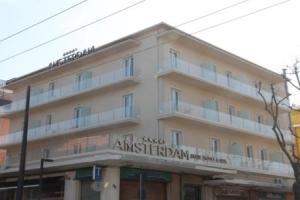
Rimini
Description
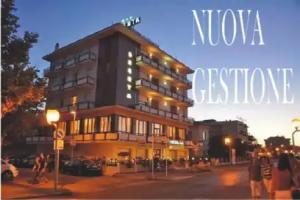
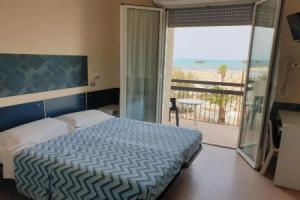
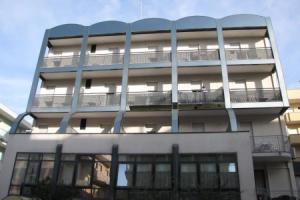
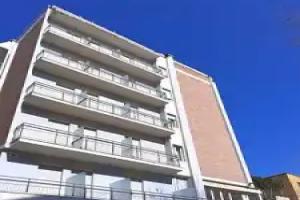
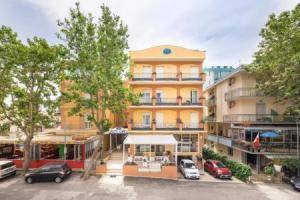
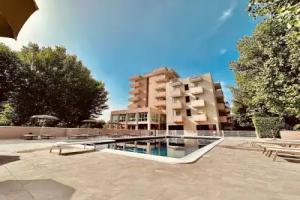
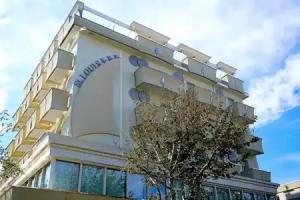
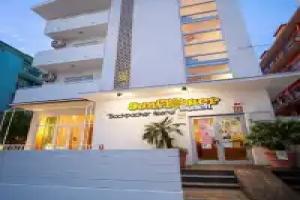
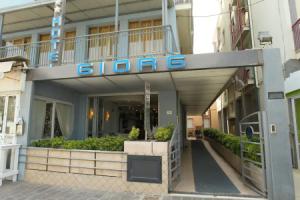
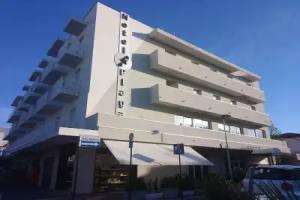
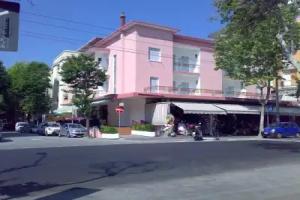
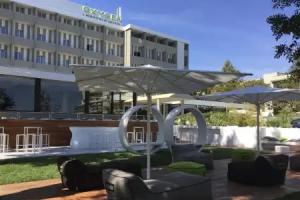
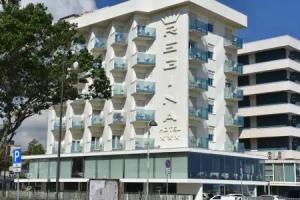
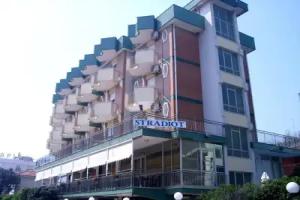
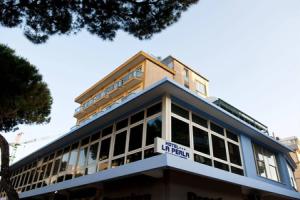
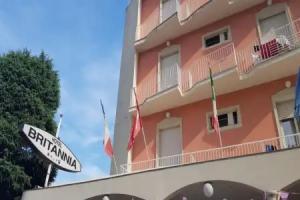
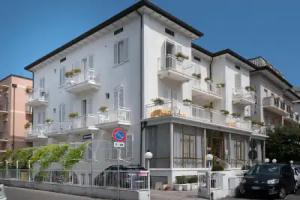
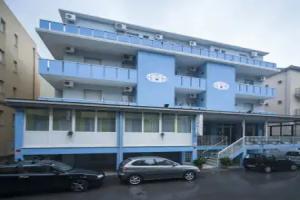
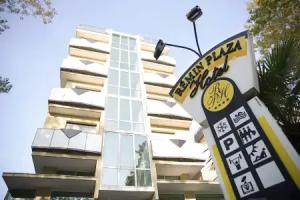
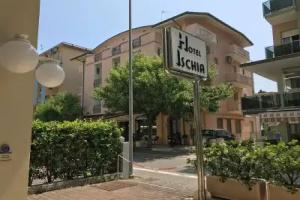
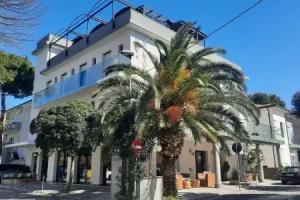
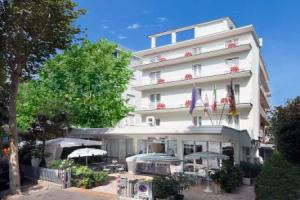
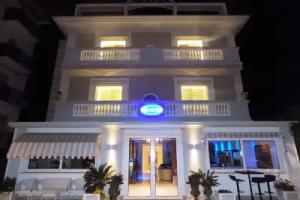
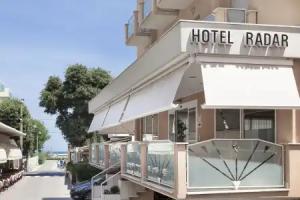
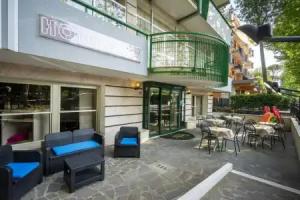
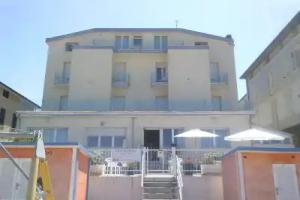
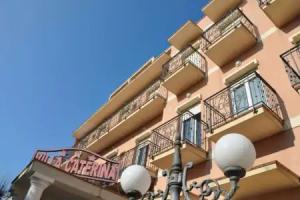
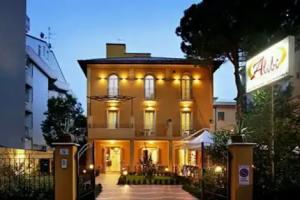
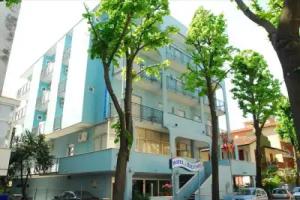
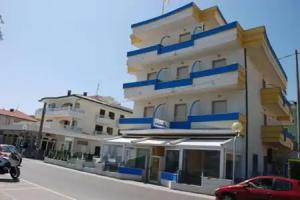
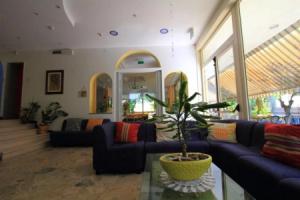
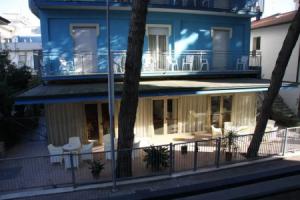
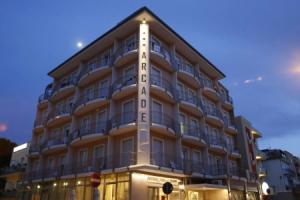
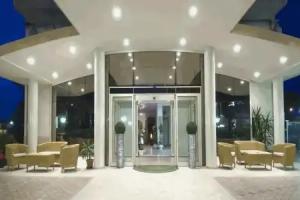
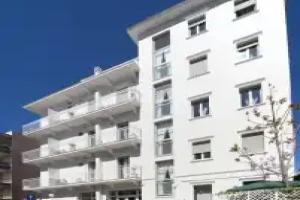
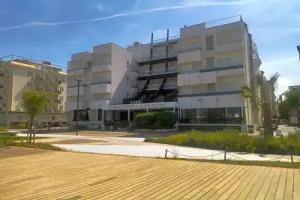
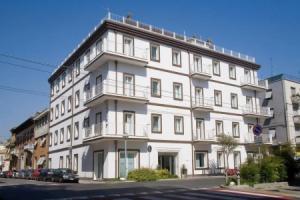
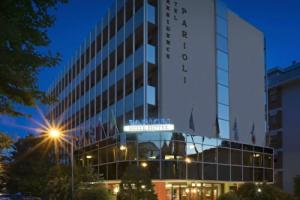
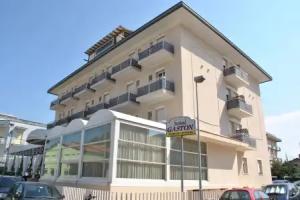
Rimini ; Romagnol dialect: Rémin; Latin: Ariminum) is a city of 146,606 inhabitants in the Emilia-Romagna region of northern Italy and capital city of the Province of Rimini. It is located on the Adriatic Sea, on the coast between the rivers Marecchia (the ancient Ariminus) and Ausa (ancient Aprusa). It is one of the most famous seaside resorts in Europe, thanks to its 15-kilometre-long (9 mi) sandy beach, over 1,000 hotels, and thousands of bars, restaurants and discos. The first bathing establishment opened in 1843. An art city with ancient Roman and Renaissance monuments, Rimini is the hometown of the famous film director Federico Fellini as well.
Founded by the Romans in 268 BC, throughout their period of rule Rimini was a key communications link between the north and south of the peninsula, and on its soil Roman emperors erected monuments like the Arch of Augustus and the Tiberius Bridge, while during the Renaissance, the city benefited from the court of the House of Malatesta, which hosted artists like Leonardo and produced works such as the Malatesta Temple. In the 19th century, Rimini was one of the most active cities in the revolutionary front, hosting many of the movements aimed at the unification of Italy. In the course of World War II, the city was the scene of clashes and bombings, but also of a fierce partisan resistance that earned it the honor of a gold medal for civic valor. Finally, in recent years it has become one of the most important sites for trade fairs and conferences in Italy.
The total approximate population of the Rimini urban area is 225,000 and the provincial population is 330,000.
History
For ecclesiastical history, see Roman Catholic Diocese of RiminiAncient history
In 268 BC at the mouth of the Ariminus river, in an area that had previously been inhabited by the Etruscans, the Umbrians, the Greeks and the Gauls, the Romans founded the colony of Ariminum, probably from the name of a nearby river, Ariminus (today, Marecchia). Previously the area had been Gaulish, from the 6th century BC, to that group's final defeat in 283 BC by the Umbri, in whose possession it remained until 263 BC when it became a Latin colony very helpful to the Romans during the late Gallic Wars.
The city was involved in the civil wars but remained faithful to the popular party and to its leaders, firstly Marius, and then Caesar. After crossing the Rubicon, the latter made his legendary appeal to the legions in the Forum of Rimini.
Ariminum was seen as a bastion against invaders from Gaul and also as a springboard for conquering the Padana plain. As the terminus of the Via Flaminia, which ended here in the surviving prestigious Arch of Augustus (erected 27 BC), Rimini was a road junction connecting central Italy and northern Italy by the Via Aemilia that led to Piacenza and the Via Popilia that extended northwards; it also opened up trade by sea and river. Remains of the amphitheater that could seat 12000 people, and a five-arched bridge of Istrian stone completed by Tiberius (21 AD) are also still visible. Later Galla Placida built the church of San Stefano.
Crisis in the Roman world was marked by destruction caused by invasions and wars, but also by the testimony of the palaces of the Imperial officers and the first churches, the symbol of the spread of Christianity that held an important Council in Rimini in 359.
Middle Ages
When the Ostrogoths conquered Rimini in 493, Odoacer, besieged in Ravenna, had to capitulate. During the Gothic War Rimini was taken and retaken many times. In its vicinity the Byzantine general Narses overthrew (553) the Alamanni. Under the Byzantine rule, it belonged to the Pentapolis, part of the Exarchate of Ravenna.
In 728, it was taken with many other cities by the Lombard King Liutprand but returned to the Byzantines about 735. King Pepin gave it to the Holy See, but during the wars of the popes and the Italian cities against the emperors, Rimini sided with the latter.
In the 13th century, it suffered from the discords of the Gambacari and Ansidei families. The city became a municipality in the 14th century and with the arrival of the religious orders, numerous convents and churches were built, providing work for many illustrious artists. In fact, Giotto inspired the 14th-century School of Rimini, which was the expression of original cultural ferment.
The Malatesta family emerged from the struggles between municipal factions with Malatesta da Verucchio, who in 1239 was named podestà (feudal lord) of the city. Despite interruptions, his family held authority until 1528. In 1312 he was succeeded by Malatesta II, first signore (lord) of the city and Pandolfo I, the latter's brother, named by Louis the Bavarian imperial vicar in Romagna. Ferrantino, son of Malatesta II (1335), was opposed by his cousin Ramberto and by Cardinal Bertando del Poggetto (1331), legate of John XXII. Malatesta Guastafamiglia (1363) was also lord of Pesaro. He was succeeded by Malatesta Ungaro (1373) and Galeotto, uncle of the former (1385), lord also of Fano (from 1340), Pesaro, and Cesena (1378).
His son Carlo, one of the most respected condottieri of the time, enlarged the Riminese possessions and restored the port. Carlo died childless in 1429, and the lordship was divided into three parts, Rimini going to Galeotto Roberto, a Catholic zealot who turned out to be totally inadequate for the role. The Pesarese line of the Malatestas tried, in fact, to take advantage of his weakness and to capture the city, but Sigismondo Pandolfo Malatesta, Carlo's nephew, who was only 14 at the time, intervened to save it. Galeotto retired to a convent, and Sigismondo obtained the rule of Rimini.
Sigismondo Pandolfo was the most famous lord of Rimini. In 1433 Emperor Sigismund soujourned in the city and for a while he was the commander-in-chief of the Papal armies. A skilled general, Sigismondo often acted as condottiero for other states to gain money to embellish it (he was also a dilettante poet). He had the famous Tempio Malatestiano rebuilt by Leon Battista Alberti. However, after the rise of Pope Pius II he had to fight constantly for the independence of the city. In 1463 he was forced to submit to Pius II, who left him only Rimini and little more; Roberto Malatesta, his son (1482), under pope Paul II nearly lost his state but under Sixtus IV became the commanding officer of the pontifical army against Ferdinand of Naples. Sigismondo was, however, defeated by Neapolitan forces in the battle of Campomorto (1482). Pandolfo IV, his son (1500), lost Rimini to Cesare Borgia, after whose overthrow it fell to Venice (1503–1509), but it was later retaken by pope Julius II and incorporated into the Papal States. After the death of pope Leo X, Pandolfo returned for several months, and with his son Sigismondo held a rule which looked tyrannous even for the time. Pope Adrian VI expelled him again and gave Rimini to the Duke of Urbino, the pope's vicar in Romagna. In 1527 Sigismondo managed to regain the city, but in the following year the Malatesta dominion died forever.
Renaissance and Enlightment
At the beginning of the 16th century, Rimini, now a secondary town of the Papal States, was ruled by an Apostolic Legate. Towards the end of the 16th century, the municipal square (now Piazza Cavour), which had been closed off on a site where the Poletti Theatre was subsequently built, was redesigned. The statue of Pope Paul V has stood in the centre of the square next to the fountain since 1614.
In the 16th century, the 'grand square' (now the Piazza Tre Martiri in honor of three civilians hanged by the retreating Nazis at the end of World War II), which was where markets and tournaments were held, underwent various changes. A small temple dedicated to Saint Anthony of Padua and a clock tower were built there, giving the square its present shape and size.
Until the 18th century raiding armies, earthquakes, famines, floods and pirate attacks ravaged the city. In this gloomy situation and due to a weakened local economy, fishing took on great importance, a fact testified by the construction of structures such as the fish market and the lighthouse.
In 1797 Rimini, along with the rest of Romagna, was affected by the passage of the Napoleonic army and became part of the Cisalpine Republic. Napoleonic policy suppressed the monastic orders, confiscating their property and thus dispersing a substantial heritage, and demolished many churches including the ancient cathedral of Santa Colomba.
Modern history
On 30 March 1815, Joachim Murat launched his Rimini Proclamation to the Italian people from here, hoping to incite them to unity and independence. In 1845 a band of adventurers commanded by Ribbotti entered the city and proclaimed a constitution which was soon abolished. In 1860 Rimini and Romagna were incorporated into the Kingdom of Italy.
The city was transformed after the 1843 founding of the first bathing establishment and the Kursaal, a building constructed to host sumptuous social events, became the symbol of Rimini's status as a tourist resort. In just a few years the seafront underwent considerable development work making Rimini 'the city of small villas'. At the beginning of the 20th century The Grand Hotel, the city’s first major accommodation facility, was built near the beach.
During the first World War Rimini and its surrounding infrastructure was one of the primary targets of the Austro-Hungarian Navy. After Italy's declaration of war on 15 May 1915 the Austro-Hungarian fleet left its harbours the same day and started its assault on the Adriatic coast between Venice and Barletta.
During World War II the city was torn apart by heavy bombardments and by the passage of the front over the Gothic Line during the Battle of Rimini and was eventually captured by Greek and Canadian forces. Following its liberation on September 21, 1944, reconstruction work began, culminating in huge development of the tourist industry in the city.
Geography
Topography
Rimini is situated at 44°03’00’’ of latitude North e 12°34’00’’ of longitude East, along the coast of the Adriatic sea, at the south-eastern edge of Emilia-Romagna, at a short distance from Montefeltro and Marche. Rimini extends for 135.71 square km and borders the municipalities of Bellaria-Igea Marina, San Mauro Pascoli and Santarcangelo di Romagna towards NW, Verucchio and Serravalle towards SW, Coriano towards S and Riccione towards SE.
Rimini is located in a historically strategic position, at the extreme southern edge of the Po Valley, at the junction point of Northern and Central Italy. It is surrounded towards southwest by the gently hills of Covignano (153 metres high), Vergiano (81 m), San Martino Monte l’Abbate (57 m) and San Lorenzo in Correggiano (60 m), widely cultivated, with vineyards, olive groves and orchards, and dominated by ancient mansions. These hills, mostly made of clay and sand, connect the plains, created by Marecchia and Ausa, the two most important rivers of Rimini territory, to the higher hills of the Apennines.
The Marecchia river runs through its valley and the plain in a very large riverbed and, after receiving the waters of Ausa, it flows into the Adriatic sea through a deviator between San Giuliano Mare and Rivabella, while the ancient riverbed is used in its last section as the city’s harbour. The Marecchia, usually poor of water, was subjected to periodic, destructive floods near its mouth, where the riverbed became narrow after various bend: for this reason it was deviated towards North. Ausa creek, which was the eastern limit of Rimini for many centuries, was deviated as well after World War II, and its original riverbed was filled and turned into an urban park.
The coastal strip, made of recents marine deposits, is edged by a fine sandy beach, 15 km long and up to 200 metres wide, interrupted only by the mouth of the rivers and gently shelving towards the sea. Along the coastline there is a low sandy cliff, created by sea rise around 4000 B.C., partly conservated north of Rimini, between Rivabella and Bellaria-Igea Marina, at a distance of about 1,300 metres from the sea.
Rimini’s territory, for its geographical position and its climatic features, is situated on the edge between the mediterranean and the central European phytoclimatic zones, and thus it represents an environment of notable naturalistic value.
Arts and culture
Museums
The City Museum (Museo della Città), main museal institution of Rimini, was inaugurated as “Archaeology Gallery”, at the ground floor of Palazzo Gambalunga in 1872, thanks to riminese historian Luigi Tonini, active in researching and studying the local archaeological heritage. The Archaeology Gallery was the first museum of the city and was conceived as a collection of Etruscan civilization and Roman antiquities, found in Rimini and in the surrounding countryside.
The civic museum was arranged in San Francesco monastery in 1923 and in 1938 was enlarged with a section of Medieval Art. The objects avoid the destructions of World War II, being moved between 1940 and 1943 in two different shelters in Spadarolo and Novafeltria. In 1964, the collections were moved to Palazzo Visconti and finally, from 1990, in the Collegio dei Gesuiti, a large Jesuites convent designed by bolognese architect Alfonso Torreggiani, built in 1749.
In the Archaeological department are exhibited grave goods from Villanovian tombs of Verucchio and Covignano, architectural pieces, sculptures, mosaics, ceramics, coins of Republican and Imperial eras, and the exceptional medical kit from the Domus del Chirurgo. The collection of the Roman Lapidary, exhibited in the inner courtyard of the convent, has funerary monuments, epigraphies and milestones.
The Medieval and Modern Art departments include collections of paintings, sculptures and art objects by artists from Romagna (Giovanni da Rimini, Giuliano da Rimini, Guido Cagnacci), Emilia (Guercino, Vittorio Maria Bigari), Tuscany (Domenico Ghirlandaio, Agostino di Duccio) and Veneto (Giovanni Bellini), from 14th to 19th century. The City Museum arranges temporary exhibitions and promotes researches, study and restoration activities of the city’s historical and artistic heritage.
The Fellini Museum (Museo Fellini), dedicated to Federico Fellini, houses temporary exhibitions of documents, drawings, scenographies and costumes related to the movie production of the famous film director.
The Museum of Glances (Museo degli Sguardi), housed in Villa Alvarado, on Covignano hill, was instituted in 2005 acquiring the objects of the former Museum of Extra European Cultures “Dinz Rialto”, founded in Rimini in 1972 by explorer Delfino Dinz Rialto, the art pieces of the former Missionary Museum of the Grazie and other private collections. The museum has over 3,000 objects coming from China, Oceania, Africa and pre-Columbian America, with paintings, sculptures, everyday objects, totems, masks, musical instruments and clothes illustrating how the Western world has looked at these territories’ cultures through history.
The Museum of Small Fishing and Marine (Museo della Piccola Pesca e della Marineria), in Viserbella, shows the history of Rimini’s Marine through a collection of boats, fishing tools, photographs and a large seashells collection, with pieces from all over the Mediterranean Sea.
In the municipality of Rimini there are also two private museums: the Aviation Museum (Museo dell’Aviazione) in Sant’Aquilina, close to the boundary of the Republic of San Marino, and the National Museum of Motorcycle (Museo Nazionale del Motociclo) in Casalecchio.
Libraries
The Gambalunghiana Library, historic institution founded in 1617 by jurist Alessandro Gambalunga, plays a leading role in the city’s cultural life. The library has over 280.000 books, including 60.000 ancient books, 1.350 manuscripts, 6.000 prints and 80.000 photographs. Among the incunables, dated back from the 15th century, stand out De Claris mulieribus (1497) by Giacomo Filippo Foresti and De re militari by Roberto Valturio. The collection of illuminated manuscripts, coming from different cultural and linguistic European boundaries, includes the Regalis Historia by Frate Leonardo and De Civitate Dei by Saint Augustine.
Theatre and Films
The first stable theatre in Rimini is documented since 1681, when the city council decided the transformation of the Arengo’s main hall into a large theatre hall, hosting shows of amateur dramatics companies and the young Carlo Goldoni, who was studying philosophy in the city at that time. Between 1842 and 1857 was built the great Municipal Theatre Vittorio Emanuele II, designed in Neoclassical style by the architect Luigi Poletti, according to the traditional canons of the 19th-century Italian theatre. The theatre was inaugurated by Giuseppe Verdi, who directed “L’Aroldo”, and hosted prestigious opera seasons until its destruction, occurred in 1943 due to aerial bombings. Since then, theatre shows has been hosted in the modern Teatro Ermete Novelli in Marina Centro.
Rimini appeared on the movie screen for the first time in some early footages, such as the documentary “Rimini l’Ostenda d’Italia” (1912), and in various Istituto Luce’s newsreels in the Thirties. Worldwide famous film director Federico Fellini, born and raised in Rimini, portrayed characters, places and atmospheres of its hometown through its movies, which however were almost entirely shot in Cinecittà’s studios in Rome: I Vitelloni, 8 e ½ (Oscar award in 1964), I clowns, Amarcord (Oscar award in 1975). Other italian movies filmed in Rimini includes “La prima notte di quiete” by Valerio Zurlini, "Rimini Rimini" by Sergio Corbucci, "Abbronzatissimi" by Bruno Gaburro, “Sole negli occhi” by Andrea Porporati, “Da zero a dieci” by Luciano Ligabue and “Non pensarci” by Gianni Zanasi.
Music
The earliest musician from Rimini was Saint Arduino (10th century); a musical tradition of some relief is witnessed in the following century by the presence of a music school, named “Scuola cantorum”, at the Cathedral of Santa Colomba. French composer Guillaume Dufay stayed in Rimini, at Malatesta’s, court until 1427. In 1518 Pietro Aaron became the first choirmaster of the Cathedral’s chapel. In 1690 Carlo Tessarini, violinist and composer, was born in Rimini. The city also gave birth to the musician Benedetto Neri, professor at the Academy of Music in Milan.
Amintore Galli, illustrious musicologist and composer born in Talamello in 1845, attended the city’s Classical Lyceum before moving to Milan, where he studied at the Academy of Music; in 1945 the Municipal Theatre of Rimini was dedicated to him.
Between the late 19th and early 20th centuries, many social events and dance party took place at the Bathing Establishment, hosting celebrities such as soprano Elena Bianchini Cappelli and tenor Enrico Caruso.
In recent years, the city inspired the homonymous music album by Fabrizio De André, released in 1978, and it is cited in various popular Italian and foreign songs by Fabrizio De André, Francesco Guccini, Nino Rota, Elvis Costello, Fred Buscaglione. In Rimini were also born the songwriter Samuele Bersani and the composer and music producer Carlo Alberto Rossi, author of some of Mina’s songs.
Cuisine
Rimini’s cuisine is simple and characterized by intense flavours, and it is indissolubly related to the traditions of rural culture, with peculiar influences due to the city’s position between the sea and the hills, near the edge between Romagna and Marche.
The traditional main course is pasta, which includes regular pasta, pasta in broth and baked pasta, prepared in many different shapes. Almost all of pasta dishes require a base of “sfoglia”, a dough of eggs and flour, handmade with a rolling pin. First courses include cappelletti, passatelli in broth, lasagne, cannelloni, nidi di rondine, ravioli, tagliatelle, garganelli, maltagliati, gnocchi and strozzapreti, seasoned with bolognese sauce or a dressing of butter and sage.
Second courses include meat dishes, such as pollo alla cacciatora, rabbit in porchetta, meat-filled zucchini, sausages and mixed grilled meats, and fish dishes, like barbecues of atlantic mackerels, sardines, rotisseries of oily fishes, sepias with peas, fried squids and gianchetti (known here as “omini nudi”).
Piada is a flatbread of ancient traditions, thin and crumbly, obtained from a dough of flour, water, lard and salt, and baked on a scorching “testo” of terracotta or cast iron. It is often accompanied by grilled meats or fishes, sausages, gratinée vegetables, salami, prosciutto, fresh cheeses and country herbs. Cassoni, or cascioni, are stuffed flatbreads similar to piada, with various fillings: country herbs, potatoes and sausages, tomato and mozzarella. Side dishes include mixed salads, gratinée vegetables, roasted potatoes, sautée bladder campion leaves, marinated olives with dill, garlic and orange zest.
Traditional desserts are ciambella, Carnevale’s fried fiocchetti and castagnole, piada dei morti (a doughnuts with walnuts, raisins, pinenuts and almonds, prepared in November), zuppa inglese (a rich dessert with custard, savoiardi and liqueurs), caramelized figs, peaches in white wine and strawberries in red wine.
Typical local products are squacquerone (a fresh cheese) and saba, a grape syrup used to prepare desserts. Quality extra virgin olive oil is traditionally produced in Rimini area since ancient times. The most famous wines include Sangiovese, Trebbiano, Pagadebit, Rebola, Cabernet Sauvignon and Albana, a dessert wine of Roman origins.
Parks and recreation
Rimini has a wide parks system, with 1.3 million square metres of parks and gardens inside the urban area and a total of 2.8 million square metres of green areas inside the city limits, including river parks, sport facilities and natural areas.
The city’s park system include a serie of large urban parks, created along the old riverbeds of Marecchia and Ausa, neighbourhood parks and gardens and tree-lined boulevards.
The main parks of the city are XXV Aprile Park, Giovanni Paolo II Park, Alcide Cervi Park, Fabbri Park, Ghirlandetta Park, Federico Fellini Park, Pertini Park in Marebello and Briolini Park in San Giuliano Mare.
In Rimini there are about 42.000 public trees, belonging to 190 different species, predominantly linden, planes, maples, poplars, pines and oaks. 23 of these are old trees, protected as “monumental trees” for their age and their naturalistic value, such as the plane of piazza Malatesta, the downy oak of Giovanni Paolo II Park, the cypresses of Sant’Agostino, the elm of Viale Vespucci and the linden trees of San Fortunato.
The city’s cycling network is articulated inside the main parks and boulevards, linking the most important monuments, tourist attractions, beaches, meeting places, offering various opportunities to different use categories, including urban travels, mountain bike and cyclotourism.
The urban cycling network is connected, through XXV Aprile Park, to the cycle route which links Rimini and Saiano, along the river Marecchia.
Transports
Rimini is an important road and railway junction, thanks to its position at the intersection between the Adriatic coastal routes and the Po Valley ones and its proximity to the Republic of San Marino.
Roads
The Adriatic motorway (A14) connects Rimini to Bologna towards North and Taranto towards South, through the tolls of Rimini Nord and Rimini Sud. Rimini is a junction of three highways of Roman origins: the Via Emilia (SS 9) to Milan, the Via Flaminia (SS 16) to Rome and the Via Popilia (SS 16) to Padova.
The Rimini-San Marino Highway (SS 72) connects the Adriatic Riviera to the capital of the Republic of San Marino, entering the Sammarinese territory after the State limit at Dogana.
Via Marecchiese (SP 258), leading to Sansepolcro, pass through the Apennines at Viamaggio Pass and links Rimini to its hinterland, Tuscany and the Tiber Valley. Roads of local importance are the provincial roads to Coriano (SP 31), Montescudo (SP 41) and Santa Cristina (SP 69).
Railways
Rimini is a major junction of the regional railway network and it is one of the main stations of the Adriatic railway. Rimini Station is a junction of the railroad lines Bologna-Ancona and Ferrara-Ravenna-Rimini, and trains of all categories stop there, including Frecciarossa and Frecciabianca. It is also the ending point of long-distance railway services to Rome and of regional services to Bologna, Castelbolognese, Ancona and Ravenna.
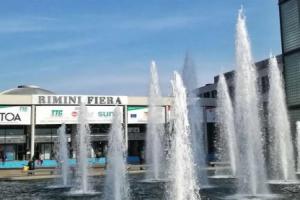
Rimini also has four minor railway stations: Miramare, Viserba, Torre Pedrera, served by regional services, and Rimini Fiera, periodically served by regional and intercity services in conjunction of the main trade fairs.
Airways
The city is served by the Federico Fellini International Airport, at Miramare, the second airport in Emilia-Romagna by passenger traffic. It has regular links to national and international hubs, low cost, charter and seasonal flights.
The closest major international airports are Bologna-Marconi, Venice-Marco Polo and Milan-Malpensa.
Urban transports
The network of urban transports, provided by START Romagna, includes 13 urban bus lines, 9 suburban bus lines and a trolleybus line which connects Rimini city centre to the nearby seaside resort of Riccione.