Miami

Description

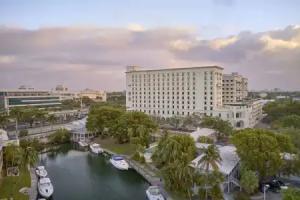
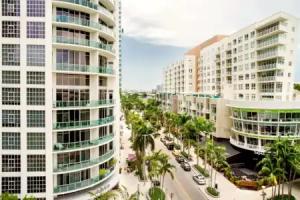
Miami is a seaport city at the southeastern corner of the U.S. state of Florida. As the seat of Miami-Dade County, the municipality is the principal, central, and most populous of its metropolitan area and part of the second-most populous metropolis in the southeastern United States. According to the U.S. Census Bureau, Miami's metro area is the eighth-most populous and fourth-largest urban area in the U.S., with a population of around 5.5 million.

Miami is a major center, and a leader in finance, commerce, culture, media, entertainment, the arts, and international trade. In 2012, Miami was classified as an Alpha−World City in the World Cities Study Group's inventory. In 2010, Miami ranked seventh in the United States in terms of finance, commerce, culture, entertainment, fashion, education, and other sectors. It ranked 33rd among global cities. In 2008, Forbes magazine ranked Miami "America's Cleanest City", for its year-round good air quality, vast green spaces, clean drinking water, clean streets, and citywide recycling programs. According to a 2009 UBS study of 73 world cities, Miami was ranked as the richest city in the United States, and the world's fifth-richest city in terms of purchasing power. Miami is nicknamed the "Capital of Latin America" and is the largest city with a Cuban-American plurality.

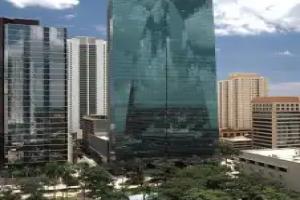
Downtown Miami is home to the largest concentration of international banks in the United States, and many large national and international companies. The Civic Center is a major center for hospitals, research institutes, medical centers, and biotechnology industries. For more than two decades, the Port of Miami, known as the "Cruise Capital of the World", has been the number one cruise passenger port in the world. It accommodates some of the world's largest cruise ships and operations, and is the busiest port in both passenger traffic and cruise lines.

In a study by the website 24/7 Wall Street, Miami was rated as the worst U.S. city in which to live. The primary factors cited were crime, poverty, income inequality and housing costs that far exceeded the national median.

History

The Miami area was inhabited for thousands of years by indigenous cultures. The Tequestas occupied the area for a thousand years before encountering Europeans. An Indian village of hundreds of people dating to 500–600 B.C. was located at the mouth of the Miami River.

In 1566 the explorer, Pedro Menéndez de Avilés, claimed it for Spain. A Spanish mission was constructed one year later in 1567. Spain and Great Britain successively "controlled" Florida, and Spain ceded it to the United States in 1821. In 1836, the US built Fort Dallas as part of its development of the Florida Territory and attempt to suppress and remove the Seminole. The Miami area subsequently became a site of fighting during the Second Seminole War.

Miami is noted as "the only major city in the United States conceived by a woman, Julia Tuttle", a local citrus grower and a wealthy Cleveland native. The Miami area was better known as "Biscayne Bay Country" in the early years of its growth. In the late 19th century, reports described the area as a promising wilderness. The area was also characterized as "one of the finest building sites in Florida." The Great Freeze of 1894–95 hastened Miami's growth, as the crops of the Miami area were the only ones in Florida that survived. Julia Tuttle subsequently convinced Henry Flagler, a railroad tycoon, to expand his Florida East Coast Railway to the region, for which she became known as "the mother of Miami." Miami was officially incorporated as a city on July 28, 1896 with a population of just over 300. It was named for the nearby Miami River, derived from Mayaimi, the historic name of Lake Okeechobee.

Black labor played a crucial role in Miami's early development. During the beginning of the 20th century, migrants from the Bahamas and African-Americans constituted 40 percent of the city's population.:25 Whatever their role in the city's growth, their community's growth was limited to a small space. When landlords began to rent homes to African-Americans in neighborhoods close to Avenue J (what would later become NW Fifth Avenue), a gang of white men with torches visited the renting families and warned them to move or be bombed.:33

During the early 20th century, northerners were attracted to the city, and Miami prospered during the 1920s with an increase in population and infrastructure. The legacy of Jim Crow was embedded in these developments. Miami's chief of police, H. Leslie Quigg, did not hide the fact that he, like many other white Miami police officers, was a member of the Ku Klux Klan. Unsurprisingly, these officers enforced social codes far beyond the written law. Quigg, for example, "personally and publicly beat a colored bellboy to death for speaking directly to a white woman.":53

The collapse of the Florida land boom of the 1920s, the 1926 Miami Hurricane, and the Clutch Plague in the 1930s slowed development. When World War II began, Miami, well-situated on the southern coast of Florida, became a base for US defense against German submarines. The war brought an increase in Miami's population; by 1940, 172,172 people lived in the city.

After Fidel Castro rose to power in Cuba in 1959, many wealthy Cubans sought refuge in Miami, further increasing the population. The city developed businesses and cultural amenities as part of the New South. In the 1980s and 1990s, South Florida weathered social problems related to drug wars, immigration from Haiti and Latin America, and the widespread destruction of Hurricane Andrew. Racial and cultural tensions were sometimes sparked, but the city developed in the latter half of the 20th century as a major international, financial, and cultural center. It is the second-largest US city (after El Paso, Texas) with a Spanish-speaking majority, and the largest city with a Cuban-American plurality.

Miami and its metropolitan area grew from just over 1,000 residents to nearly 5.5 million residents in just 110 years (1896–2006). The city's nickname, The Magic City, comes from this rapid growth. Winter visitors remarked that the city grew so much from one year to the next that it was like magic.

Geography

Miami and its suburbs are located on a broad plain between the Florida Everglades to the west and Biscayne Bay to the east, which also extends from Florida Bay north to Lake Okeechobee. The elevation of the area never rises above 40 ft (12 m) and averages at around 6 ft (1.8 m) above mean sea level in most neighborhoods, especially near the coast. The highest undulations are found along the coastal Miami Rock Ridge, whose substrate underlies most of the eastern Miami metropolitan region. The main portion of the city lies on the shores of Biscayne Bay which contains several hundred natural and artificially created barrier islands, the largest of which contains Miami Beach and South Beach. The Gulf Stream, a warm ocean current, runs northward just 15 miles (24 km) off the coast, allowing the city's climate to stay warm and mild all year.

Geology

The surface bedrock under the Miami area is called Miami oolite or Miami limestone. This bedrock is covered by a thin layer of soil, and is no more than 50 feet (15 m) thick. Miami limestone formed as the result of the drastic changes in sea level associated with recent glaciations or ice ages. Beginning some 130,000 years ago the Sangamonian Stage raised sea levels to approximately 25 feet (8 m) above the current level. All of southern Florida was covered by a shallow sea. Several parallel lines of reef formed along the edge of the submerged Florida plateau, stretching from the present Miami area to what is now the Dry Tortugas. The area behind this reef line was in effect a large lagoon, and the Miami limestone formed throughout the area from the deposition of oolites and the shells of bryozoans. Starting about 100,000 years ago the Wisconsin glaciation began lowering sea levels, exposing the floor of the lagoon. By 15,000 years ago, the sea level had dropped to 300 to 350 feet (90 to 110 m) below the contemporary level. The sea level rose quickly after that, stabilizing at the current level about 4000 years ago, leaving the mainland of South Florida just above sea level.

Beneath the plain lies the Biscayne Aquifer, a natural underground source of fresh water that extends from southern Palm Beach County to Florida Bay, with its highest point peaking around the cities of Miami Springs and Hialeah. Most of the Miami metropolitan area obtains its drinking water from this aquifer. As a result of the aquifer, it is not possible to dig more than 15 to 20 ft (5 to 6 m) beneath the city without hitting water, which impedes underground construction, though some underground parking garages exist. For this reason, the mass transit systems in and around Miami are elevated or at-grade.

Most of the western fringes of the city extend into the Everglades, a subtropical marshland located in the southern portion of the U.S. state of Florida. Alligators have ventured into Miami communities and on major highways.

In terms of land area, Miami is one of the smallest major cities in the United States. According to the US Census Bureau, the city encompasses a total area of 55.27 sq mi (143.1 km2). Of that area, 35.67 sq mi (92.4 km2) is land and 19.59 sq mi (50.7 km2) is water. That means Miami comprises over 400,000 people in 35 square miles (91 km2), making it one of the most densely populated cities in the United States, along with New York City, San Francisco, Boston, Chicago, and Philadelphia.

Culture

Entertainment and performing arts

In addition to such annual festivals like Calle Ocho Festival and Carnaval Miami, Miami is home to many entertainment venues, theaters, museums, parks and performing arts centers. The newest addition to the Miami arts scene is the Adrienne Arsht Center for the Performing Arts, the second-largest performing arts center in the United States after the Lincoln Center in New York City, and is the home of the Florida Grand Opera. Within it are the Ziff Ballet Opera House, the center's largest venue, the Knight Concert Hall, the Carnival Studio Theater and the Peacock Rehearsal Studio. The center attracts many large-scale operas, ballets, concerts, and musicals from around the world and is Florida's grandest performing arts center. Other performing arts venues in Miami include the Gusman Center for the Performing Arts, Coconut Grove Playhouse, Colony Theatre, Lincoln Theatre, New World Center, Actor's Playhouse at the Miracle Theatre, Jackie Gleason Theatre, Manuel Artime Theater, Ring Theatre, Playground Theatre, Wertheim Performing Arts Center, the Fair Expo Center and the Bayfront Park Amphitheater for outdoor music events.

The city attracts a large number of musicians, singers, actors, dancers, and orchestral players. Miami has numerous orchestras, symphonies and performing art conservatories. Some of these include the Florida Grand Opera, FIU School of Music, Frost School of Music, Miami City Ballet, Miami Conservatory, Miami Wind Symphony, New World School of the Arts, New World Symphony Orchestra, as well as the music, theater and art schools of the city's many universities and schools.

Miami is also a major fashion center, home to models and some of the top modeling agencies in the world. Miami is also host to many fashion shows and events, including the annual Miami Fashion Week and the Mercedes-Benz Fashion Week Miami held in the Wynwood Art District.

Museums and art

The city is home to numerous museums as well, many of which are in Downtown. These include the Frost Art Museum, HistoryMiami, Miami Art Museum, Miami Children's Museum, Miami Science Museum, Vizcaya Museum and Gardens, and the Miami-Dade Cultural Center, home of the Miami Main Library. Miami is also the home of the world's largest art exhibition, dubbed the "Olympics of Art", Art Basel Miami. The event is held annually in December, and attracts thousands of visitors from around the world.

Music

Miami music is varied. Cubans brought the conga and rumba, while Haitians and the rest of the French West Indies have brought kompa and zouk to Miami from their homelands instantly popularizing them in American culture. Dominicans brought bachata, and merengue, while Colombians brought vallenato and cumbia, and Brazilians brought samba. West Indians and Caribbean people have brought, reggae, soca, calypso, and steel pan to the area as well.

In the early 1970s, the Miami disco sound came to life with TK Records, featuring the music of KC and the Sunshine Band, with such hits as "Get Down Tonight", "(Shake, Shake, Shake) Shake Your Booty" and "That's the Way (I Like It)"; and the Latin-American disco group, Foxy (band), with their hit singles "Get Off" and "Hot Number". Miami-area natives George McCrae and Teri DeSario were also popular music artists during the 1970s disco era. The Bee Gees moved to Miami in 1975 and have lived here ever since then. Miami-influenced, Gloria Estefan and the Miami Sound Machine, hit the popular music scene with their Cuban-oriented sound and had hits in the 1980s with "Conga" and "Bad Boys".

Miami is also considered a "hot spot" for dance music, Freestyle, a style of dance music popular in the 1980s and 90s was heavily influenced by Electro, hip-hop, and disco. Many popular Freestyle acts such as Pretty Tony, Debbie Deb, Stevie B, and Exposé, originated in Miami. Indie/folk acts Cat Power and Iron & Wine are based in the city, while alternative hip hop artist Sage Francis, electro artist Uffie, and the electroclash duo Avenue D were born in Miami, but musically based elsewhere. Also, ska punk band Against All Authority is from Miami, and rock/metal bands Nonpoint and Marilyn Manson each formed in neighboring Fort Lauderdale. Cuban American female recording artist, Ana Cristina, was born in Miami in 1985.

The 1980s and '90s also brought the genre of high energy Miami Bass to dance floors and car subwoofers throughout the country. Miami Bass spawned artists like 2 Live Crew (featuring Uncle Luke), 95 South, Tag Team, 69 Boyz, Quad City DJ's, and Freak Nasty. Examples of these songs are "Whoomp! (There It Is)" by Tag Team in 1993, "Tootsee Roll" by 69 Boyz in 1994, and "C'mon N' Ride It (The Train)" by the Quad City DJ's in 1996.

This was also a period of alternatives to nightclubs, the warehouse party, acid house, rave and outdoor festival scenes of the late 1980s and early 1990s were havens for the latest trends in electronic dance music, especially house and its ever-more hypnotic, synthetic offspring techno and trance, in clubs like the infamous Warsaw Ballroom better known as Warsaw and The Mix where DJs like David Padilla (who was the resident DJ for both) and radio. The new sound fed back into mainstream clubs across the country. The scene in SoBe, along with a bustling secondhand market for electronic instruments and turntables, had a strong democratizing effect, offering amateur, "bedroom" DJs the opportunity to become proficient and popular as both music players and producers, regardless of the whims of the professional music and club industries. Some of these notable DJs are John Benetiz (better known as JellyBean Benetiz), Danny Tenaglia, and David Padilla.

Miami is also home to a vibrant techno and dance scene and hosts the Winter Music Conference, the largest dance event in the world, Ultra Music Festival and many electronica music-themed celebrations and festivals.

There are also several rap and hip hop artists out of Miami. They include Trick Daddy, Trina, Pitbull, Pretty Ricky, and the Miami Bass group 2 Live Crew.

Cuisine

The cuisine of Miami is a reflection of its diverse population, with a heavy influence especially from Caribbean cuisine and from Latin American cuisine. By combining the two with American cuisine, it has spawned a unique South Florida style of cooking known as Floribbean cuisine. Floribbean cuisine is widely available throughout Miami and South Florida, and can be found in restaurant chains such as Pollo Tropical.

Cuban immigrants in the 1960s brought the Cuban sandwich, medianoche, Cuban espresso, and croquetas, all of which have grown in popularity to all Miamians, and have become symbols of the city's varied cuisine. Today, these are part of the local culture, and can be found throughout the city in window cafés, particularly outside of supermarkets and restaurants. Restaurants such as Versailles restaurant in Little Havana are landmark eateries of Miami. Located on the Atlantic Ocean, and with a long history as a seaport, Miami is also known for its seafood, with many seafood restaurants located along the Miami River, and in and around Biscayne Bay. Miami is also the home of restaurant chains such as Burger King, Tony Roma's and Benihana.

Dialect

The Miami area has a unique dialect, (commonly called the "Miami accent") which is widely spoken. The dialect developed among second- or third-generation Hispanics, including Cuban-Americans, whose first language was English (though some non-Hispanic white, black, and other races who were born and raised the Miami area tend to adopt it as well.) It is based on a fairly standard American accent but with some changes very similar to dialects in the Mid-Atlantic (especially the New York area dialect, Northern New Jersey English, and New York Latino English.) Unlike Virginia Piedmont, Coastal Southern American, and Northeast American dialects and Florida Cracker dialect (see section below), "Miami accent" is rhotic; it also incorporates a rhythm and pronunciation heavily influenced by Spanish (wherein rhythm is syllable-timed). However, this is a native dialect of English, not learner English or interlanguage; it is possible to differentiate this variety from an interlanguage spoken by second-language speakers in that "Miami accent" does not generally display the following features: there is no addition of /ɛ/ before initial consonant clusters with /s/, speakers do not confuse of /dʒ/ with /j/, (e.g., Yale with jail), and /r/ and /rr/ are pronounced as alveolar approximant [ɹ] instead of alveolar tap [ɾ] or alveolar trill [r] in Spanish.

In popular culture

In film and television

Miami is a center for television and film production. The city has acted as the backdrop for many movies, and many television shows, telenovelas, and awards shows have been set or filmed in Miami. In the mid-2000s, Miami started to become a popular backdrop for reality television shows. Additionally, Miami is a major center, worldwide, for Spanish-language television and film production.

In music

Miami has inspired the names of musical groups as well as of numerous albums and song titles. For example, the late country singer Keith Whitley (1955–1989) sang a song called "Miami, My Amy", about a special woman from Miami; the song is one of his biggest hits to this day.

In video games

The video games, Grand Theft Auto: Vice City (which became one of the best selling video games in 2002) and Grand Theft Auto: Vice City Stories, take place in Vice City, a fictional city inspired by Miami, which includes some of the same architecture and geography. The game also includes characters who speak Haitian Creole and Spanish, as do many people found in Miami.

The video game Scarface: The World Is Yours takes place in Miami. The game is based on and is a quasi-sequel to the 1983 motion picture Scarface starring Al Pacino reprising his role as Tony Montana, with André Sogliuzzo providing Montana's voice. The game begins in the film's final scene, with Tony Montana's mansion being raided by Alejandro Sosa's (Robert Davi) assassins.

Parks

Miami's tropical weather allows for year-round outdoors activities. The city has numerous marinas, rivers, bays, canals, and the Atlantic Ocean, which make boating, sailing, and fishing popular outdoors activities. Biscayne Bay has numerous coral reefs which make snorkeling and scuba diving popular. There are over 80 parks and gardens in the city. The largest and most popular parks are Bayfront Park and Bicentennial Park (located in the heart of Downtown and the location of the American Airlines Arena and Bayside Marketplace), Tropical Park, Peacock Park, Morningside Park, Virginia Key, and Watson Island.

Other popular cultural destinations in or near Miami include Zoo Miami, Jungle Island, Miami Seaquarium, Monkey Jungle, Coral Castle, St. Bernard de Clairvaux Church, Charles Deering Estate, Fairchild Botanical Gardens, and Key Biscayne.

Transportation

Airports

Miami International Airport serves as the primary international airport of the Greater Miami Area. One of the busiest international airports in the world, Miami International Airport caters to over 35 million passengers a year. The airport is a major hub and the single largest international gateway for American Airlines. Miami International is the busiest airport in Florida, and is the United States' second-largest international port of entry for foreign air passengers behind New York's John F. Kennedy International Airport, and is the seventh-largest such gateway in the world. The airport's extensive international route network includes non-stop flights to over seventy international cities in North and South America, Europe, Asia, and the Middle East.

Alternatively, nearby Fort Lauderdale-Hollywood International Airport also serves commercial traffic in the Miami area. Opa-locka Airport in Opa-locka and Kendall-Tamiami Airport in an unincorporated area serve general aviation traffic in the Miami area.

PortMiami

Further information: PortMiami

Miami is home to one of the largest ports in the United States, the PortMiami. It is the largest cruise ship port in the world. The port is often called the "Cruise Capital of the World" and the "Cargo Gateway of the Americas". It has retained its status as the number one cruise/passenger port in the world for well over a decade accommodating the largest cruise ships and the major cruise lines. In 2007, the port served 3,787,410 passengers. Additionally, the port is one of the nation's busiest cargo ports, importing 7.8 million tons of cargo in 2007. Among North American ports, it ranks second only to the Port of South Louisiana in New Orleans in terms of cargo tonnage imported/exported from Latin America. The port is on 518 acres (2 km2) and has 7 passenger terminals. China is the port's number one import country, and Honduras is the number one export country. Miami has the world's largest amount of cruise line headquarters, home to: Carnival Cruise Lines, Celebrity Cruises, Norwegian Cruise Line, Oceania Cruises, and Royal Caribbean International. In 2014, the Port of Miami Tunnel was completed and will serve the PortMiami.

Public transportation

Public transportation in Miami is operated by Miami-Dade Transit and SFRTA, and includes commuter rail (Tri-Rail), heavy-rail rapid transit (Metrorail), an elevated people mover (Metromover), and buses (Metrobus). Miami has Florida's highest transit ridership as about 17% of Miamians use transit on a daily basis.

Miami's heavy-rail rapid transit system, Metrorail, is an elevated system comprising two lines and 23 stations on a 24.4-mile (39.3 km)-long line. Metrorail connects the urban western suburbs of Hialeah, Medley, and inner-city Miami with suburban The Roads, Coconut Grove, Coral Gables, South Miami and urban Kendall via the central business districts of Miami International Airport, the Civic Center, and Downtown. A free, elevated people mover, Metromover, operates 21 stations on three different lines in greater Downtown Miami, with a station at roughly every two blocks of Downtown and Brickell. Several expansion projects are being funded by a transit development sales tax surcharge throughout Miami-Dade County.

Tri-Rail, a commuter rail system operated by the South Florida Regional Transportation Authority (SFRTA), runs from Miami International Airport northward to West Palm Beach, making eighteen stops throughout Miami-Dade, Broward, and Palm Beach counties.

Construction is currently underway on the Miami Intermodal Center and Miami Central Station, a massive transportation hub servicing Metrorail, Amtrak, Tri-Rail, Metrobus, Greyhound Lines, taxis, rental cars, MIA Mover, private automobiles, bicycles and pedestrians adjacent to Miami International Airport. Completion of the Miami Intermodal Center is expected to be completed by winter 2011, and will serve over 150,000 commuters and travelers in the Miami area. Phase I of Miami Central Station is scheduled to begin service in the spring of 2012, and Phase II in 2013.

Two new light rail systems, Baylink and the Miami Streetcar, have been proposed and are currently in the planning stage. BayLink would connect Downtown with South Beach, and the Miami Streetcar would connect Downtown with Midtown.

Rail

Miami is the southern terminus of Amtrak's Atlantic Coast services, running two lines, the Silver Meteor and the Silver Star, both terminating in New York City. The Miami Amtrak Station is located in the suburb of Hialeah near the Tri-Rail/Metrorail Station on NW 79 St and NW 38 Ave. Current construction of the Miami Central Station will move all Amtrak operations from its current out-of-the-way location to a centralized location with Metrorail, MIA Mover, Tri-Rail, Miami International Airport, and the Miami Intermodal Center all within the same station closer to Downtown. The station was expected to be completed by 2012, but experienced several delays and was later expected to be completed in late 2014, again pushed back to early 2015.

Florida High Speed Rail was a proposed government backed high-speed rail system that would have connected Miami, Orlando, and Tampa. The first phase was planned to connect Orlando and Tampa and was offered federal funding, but it was turned down by Governor Rick Scott in 2011. The second phase of the line was envisioned to connect Miami. By 2014, a private project known as All Aboard Florida by a company of the historic Florida East Coast Railway began construction of a higher-speed rail line in South Florida that is planned to eventually terminate at Orlando International Airport.

Road

Miami's road system is based along the numerical "Miami Grid" where Flagler Street forms the east-west baseline and Miami Avenue forms the north-south meridian. The corner of Flagler Street and Miami Avenue is in the middle of Downtown in front of the Downtown Macy's (formerly the Burdine's headquarters). The Miami grid is primarily numerical so that, for example, all street addresses north of Flagler Street and west of Miami Avenue have "NW" in their address. Because its point of origin is in Downtown, which is close to the coast, therefore, the "NW" and "SW" quadrants are much larger than the "SE" and "NE" quadrants. Many roads, especially major ones, are also named (e.g., Tamiami Trail/SW 8th St), although, with exceptions, the number is in more common usage among locals.

With few exceptions, within this grid north/south roads are designated as Courts, Roads, Avenues or Places (often remembered by their acronym), while east/west roads are Streets, Terraces, Drives or occasionally Ways. Major roads in each direction are located at one mile intervals. There are 16 blocks to each mile on north/south avenues, and 10 blocks to each mile on east/west streets. Major north/south avenues generally end in "7" - e.g., 17th, 27th, 37th/Douglas Aves., 57th/Red Rd., 67th/Ludlam, 87th/Galloway, etc., all the way west beyond 177th/Krome Avenue. (One prominent exception is 42nd Avenue, LeJeune Road, located at the half-mile point instead.) Major east/west streets to the south of downtown are multiples of 16, though the beginning point of this system is at SW 8th St, one half mile south of Flagler ("zeroth") Street. Thus, major streets are at 8th St. + 16 = 24th St./Coral Way, + 16 = 40th St./Bird, +16 = 56th/Miller, + 16 = 72nd/ Sunset, + 16 = 88th/N. Kendall, + 16 = 104th (originally S. Kendall), + 16 = 120th/Montgomery, + 16 = 136th/Howard, + 16 = 152nd/Coral Reef, + 16 = 168th/Richmond, + 16 = 184th/Eureka, + 16 = 200th/Quail Roost, + 16 = 216th/Hainlin Mill, + 16 = 232nd/Silver Palm, + 16 = 248th/Coconut Palm, etc., well into the 300's. Within the Grid, odd-numbered addresses are generally on the north or east side, and even-numbered addresses are on the south or west side. This makes even unfamiliar addresses and distances easy - If one must travel from, say 1709 SW 8th St. to 24832 SW 157th Avenue, one knows it will be 140 blocks (157-17) / 20 miles to the west and 240 blocks (248-8) / 15 miles to the south, and that the destination will be on the south side of 248th St. Remarkably, even Miami natives are often unaware of this pattern.

All streets and avenues in Miami-Dade County follow the Miami Grid, with a few exceptions, most notably Coral Gables, Hialeah, Coconut Grove and Miami Beach. One neighborhood, The Roads, is thusly named because its streets run off the Miami Grid at a 45-degree angle, and therefore are all named roads.

Miami-Dade County is served by four Interstate Highways (I-75, I-95, I-195, I-395) and several U.S. Highways including U.S. Route 1, U.S. Route 27, U.S. Route 41, and U.S. Route 441.

Some of the major Florida State Roads (and their common names) serving Miami are:

  • SR 112 (Airport Expressway): Interstate 95 to MIA
  • Homestead Extension of Florida's Turnpike (SR 821): Florida's Turnpike mainline (SR 91)/Miami Gardens to U.S. Route 1/Florida City
  • SR 826 (Palmetto Expressway): Golden Glades Interchange to U.S. Route 1/Pinecrest
  • SR 836 (Dolphin Expressway): Downtown to SW 137th Ave via MIA
  • SR 874 (Don Shula Expressway): 826/Bird Road to Homestead Extension of Florida's Turnpike/Kendall
  • SR 878 (Snapper Creek Expressway): SR 874/Kendall to U.S. Route 1/Pinecrest & South Miami
  • SR 924 (Gratigny Parkway) Miami Lakes to Opa-locka
Miami Causeways Name Termini Year built Rickenbacker Causeway Brickell and Key Biscayne 1947 Venetian Causeway Downtown and South Beach 1912–1925 MacArthur Causeway Downtown and South Beach 1920 Julia Tuttle Causeway Wynwood/Edgewater and Miami Beach 1959 79th Street Causeway Upper East Side and North Beach 1929 Broad Causeway North Miami and Bal Harbour 1951

Miami has six major causeways that span over Biscayne Bay connecting the western mainland, with the eastern barrier islands along the Atlantic Ocean. The Rickenbacker Causeway is the southernmost causeway and connects Brickell to Virginia Key and Key Biscayne. The Venetian Causeway and MacArthur Causeway connect Downtown with South Beach. The Julia Tuttle Causeway connects Midtown and Miami Beach. The 79th Street Causeway connects the Upper East Side with North Beach. The northernmost causeway, the Broad Causeway, is the smallest of Miami's six causeways, and connects North Miami with Bal Harbour.

In 2007, Miami was identified as having the rudest drivers in the United States, the second year in a row to have been cited, in a poll commissioned by automobile club AutoVantage. Miami is also consistently ranked as one of the most dangerous cities in the United States for pedestrians.

Bicycling

In recent years the city government, under Mayor Manny Diaz, has taken an ambitious stance in support of bicycling in Miami for both recreation and commuting. Every month, the city hosts "Bike Miami", where major streets in Downtown and Brickell are closed to automobiles, but left open for pedestrians and bicyclists. The event began in November 2008, and has doubled in popularity from 1,500 participants to about 3,000 in the October 2009 Bike Miami. This is the longest-running such event in the US. In October 2009, the city also approved an extensive 20-year plan for bike routes and paths around the city. The city has begun construction of bike routes as of late 2009, and ordinances requiring bike parking in all future construction in the city became mandatory as of October 2009.

In 2010, Miami was ranked as the 44th-most bike-friendly city in the US according to Bicycling Magazine.

Walkability

A 2011 study by Walk Score ranked Miami the eighth-most walkable of the fifty largest cities in the United States, but a 2013 survey by Travel + Leisure ranked Miami 34th for "public transportation and pedestrian friendliness."

Street view

Hotels

2 guests
Adults2+
Children under 170+
Age7+
Age7+
Age7+
Age7+
Age7+
Age7+
Age7+
Age7+
Age7+
Age7+
Search hotel

Reviews

Share your experiences, help others make the right choice!
Think about what you would like to know if you were looking for a review about a place to relax. Please describe in detail what you liked and what you didn't. What would you advise to other guests and to the hotel owner. The more fully you tell about the hotel, the easier it will be for other people to make a choice and they will be very grateful to you!

Map

X